How to Toilet Train a Puppy (Without the Setbacks)
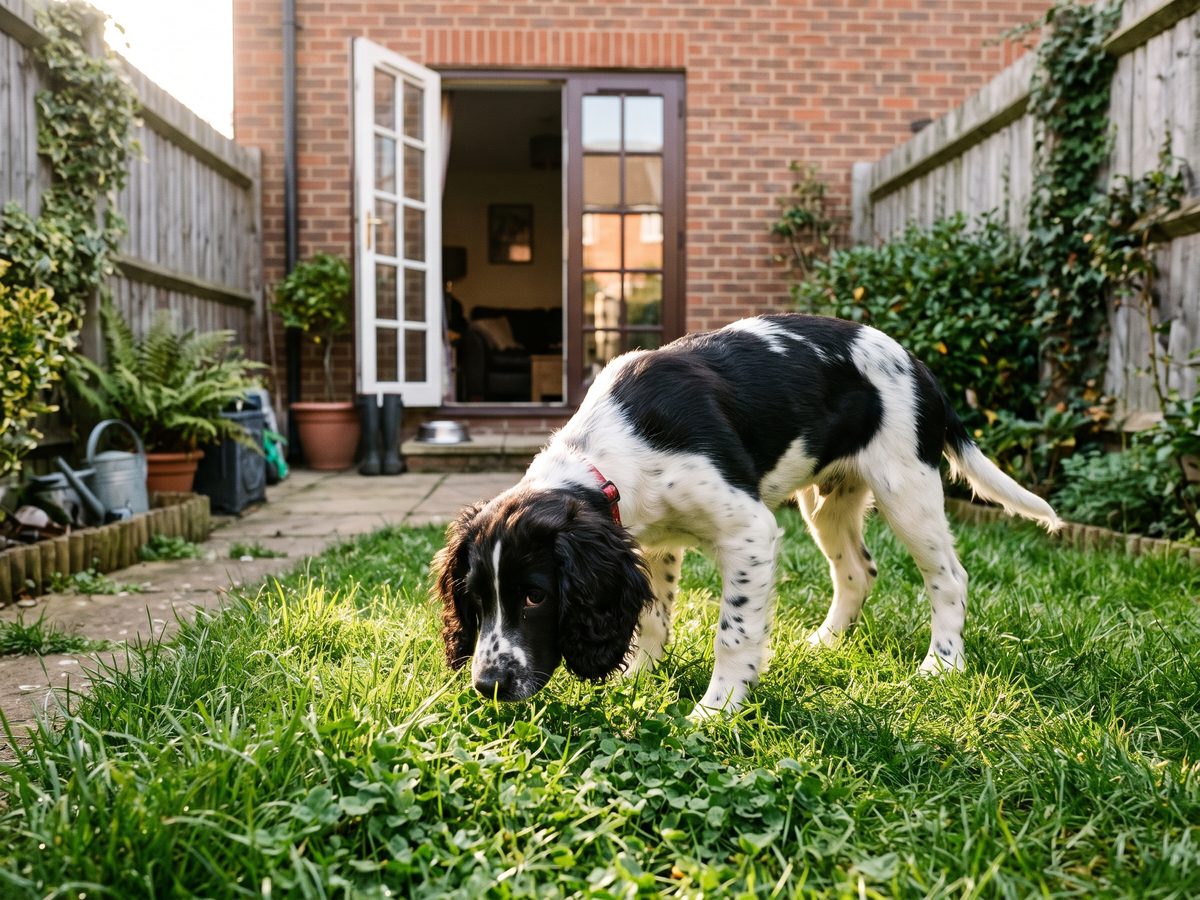
The Routine
- Take your puppy to the same spot each time, on a leash if needed, and stand quietly.
- When it starts to go, say a calm cue word such as "be quick".
- The moment it finishes, praise and give a treat right there, not back indoors.
- If nothing happens in a few minutes, go back in, keep your puppy close or in its crate, and try again shortly.
- Watch for signs it needs to go: sniffing the floor, circling, heading for the door.
Apartments vs a House With a Yard
With a yard or garden, take your puppy straight out to its spot. In an apartment, the trip down takes longer, so carry a young puppy to the door and outside, or use an indoor grass box or pad area on a balcony while you build up. See puppy pads. Ask your vet when your puppy can safely use public areas.
The Two Mistakes Behind Most Setbacks
- Too much freedom too soon. A puppy wandering the house unsupervised will have accidents you don't see. Use a crate, pen or gates, and widen its space as it gets reliable. See crate training.
- Punishing accidents. Scolding teaches a puppy to hide when it goes, not to go outside. Calmly clean up with an enzyme cleaner and take it out more often. See enzyme cleaners.
Nights
Young puppies often need a trip outside during the night. Keep it calm and boring: out, toilet, quiet praise, straight back to bed. As your puppy grows, it will manage longer stretches; you can gradually wait longer before the night trip.
Gear for House-Training Season
Each button opens a search in your own country's Amazon store. As an Amazon Associate we earn from qualifying purchases.
A crate with a divider keeps a puppy's space the right size. Tiny treats reward the right spot instantly. An enzyme cleaner deals with accidents properly, and potty bells give your puppy a way to ask.
When to Check With Your Vet
Call your vet if a puppy that was doing well starts having lots of accidents, pees very often or in tiny amounts, strains, drinks much more than usual, or has blood in its urine. A medical cause is possible and needs checking before more training.
Frequently Asked Questions
Every puppy owner asks these.
How long does toilet training take?
Most puppies make good progress within a few weeks and are reliable within a few months. Small breeds sometimes take longer.
Should I rub my puppy's nose in an accident?
Never. It frightens the puppy and teaches it to hide. Clean up calmly and take it out more often.
Should I use puppy pads?
They can help in high-rise homes or for very young puppies, but going straight to outdoor training is usually quicker.
Why does my puppy go right after coming in?
It was probably distracted outside. Wait a bit longer in a quiet spot, stay calm and boring, and reward the moment it goes.
Related Reading
- Crate training without tears: the den that helps.
- Puppy pads: how many and how long.
- Enzyme cleaners: accidents, cleaned properly.
If toilet training suddenly goes backward, or your puppy strains or pees very often, ask your vet to check it.