Puppy Biting and Mouthing: Why It Happens and What to Do
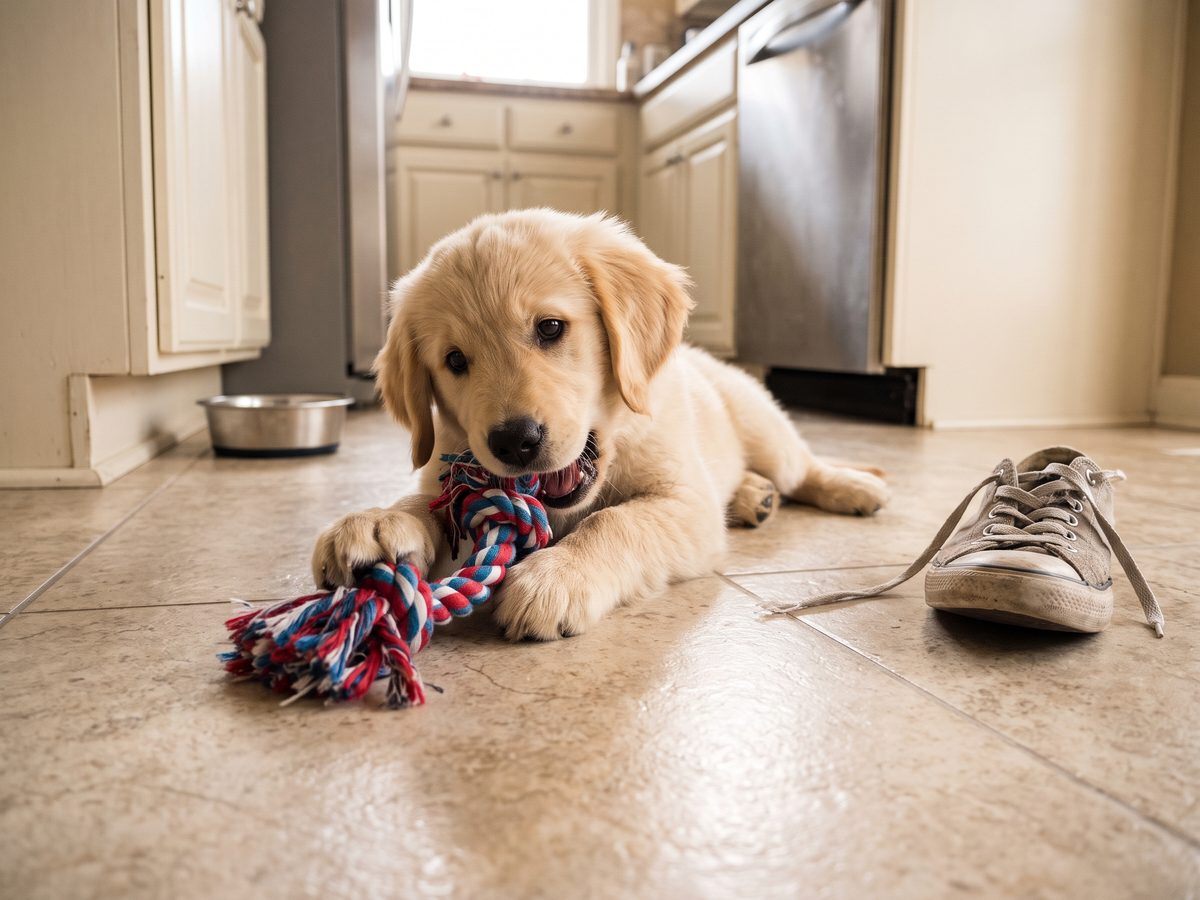
Redirect, Then Pause Play
- When teeth touch skin, go still for a second.
- Calmly move your hand away and offer a toy or chew instead.
- If your puppy keeps biting hands or clothes, stand up and step away for 10–20 seconds. Play ends.
- Come back when your puppy is calm, and play gently with a toy between you.
- Repeat every single time. Consistency shortens this stage.
Avoid games where hands are the toy, and use long tug toys so teeth have somewhere to go.
Normal Development, Not a Problem Puppy
Puppies explore the world with their mouths, much as toddlers do with their hands. Biting in play, teething and plain curiosity are a universal stage, not a sign of aggression. Most puppies improve a lot as adult teeth come in and self-control grows, often somewhere between four and seven months, though it varies.
Overtired puppies bite more. Young puppies need a lot of sleep, so if the biting turns frantic, a quiet nap in a crate or pen often fixes it.
Bite Inhibition in Plain Words
Bite inhibition is a dog learning to control how hard it uses its mouth. Puppies learn a lot of it from playing with other puppies, who yelp and stop if a bite is too hard. That's one reason well-run puppy classes and supervised playdates with friendly, healthy dogs matter. Ask your vet when your puppy can safely mix with other dogs.
Teething Makes Everything Harder
From about three to six months, sore gums make chewing feel good. Offer a rotation of chew toys in different textures, including ones you can chill in the fridge or freezer. Keep shoes, cables and anything precious out of reach, and supervise chews.
Toys for a Mouthy Puppy
Each button opens a search in your own country's Amazon store. As an Amazon Associate we earn from qualifying purchases.
Puppy-safe rubber chews and freezable teething toys soothe sore gums. A long rope or fleece tug toy keeps teeth away from hands during play. A puppy pen gives a safe place for overtired naps.
When It Isn't Just a Stage
Play biting that stays soft and stops when you step away is normal. Biting with a stiff body, a hard stare or real intent to hurt is different, and so is biting around food or toys; get help from a qualified trainer early. A sudden jump in biting in a puppy that was improving can mean pain, so check with your vet. See resource guarding basics.
Frequently Asked Questions
Tiny teeth, big questions.
When will my puppy stop biting?
Most improve a lot somewhere between four and seven months, as adult teeth come in. Consistent redirecting speeds it up.
Should I yelp when my puppy bites?
A short, quiet "ouch" works for some puppies, but it excites others. Going still and stepping away works more reliably.
Is my puppy aggressive?
Almost certainly not. Soft, playful biting is normal. Stiff, staring or intense biting is worth discussing with a trainer.
Why is my puppy worse in the evening?
Many puppies get overtired and bitey in the evening. A calm wind-down and a nap often help.
Related Reading
- Crate training without tears: a nap spot puppies love.
- Dog toys and enrichment: chew styles and toys.
- Toilet training a puppy: the other big puppy job.
If your puppy's gums bleed a lot, it seems in pain or it stops eating, ask your vet to check its mouth.