Flat-Faced (Brachycephalic) Dog Breeds: A Group Guide
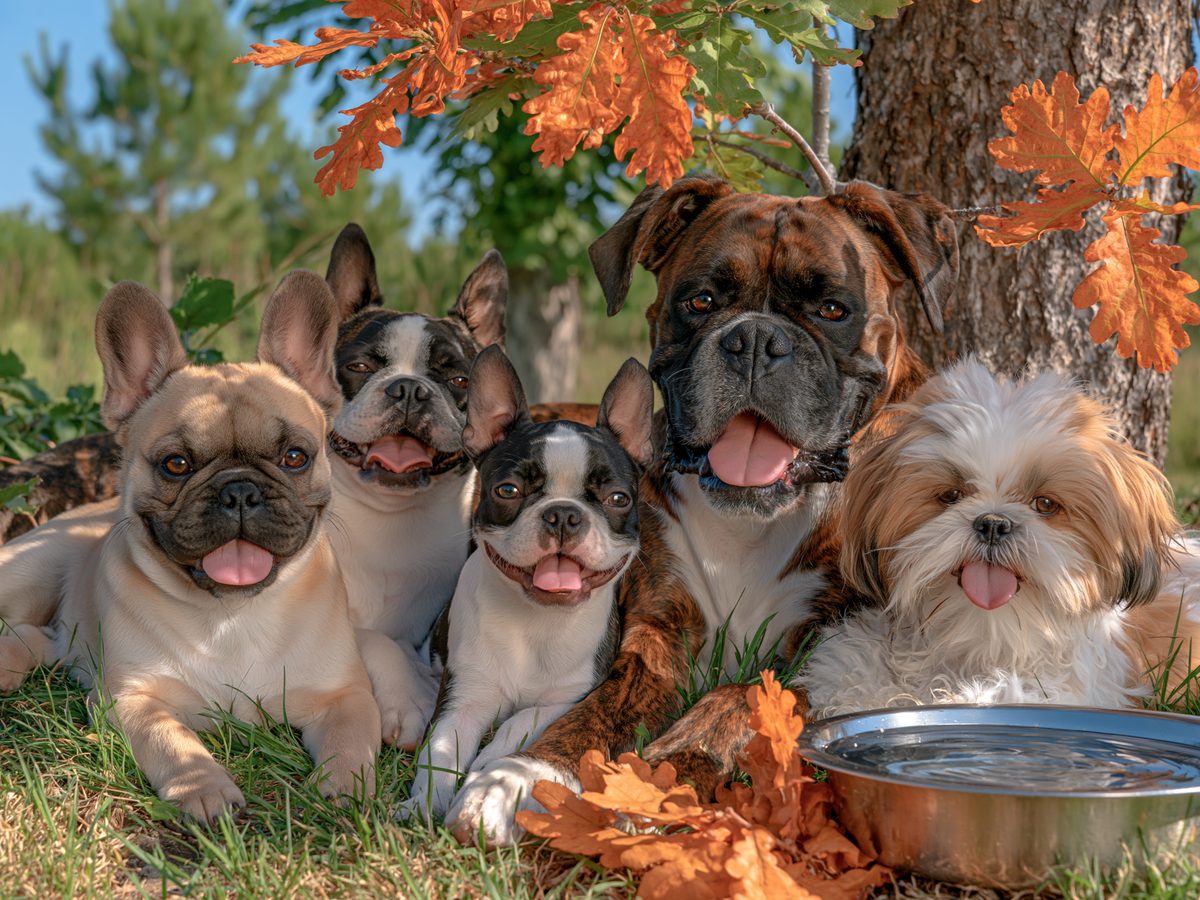
What "Flat-Faced" Means
A shorter muzzle leaves less room for the nose and airway. Many flat-faced dogs also have narrow nostrils. Breathing problems and heat sensitivity are recognized welfare issues in these breeds, but how much a dog is affected varies hugely: two dogs of the same breed can be very different. Only a vet can assess an individual dog.
Signs worth raising with your vet include loud breathing at rest, snoring that worries you, tiring very quickly, or struggling after mild exercise. Noisy breathing is common in these breeds, but common doesn't mean it can be ignored.
Heat and Exercise: Pace by Effort, Not the Clock
- Walk early and late in warm weather, and skip walks on hot or humid days.
- Stop when breathing gets heavy, find shade and offer water. Don't push on to finish the route.
- Use a harness, so the leash doesn't press on the throat.
- Keep the dog lean; extra weight makes breathing harder.
- Never leave the dog in a car, even for a few minutes.
Emergency: collapse, wobbling, heavy drooling, or pale, dark red or blue gums after heat or exercise mean go to a vet straight away. See when to call the vet.
Choosing a Puppy Well
Breathing varies within each breed, so the parents matter more than color or look. Ask the breeder for breathing assessments of both parents. In the UK, The Royal Kennel Club's Respiratory Function Grading scheme covers French Bulldogs, Pugs and Bulldogs, and The Royal Kennel Club lists it for other short-faced breeds too. Look for parents with more open nostrils and a more moderate face, and walk away from a puppy that already breathes noisily at rest.
Rescues also have many flat-faced dogs looking for homes, often with a vet's history already known.
Gear for Any Flat-Faced Dog
Each button opens a search in your own country's Amazon store. As an Amazon Associate we earn from qualifying purchases.
A padded harness keeps pressure off the throat. A cooling mat and a raised mesh bed give a cooler place to rest. A portable water bottle with a bowl means water on every walk, and a shallow slow-feed bowl suits a short muzzle better than a deep puzzle.
Flying and Insurance
Many airlines restrict or refuse flat-faced breeds in the hold, and some limit travel in hot months. Small dogs may travel in the cabin in an approved carrier on some airlines. Rules change and differ by airline, so check before you book.
Insurers often charge more for these breeds or add exclusions linked to breathing. Read the policy wording before you buy, not after a claim.
Frequently Asked Questions
Flat faces, lots of questions.
What does brachycephalic mean?
It means short-headed. These breeds have a shortened skull and muzzle, which can make breathing and cooling down harder, to different degrees in different dogs.
Are all flat-faced breeds equally at risk?
No. The flatter the face, the more caution is needed, and dogs vary within each breed. Every short-faced dog still needs care in the heat.
Why do airlines restrict these breeds?
Because of the heat and breathing risks during travel. Many restrict them in the hold, and some allow small dogs in the cabin. Check the airline's current rules.
Does insurance cost more for flat-faced breeds?
Often, or the policy may exclude some conditions. Compare policies and read the exclusions before you commit.
What should I ask a breeder?
Ask for breathing assessments of both parents, see them breathing at rest, and ask how they cope with exercise and heat. A good breeder will be glad you asked.
What's the most important daily habit?
Pace walks and play by heat and effort, and stop as soon as breathing gets heavy. That habit prevents more trouble than any gear.
Related Reading
- French Bulldog: heat, harness and wrinkle care.
- Hot-weather safety: keeping every pet cool.
- Collar vs harness: choosing walking gear.
Breathing and heat tolerance are for your vet to assess. If any flat-faced dog struggles to breathe or overheats, get to a vet straight away.