Collar vs Harness vs Front-Clip: Which Fits Your Dog?
When Pulling Is the Problem
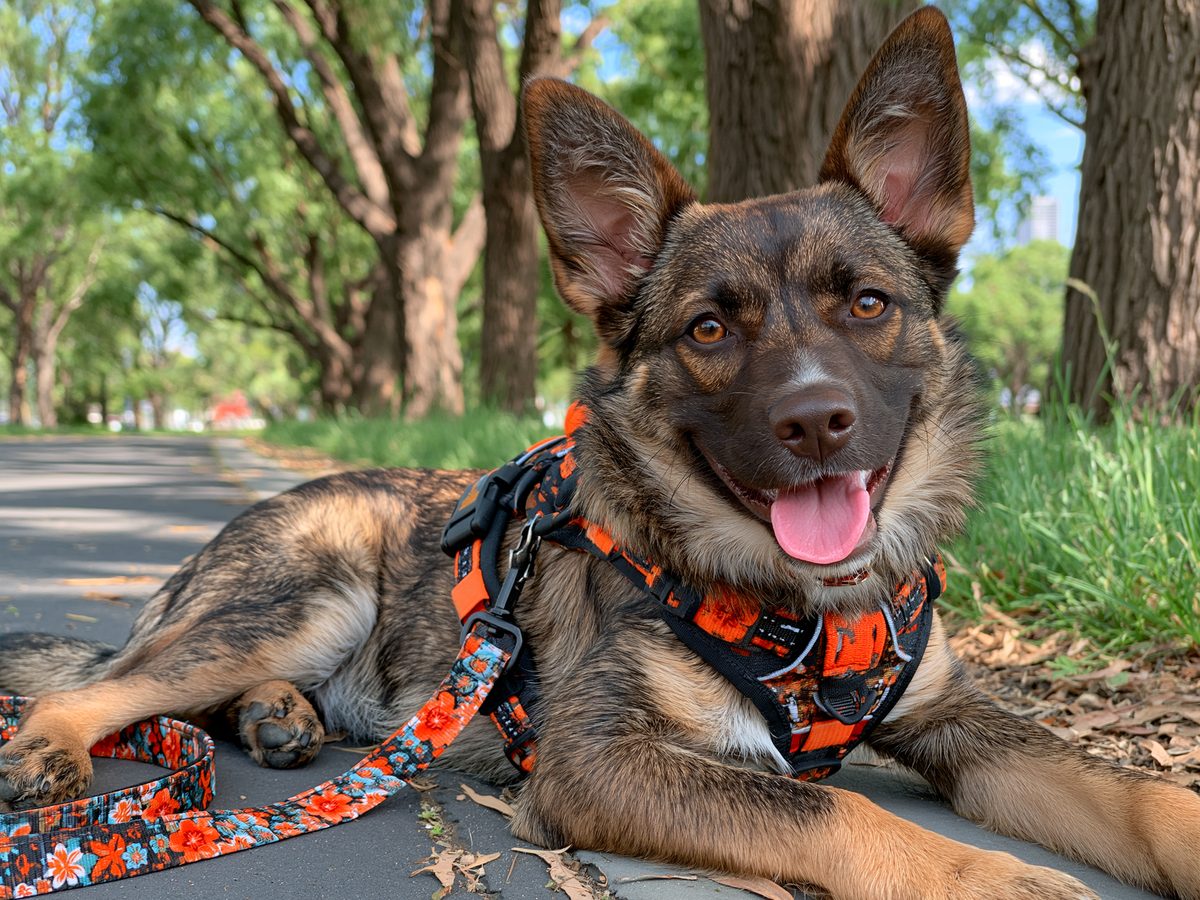
With the leash clipped at the chest, a lunge turns the dog slightly sideways instead of letting it drive forward against the leash. That makes training much easier, but the dog only learns to walk nicely when a tight leash stops the walk. See loose-leash walking. A back-clip harness on a strong puller can work like a sled harness and make pulling easier, not harder.
Delicate Necks: Small and Flat-Faced Dogs
Toy breeds and flat-faced breeds such as French Bulldogs are the clearest case for keeping leash pressure off the neck altogether. Use a harness for walks and keep a light collar just for the tag. If your dog coughs, gags or makes a honking sound when the leash tightens, switch to a harness and mention it to your vet.
Security for an Escape Artist
Some dogs back out of a collar or harness when they're scared. For them, choose holding power: a martingale collar, which tightens to a set limit when the dog pulls backward, or a harness with an extra strap behind the ribs. Some owners add a short safety clip linking harness and collar. Keep the microchip details up to date too.
Checking the Fit
- Two fingers should slide snugly under each strap.
- A collar shouldn't slip over the head when you pull it gently forward.
- A harness shouldn't twist, ride up into the armpits or press on the throat.
- Check again as puppies grow, and after a haircut or a change in weight.
Our harness measuring guide shows where to measure.
Gear for the Right Walking Setup
Each button opens a search in your own country's Amazon store. As an Amazon Associate we earn from qualifying purchases.
Choose the one that matches your dog's problem. For more options, see collars, harnesses and leashes.
Frequently Asked Questions
Which strap goes where? The usual questions.
Does a front-clip harness stop pulling?
It reduces it, but it isn't a fix by itself. Combine it with loose-leash training for lasting results.
Can my dog wear a collar and a harness?
Yes. Many owners keep a flat collar on for the tag and clip the leash to a harness for walks.
What about head halters?
They fit over the muzzle and steer the head. Some dogs need careful, gradual introduction to accept one, and they should only be used with a loose leash. Many owners find a front-clip harness easier.
Should a puppy wear a harness?
A soft, well-fitted puppy harness is a good choice for walks, with a light collar for the tag. Check the fit often as your puppy grows.
Related Reading
- Collars, harnesses and leashes: shop by need.
- Loose-leash walking: the training side.
- French Bulldog: why flat faces need harnesses.
A dog that coughs on the leash, or gear that rubs the skin sore, is worth mentioning to your vet.