Cavalier King Charles Spaniel: Temperament and Everyday Care
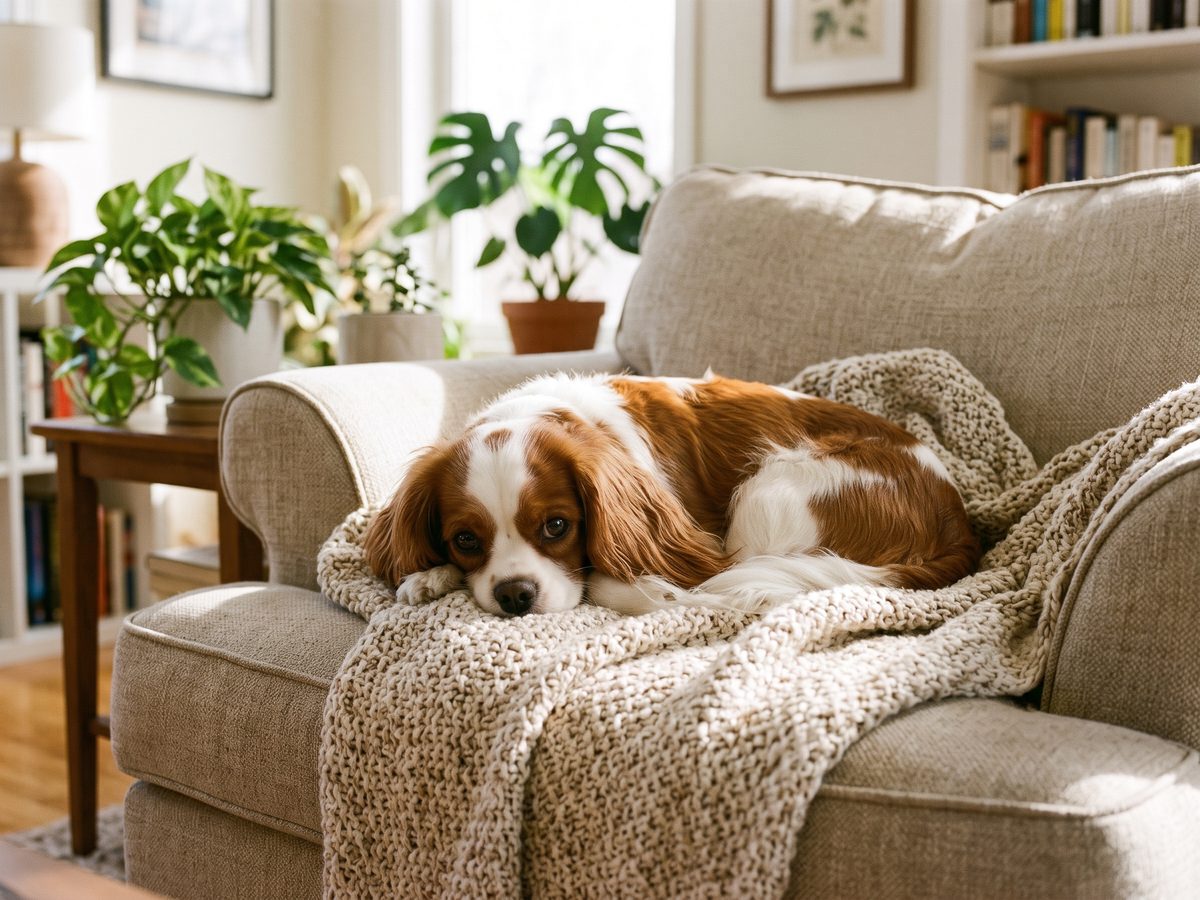
Who a Cavalier Suits
Cavaliers are sweet-natured, adaptable and devoted. They tend to get on with everyone, including children, older people and other pets, which makes them popular family and companion dogs.
They are a harder fit for long days alone, as most want company. They are also a poor guard dog: a Cavalier is more likely to greet a stranger than warn you about one.
Exercise That Suits a Companion
Up to an hour a day of walks and play suits most adults, and many enjoy more. They are still spaniels, so a good sniff and a chance to chase a ball go down well. Their slightly shortened face means some caution in hot weather: walk early and late in summer.
Recall can wobble when there are birds about, so practice with a long line; see recall training.
Coat and Ear Care
The silky coat and feathering need brushing a few times a week, with a comb through the ears, legs and "trousers", where tangles start. Trim the hair between the paw pads now and then. Long, heavy ears trap warmth and moisture, so check them weekly and dry them after baths; see cleaning dog ears safely.
Gear for a Small, Silky Spaniel
Each button opens a search in your own country's Amazon store. As an Amazon Associate we earn from qualifying purchases.
A pin brush and a metal comb keep the feathering tidy. A small harness is comfortable for walks. A snood keeps long ears out of the food bowl, a cozy bed suits a dog that loves comfort, and a long line helps with recall practice.
Health: Heart and MRI Screening
Heart health is a well-known focus in Cavaliers. Ask the breeder for recent heart checks on both parents, ideally by a vet cardiologist, and ask how old the parents were when checked.
In the UK, the BVA/Kennel Club scheme for Chiari-like malformation and syringomyelia uses MRI scans of breeding dogs; ask whether the parents have been scanned and see the grades. The Royal Kennel Club also lists DNA tests for curly coat/dry eye and episodic falling as good practice, and eye testing as best practice.
For your own dog, ask your vet to listen to the heart at every check-up, keep your dog lean, and talk about vaccinations, neutering and a parasite plan. Tell your vet if your dog often scratches at its neck or ears, or seems uncomfortable.
Heart medicines, worming and flea or tick products: see your vet or a pet supply store with trained staff. They can tell you what suits your dog.
Frequently Asked Questions
Gentle dog, important questions.
Are Cavaliers good family dogs?
Usually, yes. They are gentle, friendly and adaptable, and most enjoy children and other pets.
What health tests should a Cavalier breeder do?
Ask for heart checks on both parents, MRI scan results for syringomyelia where available, eye tests and DNA tests. A good breeder will show you the results.
Do Cavaliers shed?
Yes, moderately. Brushing a few times a week keeps loose hair and tangles under control.
Can a Cavalier be left alone?
For short periods, once it has learned to settle. Cavaliers love company and don't suit long days alone.
How much exercise does a Cavalier need?
Up to an hour a day of walks and play suits most adults. Take care in hot weather.
Related Reading
- Cocker Spaniel: a bigger, busier spaniel.
- Flat-faced breeds: heat and breathing.
- Rescue vs breeder: finding the right dog.
Breed traits are tendencies, not promises. If your Cavalier tires easily, coughs, breathes fast at rest or seems uncomfortable, call your vet.