Boxer: Temperament, Exercise and Heat Care
Who a Boxer Suits
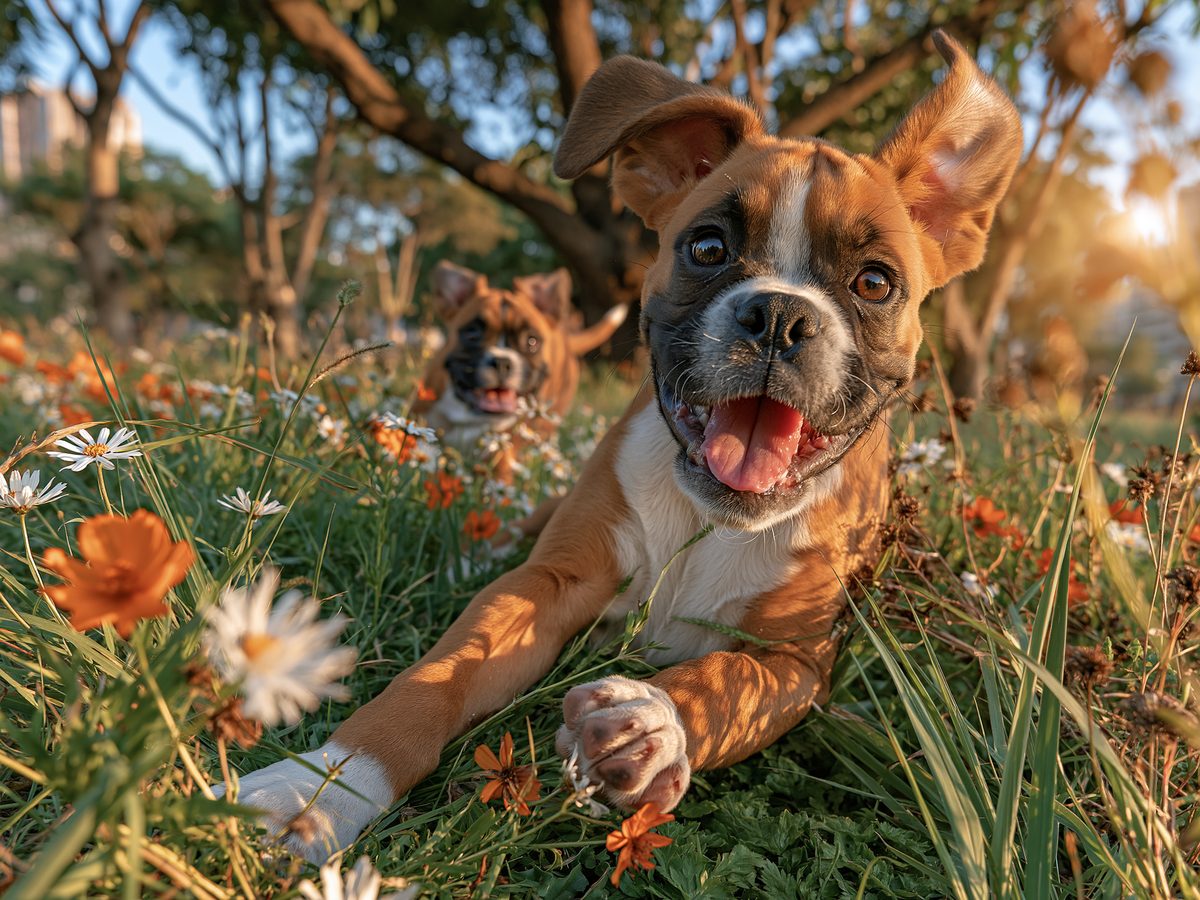
Boxers bond closely with their families, love to play and are usually patient with children. They suit people who enjoy daily walks, games and training, and who find a goofy dog charming.
They are a harder fit for anyone hoping for a calm adult dog early on: many Boxers stay puppyish well past two or three. Their size and enthusiasm also mean supervision with toddlers, who can be knocked flying by a happy greeting.
Zoomies and Real Exercise
The Royal Kennel Club suggests more than two hours of exercise a day for an adult Boxer, split across walks, play and training. Without it, energy comes out as zoomies: sudden laps of the room or yard at top speed. Fun to watch, less fun near the coffee table.
Fetch, a flirt pole, scent games and dog sports such as agility suit the breed's athletic build. Reward-based training works well, and early work on not jumping up saves a lot of muddy shirts.
Heat Caution for a Shorter Muzzle
A Boxer's muzzle is shorter than most dogs', though not as flat as a French Bulldog's, so it cools down less efficiently by panting. Combine that with a dog that won't stop playing on its own, and you have to be the one who calls time.
- Exercise early and late in warm weather.
- Carry water and take breaks in the shade.
- Stop if breathing stays heavy after a rest.
Our flat-faced breeds guide covers heat and travel for short-muzzled dogs.
Gear for an Athletic, Playful Dog
Each button opens a search in your own country's Amazon store. As an Amazon Associate we earn from qualifying purchases.
A sturdy, well-fitted harness suits a strong, keen puller. A flirt pole and tough tug toys give play some structure. A cooling vest widens the safety margin on warm days, and a travel water bottle belongs on every walk.
Health: What to Ask the Breeder and Your Vet
Heart health is a known focus in Boxers, and breed clubs in several countries run heart-testing schemes. Ask the breeder what heart screening the parents have had and see the results. In the UK, The Royal Kennel Club also lists hip, elbow and eye testing as best practice.
Show your vet any new lump or bump promptly rather than waiting to see what it does. Book a check-up soon after your dog comes home, and ask about vaccinations, neutering timing and a parasite prevention plan.
Worming, flea and tick products and supplements: see your vet or a pet supply store with trained staff. They can tell you what suits your dog.
Frequently Asked Questions
Bounce, heat and children come up most.
When do Boxers calm down?
Later than many breeds. Plenty stay playful and bouncy for years. Daily exercise and training make a big difference.
Are Boxers good with children?
Usually, yes. They are affectionate and patient, but big and boisterous, so supervise play with young children.
Do Boxers struggle in the heat?
More than longer-nosed dogs. Walk early and late in warm weather, carry water and stop when breathing gets heavy.
Do Boxers shed?
A little, all year. The short coat needs only a weekly brush.
What health checks should I ask about?
Ask about heart screening in the parents, plus hip, elbow and eye tests. Then keep up routine check-ups with your vet.
Related Reading
- Dog enrichment ideas: games for busy dogs.
- Flat-faced breeds: heat and breathing.
- Dog toys and enrichment: toys that survive a Boxer.
Breed traits are tendencies, not promises. If your Boxer faints, tires suddenly, struggles in the heat or has a new lump, call your vet.