Somali Cats: Personality, Care and What to Expect
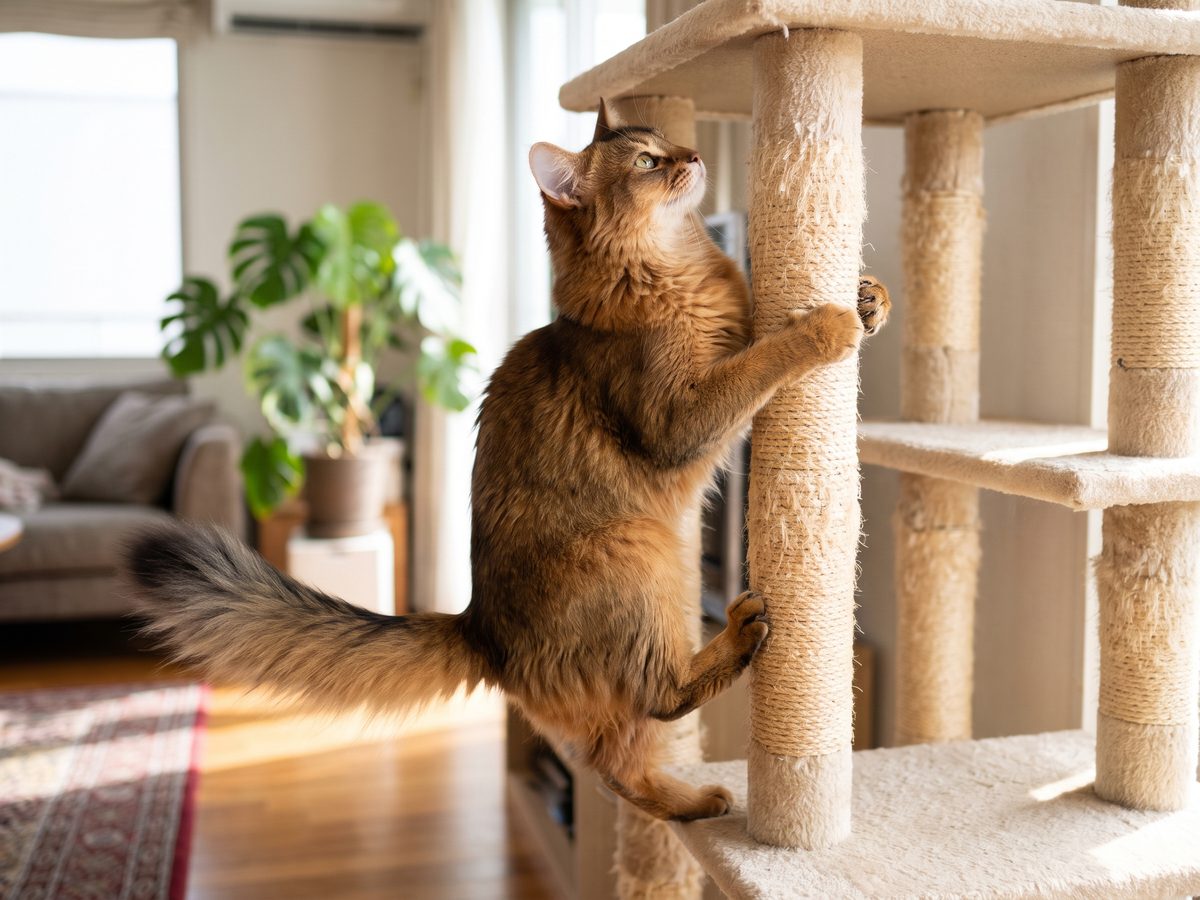
Who a Somali Suits
Somalis suit active homes that will play every day and enjoy a curious, involved cat. They are typically sociable and like company, and often get on well with other playful pets.
They are less suited to anyone who wants a quiet lap cat or is out all day. Breed traits are tendencies; every cat is an individual.
Origin: The Long-Haired Abyssinian
Long-haired kittens turned up in Abyssinian litters for decades, carrying a recessive long-hair gene. In the 1960s and 1970s breeders began developing them as the Somali, and the US Cat Fanciers' Association granted championship status in 1979, with European recognition following in 1982. Each hair is ticked with bands of color, which gives the coat its glowing look.
Personality and Play
Somalis are energetic, playful and curious, and many keep a kittenish streak into adulthood. They love climbing and puzzle toys; our indoor enrichment guide and the Abyssinian page describe the kind of setup they need.
Coat, Grooming and Shedding
The soft, fine semi-long coat has little tendency to mat, and a weekly comb is usually enough, more during seasonal sheds. The ruff and bushy tail fill out with age.
Home Setup: Indoors, Outdoors and Climbing
Give a Somali height and variety: tall cat trees, shelves, window perches and a rotating toy box. Many live happily indoors with that setup, and a catio or harness walks add interest; see our indoor or outdoor guide.
Gear for a Somali
Each button opens a search in your own country's Amazon store. As an Amazon Associate we earn from qualifying purchases.
A tall, sturdy cat tree and wall shelves give an athletic cat a climbing route. A wand toy and puzzle feeders use up energy and brainpower, and a metal comb keeps the soft coat tangle-free.
Health: What to Discuss With Your Vet and Breeder
Like Abyssinians, Somalis can inherit pyruvate kinase deficiency (a red blood cell condition) and an inherited form of retinal degeneration. DNA tests exist for both, so ask any breeder for results for the parents. Ask your vet about dental care too, and keep up the preventive care in our cat health basics.
Finding a Kitten or an Adult Cat
Somalis are fairly rare. Choose a registered breeder who DNA-tests, raises kittens in the home and lets you meet the mother.
Frequently Asked Questions
What people ask about the "fox cat".
Is a Somali just a long-haired Abyssinian?
Essentially, yes. Somalis come from Abyssinian lines that carry a recessive long-hair gene, and the two share temperament and many traits.
Do Somalis need a lot of grooming?
Less than you'd think. The fine coat rarely mats, so a weekly comb is usually enough.
Are Somali cats lap cats?
Usually not; they prefer to be busy and involved, though they are affectionate with their people.
How active are Somalis?
Very. They need daily play, climbing space and things to investigate.
What health tests should a Somali breeder do?
Ask for DNA test results for pyruvate kinase deficiency and inherited retinal degeneration in the parents.
Related Reading
- Abyssinian: the short-haired twin.
- Indoor cat enrichment: meeting a busy cat's needs.
- Play and the hunt sequence: daily play that satisfies.
Breed traits are tendencies, not promises. Book a check-up soon after your Somali comes home and ask your vet what to watch for.