Abyssinian Cats: Height, Activity, and Why This Isn't a Lap Cat
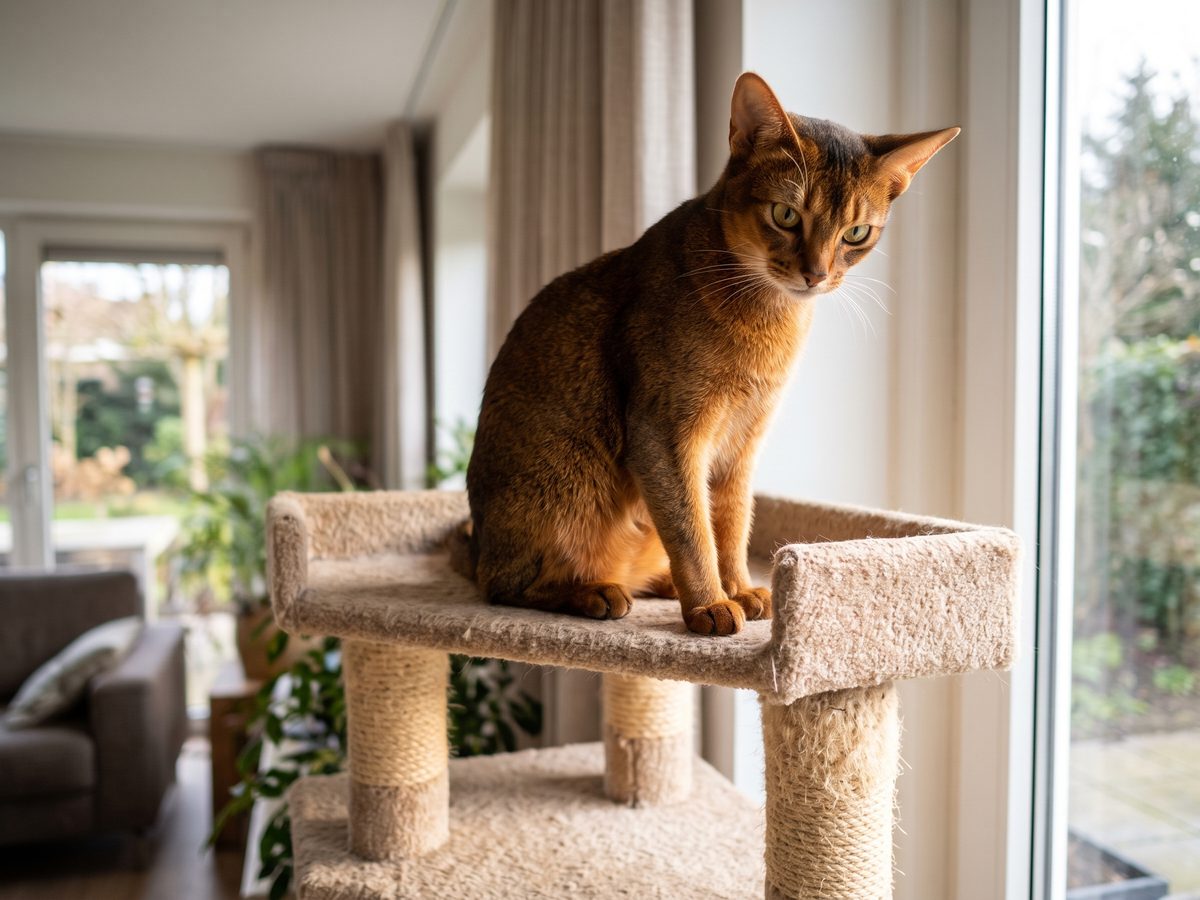
Athletic, social and rarely still: the snapshot below sets expectations.
| Coat | Energy | Height-seeking | Lap-cat tendency | Lifespan | Good with |
|---|---|---|---|---|---|
| Short, low-maintenance, minimal undercoat | High, near-constant | Strong, seeks the tallest available point | Low; affectionate but rarely settles in a lap | About 9–15 years | Active households with time for daily play |
The Drive to Get Up High, Specifically
Plenty of cats enjoy an elevated perch occasionally; an Abyssinian actively seeks the tallest reachable point in a room as a matter of course, treating height as territory worth surveying, not a passing curiosity. Without a tall, sturdy option built for the job, that drive redirects toward the refrigerator, a bookshelf, or a doorframe ledge, none of which were built with a climbing cat's grip or safety in mind.
Multiple elevated routes spread through a home, reachable without a single risky leap from furniture, satisfy this need far better than one cat tree tucked in a corner ever could.
Not a Lap Cat, and That's Not a Flaw
An Abyssinian's affection reads as constant company: following you from room to room, supervising chores and staying within sight, much more than a long, still stretch curled up in a lap. Expect the cuddle habits of a calmer breed and you may misread active devotion as distance. This site's indoor cat enrichment guide covers a five-pillar routine built for a temperament this driven, useful reading if you're weighing whether your household matches what an Abyssinian brings.
The Daily Activity This Breed Needs
A single toy left on the floor rarely holds an Abyssinian's interest for long. This breed does best with real daily structured play, rotating novelty, and enough climbing to burn off a naturally high engine. Left under-stimulated, an Abyssinian doesn't quietly nap through the gap; it tends to invent its own activity, and counters, dangling cords, and unattended objects often become the outlet instead.
Building in active sessions every day, instead of hoping a cat tree alone covers the need, keeps that energy pointed somewhere useful. A cat that has hunted, caught and eaten (a wand toy, then a meal) is a cat ready to nap.
A Naturally Social, Confident Temperament
Abyssinians tend toward real social confidence, extending to visitors, other cats, and dogs alike given a proper introduction, without the wariness some other breeds show toward anything unfamiliar. That sociability pairs naturally with the breed's activity level, since a curious, outgoing cat with somewhere to climb and something to investigate stays more content than one confined to a quiet, understimulating routine.
None of this replaces a careful, gradual introduction when a new pet joins the household. Confidence isn't the same as an instant welcome, and rushing that first meeting can undercut even a naturally outgoing cat's good start.
Shopping the Vertical: Shelves, Towers, and Outlets for Drive
A tall, multi-level cat tree with a stable, wide base gives an Abyssinian a legitimate alternative to the refrigerator or a bookshelf, and wall-mounted shelves add extra elevated routes without eating up floor space. A wand toy used in short, deliberate bursts each day does more for this breed's engine than any toy left sitting untouched on the floor, and a rotating set of puzzle feeders redirects that same problem-solving drive toward mealtime instead of counter-surfing.
A scratching post placed near a favorite window rounds out the setup with one more legitimate energy outlet.
Frequently Asked Questions
Whether a calmer household can handle this breed comes up more than any other question here.
Why does an Abyssinian want to be up high so much?
Surveying territory from an elevated point is a strong, well-documented instinct in this breed specifically, not general cat curiosity turned up slightly. A refrigerator top, a bookshelf, or a curtain rail all register as legitimate options to an Abyssinian left without a tall, sturdy alternative built for the job.
Is an Abyssinian a cuddly lap cat?
Not typically, and expecting one misreads the breed. An Abyssinian shows affection through following a person room to room and staying nearby during activity far more than through settling into a lap for long stretches, and treating that as coldness instead of a different style of affection sets an owner up for disappointment.
How much daily activity does an Abyssinian actually need?
More than many cats: real climbing opportunities plus active daily play sessions, not a single toy left on the floor. A bored, under-exercised Abyssinian tends to invent its own entertainment, and that entertainment often involves counters, cords, or anything left unattended and reachable.
Does an Abyssinian get along with other pets?
Generally well, given a proper introduction, since this breed's social confidence carries over to other animals nearly as strongly as it does to people. A slow, structured introduction still matters regardless of temperament, since a rushed first meeting can sour even a naturally social cat's first impression.
Is the Abyssinian's coat high-maintenance?
No. A short, close-lying coat with minimal undercoat sheds lightly and needs only an occasional brush to stay tidy. Coat care is the easy part of owning this breed; the activity and vertical-space needs are where the real commitment sits.
What's the single biggest misconception about this breed?
That an active, athletic temperament automatically comes packaged with a settled, affectionate lap-cat personality too. An Abyssinian offers plenty of affection on its own terms, but expecting a calm, sedentary companion from a breed built for movement and height is the mismatch that causes the most disappointment.
Is an Abyssinian a good first cat?
Workable for a first-time owner who is ready to build daily activity and real vertical space into the household from week one, less so for anyone hoping a first cat will be a low-effort, mostly-sleeping companion. The commitment here is activity, not complexity.
Related Reading
- Somali: the long-haired Abyssinian.
- Indoor cat enrichment: height and play for a busy cat.
- Cat trees and scratchers: sturdy climbing gear.
A normally busy, climbing Abyssinian that suddenly goes quiet, stops jumping, or avoids height altogether is showing a real change worth a veterinary visit, not a personality shift to wait out. Pain and illness can flatten even this breed's usual drive.