Why Do Cats Get the Zoomies at Night?
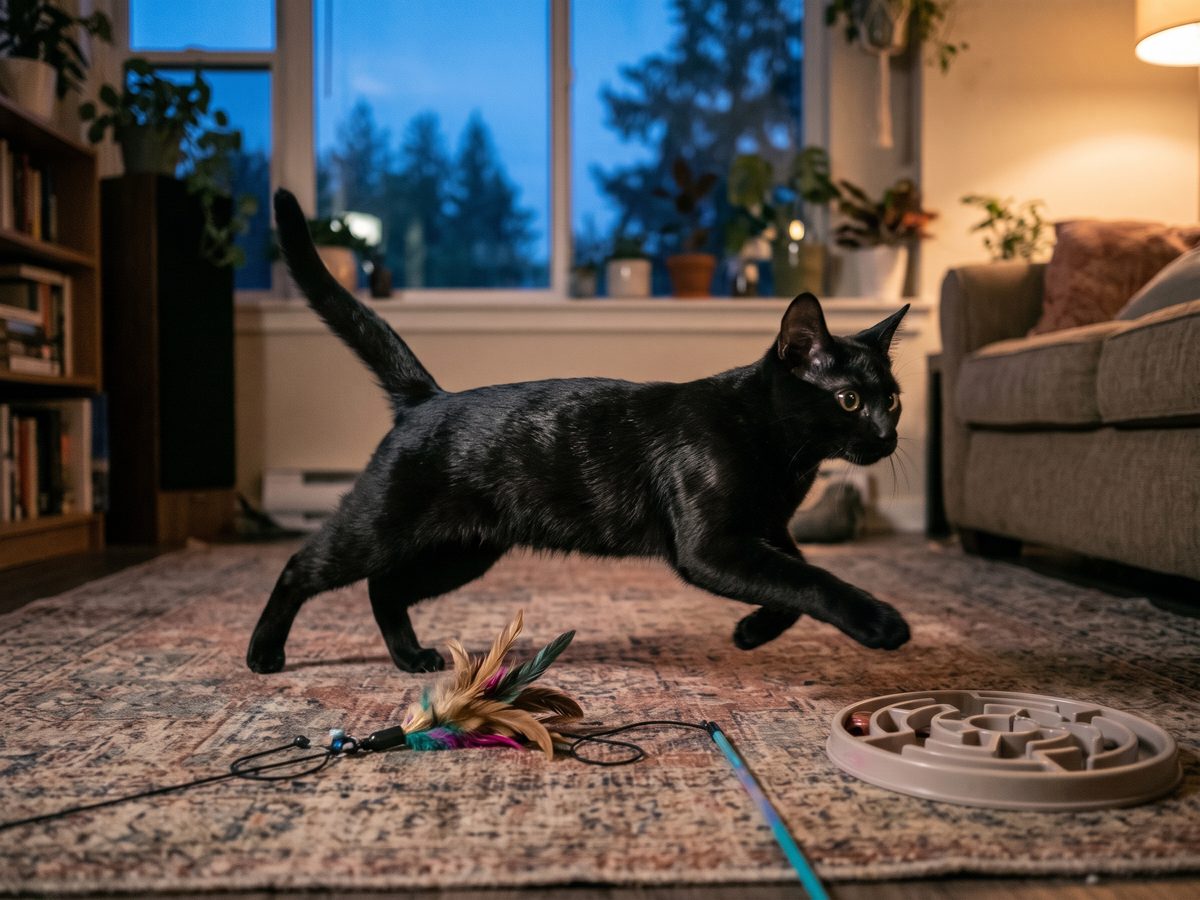
Most of the pattern responds to timing, not any single fix, and these are the pieces that matter most.
| Factor | Why it matters | What to try |
|---|---|---|
| Activity rhythm | Cats are naturally most active around dawn and dusk | Expect some burst of energy at these times instead of fighting it |
| Daytime stimulation | Unspent energy tends to surface later, often more intensely | Add a wand-play session earlier in the day |
| Evening play timing | Working through the hunt sequence before bed uses up the same energy that fuels zoomies | Run a session an hour or so before your own bedtime |
| Feeding timing | A meal after play mimics the hunt-then-eat pattern that naturally follows exertion | Feed a portion right after the evening session |
This Is Usually Just a Cat Being a Cat
Cats evolved as crepuscular hunters, meaning their bodies expect the most activity around dawn and dusk. A burst of sprinting, climbing or skidding around furniture at those hours lines up with that built-in rhythm; it doesn't signal distress. An indoor cat with no actual prey to chase still carries the same drive, and a quiet house at night, free of daytime distractions, often becomes the moment that energy finally surfaces.
None of this means you've done anything wrong. Most cats show some version of this pattern regardless of how much daytime enrichment they already get.
Shifting Play and Feeding to the Evening
One of the surest ways to shrink a night zoomies pattern is running the cat through the same hunt-catch-kill-eat sequence covered on this site's play and hunt sequence guide, timed for shortly before bed. A ten-minute wand session that ends in a real catch, followed by a portion of the evening meal, mimics the exertion-then-rest pattern a cat's body is built around and leaves considerably less spare energy for a 2 a.m. sprint.
This combination doesn't need to replace daytime play entirely. It simply adds a second, deliberately timed session where it does the most good.
Managing the House, Not the Cat
Trying to physically stop a cat mid-sprint tends to startle it and rarely shortens the episode, so managing the environment usually works better than managing the cat directly. Clearing breakables off open shelves along a cat's known sprint route, keeping bedroom doors closed if the noise disrupts sleep, and making sure no exterior door gets left cracked during an energetic dash all reduce the practical fallout without fighting the behavior itself. A cat allowed to run its course in a safe space typically settles within a few minutes on its own.
When the Pattern Isn't Just Energy
A pattern that shows up suddenly in a cat that never had it before, especially an older cat, deserves a vet visit, not an assumption of ordinary zoomies. Restlessness, pacing or crying overnight can be an age-related change in a senior cat, and the senior cat checklist covers the broader set of changes worth watching for from around age ten onward.
Real distress (yowling that sounds different from play, confusion, or a cat unable to settle at all) reads very differently from a happy, if noisy, sprint through the hallway.
Gear for an Evening Play-and-Feed Routine
A wand toy set aside just for the pre-bed session keeps that particular routine distinct from daytime play, so the cat learns to associate it with the wind-down-and-eat pattern specifically.
An automatic feeder with a scheduled late setting removes the guesswork from timing the after-play meal on nights when bedtime shifts, and it keeps the routine consistent even on evenings when the household runs later than planned. A few motorized or puzzle toys left accessible overnight give a cat something else to redirect leftover energy toward if a burst hits after the household has gone to sleep, without needing anyone to get out of bed and intervene.
Frequently Asked Questions
Whether zoomies mean something is missing during the day comes up before almost anything else.
Are night zoomies a sign that my cat isn't happy during the day?
Not by themselves. Plenty of well-exercised cats still get an evening burst of speed, since it lines up with a natural activity peak, not daytime boredom. That said, a cat getting little daytime stimulation often shows the pattern more intensely, so more play rarely hurts.
Should I ignore my cat during a zoomies episode?
Letting it run its course is usually the better call, provided the house is safe for a cat moving fast: nothing fragile within knocking distance and no doors left open to the outside. Trying to physically stop a cat mid-sprint tends to startle it more than it helps.
Do kittens get worse zoomies than adult cats?
Often, yes. A kitten's energy reserves and shorter attention span can produce more frequent, more intense bursts than a settled adult cat shows. The pattern typically eases somewhat as a kitten matures into adulthood, though it rarely disappears entirely.
Will feeding my cat right before bed stop the zoomies?
It helps many cats settle faster, since a full stomach follows naturally after a hunt in the sequence a cat's body expects. It won't eliminate every burst of energy, but pairing a late meal with an evening play session is the combination most owners find works best.
Is it normal for zoomies to include knocking things off shelves?
It's common enough, since a cat at full sprint isn't navigating with the same care it uses walking normally. Clearing breakable items from a cat's known sprint route matters more than trying to train the behavior away entirely.
My older cat suddenly started having zoomies for the first time. Is that a concern?
A sudden new pattern in a cat that never showed it before is worth mentioning to a veterinarian, particularly in a senior cat, since restlessness and altered sleep-wake patterns can sometimes point to a medical or age-related change, not a personality shift.
Can zoomies happen at times other than night?
Yes, some cats show the same burst of energy right after using the litter box, waking from a nap, or finishing a meal at any hour. Night and early morning are simply the most commonly reported times, tied to a cat's natural activity rhythm.
Related Reading
- Play and the hunt sequence: the evening session.
- Indoor cat enrichment: daytime activity.
- Microchip cat flaps: in by dark.
A lifelong pattern of evening energy bursts rarely needs a vet visit on its own. A brand-new pattern in a senior cat, or one paired with yowling, confusion, weight change or daytime lethargy, is different: that belongs in front of your vet, not managed with timing alone.