Senior Cat Checklist From Age 10
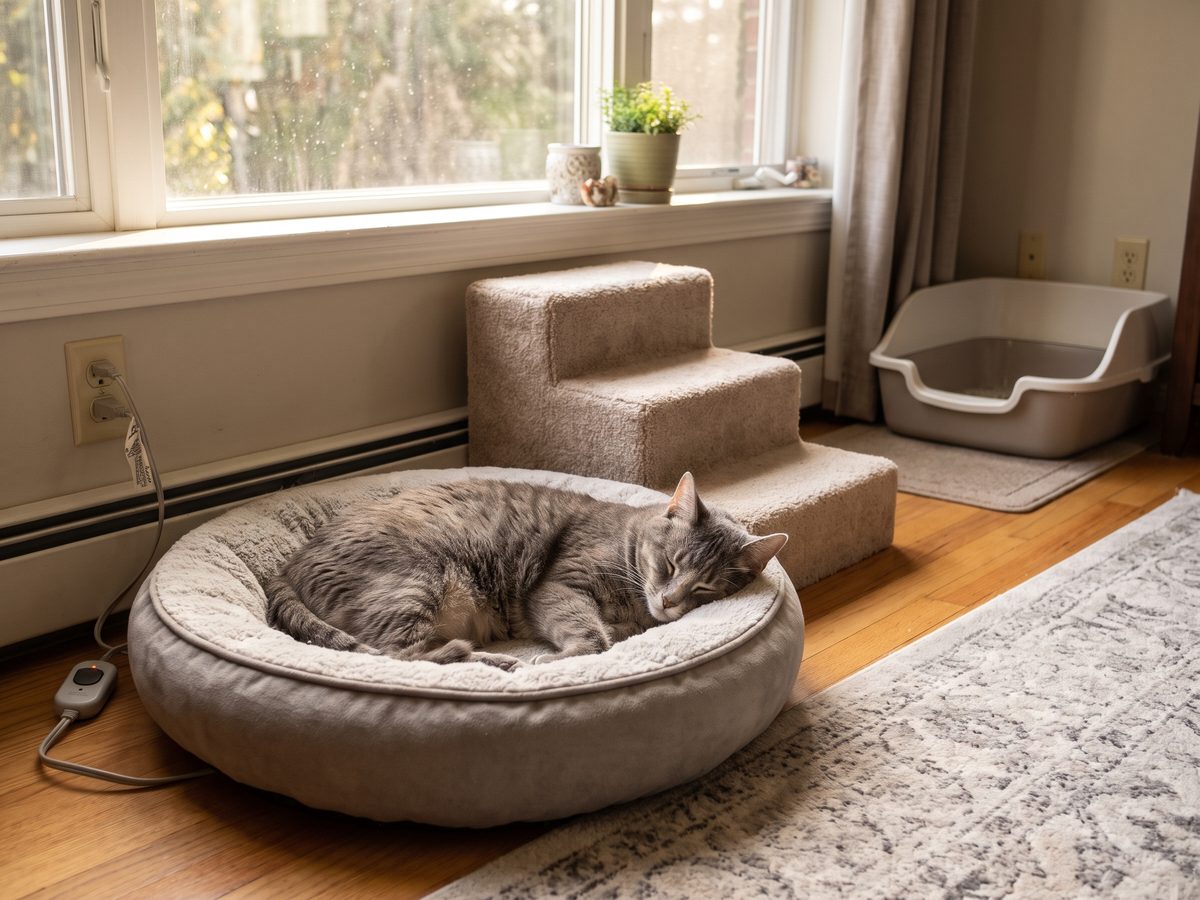
Work through this list gradually instead of in one sweep. Most senior cats settle into one change at a time better than several together.
- Book a senior wellness exam. Ask your vet about a twice-yearly schedule and whether bloodwork is due, even if nothing seems obviously wrong.
- Add warmth where your cat already rests. A heated or self-warming bed in a favorite spot helps a cat that holds its body heat less well with age.
- Lower the litter box entry. Swap a high-sided box for one with a cut-down entrance, or add a ramp, if stepping in looks effortful.
- Add ramps or steps to favorite heights. A cat that's stopped jumping onto a bed or windowsill may still want the view, just without the leap.
- Track appetite and weight monthly. A gradual change either direction, gain or loss, is worth a mention at the next visit, not dismissed as normal aging.
- Check the mouth for signs of dental trouble. Bad breath, drooling, or dropping food can point to dental pain worth having a vet look at.
Warmth Matters More Than It Used To
Older cats often seek out warm spots more deliberately than they did as younger adults, since aging bodies tend to hold heat less well and joints can feel stiffer in the cold. A heated pad or a self-warming bed placed in an already-favorite resting spot, not somewhere new, tends to get used immediately without any adjustment period.
This isn't purely about comfort: a warmer, more relaxed cat often moves more easily, which helps a stiff older cat. Keeping a senior cat's usual sleeping areas draft-free during colder months is a simple, low-cost habit that pays off in visible day-to-day comfort.
Litter Box Access for Stiffer Joints
A litter box with high sides, once no obstacle at all, can become a real barrier for a cat with sore joints or reduced mobility, sometimes leading to accidents just outside the box. Switching to a box with a cut-down entry point, or adding a low ramp up to the existing box, often helps.
Placement matters too: a senior cat may struggle with a litter box down a flight of stairs it once managed easily, so having an accessible box on every level of the home is worth considering. Any new or worsening reluctance around the litter box in an older cat still deserves a veterinary look, since pain and illness are common underlying causes.
Ramps, Steps, and Keeping the View
A cat that once leapt onto a windowsill, a bed, or a favorite shelf without a second thought may start hesitating, missing the jump, or avoiding the spot altogether as joints stiffen with age. Pet stairs or a ramp placed alongside the furniture restores access without asking a cat to jump at all, and most cats take to them quickly once the option exists.
This is worth setting up early in the senior years, instead of waiting for a fall to prompt the change. A cat that gives up favorite high perches without an alternative often becomes noticeably less active, so replacing the access, instead of accepting the loss, tends to support both mobility and mood.
Appetite and Weight: What Deserves a Vet Visit
Appetite and weight changes in a senior cat are worth tracking closely, because several health problems become more common with age and often show up first as a change in weight, appetite or thirst. Your vet may suggest blood and urine tests at senior check-ups for exactly this reason.
Weight loss (even with a good appetite), eating or drinking much more or less than usual, or vomiting are reasons to call your vet, not to switch to a tastier food first. Regular weigh-ins, whether on a home scale or noted at each vet visit, catch a slow drift in either direction long before it becomes obvious just by looking at your cat.
Comfort Upgrades for the Senior Years
A heated or self-warming bed placed in an already-favorite spot ranks among the easiest changes to make right away, and a low-entry litter box or a ramp addresses mobility around the house's most essential daily task.
Pet stairs beside a bed or a windowsill restore access to a favorite view without asking for a jump, and a set placed near a couch works just as well for furniture access during the day. An orthopedic bed with supportive foam is worth adding wherever joint stiffness seems to be part of the picture, since well-supported rest counts for just as much as warmth in an aging cat's comfort.
Frequently Asked Questions
Is age 10 the definitive point a cat becomes a senior?
Age 10 is a commonly used marker, though individual cats vary. A healthy cat may still act fairly young at that point, while another shows changes earlier. It's a reasonable prompt to start paying closer attention and asking your vet about a senior wellness schedule, not a hard cutoff.
How often should a senior cat see the vet?
Twice yearly is a common recommendation for a senior cat, compared with once yearly for a younger adult, since age-related conditions can progress faster than a once-a-year visit catches. Ask your veterinarian what schedule and bloodwork panel makes sense for your specific cat.
My senior cat seems stiff getting up. Is that just old age?
Stiffness is common with age, but it often means joint pain your vet can help with. Mention it at the next visit instead of assuming nothing can be done.
Should I switch to senior-formula food automatically at age 10?
Not automatically. Some senior cats do well on their current food for years longer, while others need a change in calories or texture. Base the decision on body condition, appetite and your vet's advice, not age alone.
Is weight loss in an older cat ever a good sign?
Rarely. Weight loss you didn't plan for in a senior cat is a reason to see your vet promptly, not a welcome side effect of aging.
Do senior cats need a heated bed even indoors?
Many benefit from one, since older cats often hold onto body heat less well than they used to and seek out warm spots more deliberately as a result. A heated or self-warming bed placed in a favorite resting spot is a low-cost comfort upgrade worth trying.
What signals that a cat needs a ramp or steps?
Watch for hesitation before a jump a cat used to take without pause, or for favorite perches being abandoned altogether. Either sign suggests the height has become uncomfortable, and a ramp or a set of pet steps restores access without forcing a jump.
Do older cats need dental checks?
Yes. Sore teeth can make eating painful enough to affect appetite and weight, and cats rarely show it. Ask for a dental check at every senior visit.
Related Reading
- Cat health basics: preventive care at any age.
- Litter boxes: low-entry options.
- The cat care kit: steps, beds and a scale.
This checklist offers general comfort and monitoring ideas; it doesn't stand in for veterinary care. Weight loss, a change in appetite, new stiffness, or any behavior change in a senior cat is worth a veterinary conversation, and a cat that stops eating entirely, seems to be in pain, or shows sudden severe symptoms needs prompt attention from your vet or an emergency clinic. Don't wait and hope it passes.