Microchip Cat Flaps: How They Work and Which to Choose
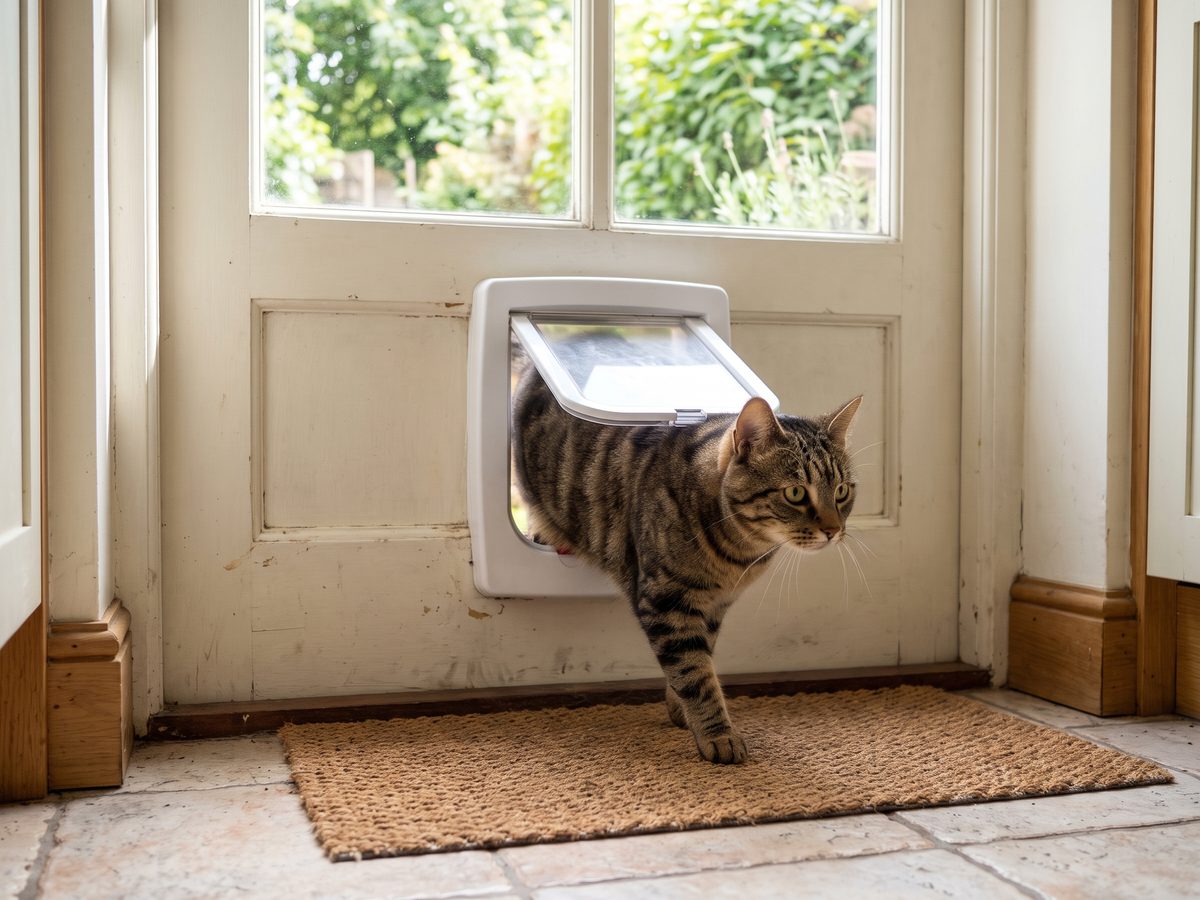
How a Microchip Cat Flap Works
Your cat's microchip is a tiny passive tag under the skin with a unique number. A microchip flap has a reader in its tunnel: when a registered cat puts its head in, the flap unlocks; when anyone else pushes, it stays shut. You "teach" the flap each cat by putting it in learning mode and letting the cat put its head through.
Most models read the chip types used for pets in many countries, but not every flap reads every older or overseas chip. If your cat was chipped abroad or many years ago, check the maker's compatibility list or ask your vet to scan the chip and tell you the type. Cats without a chip can use a small RFID tag on a breakaway collar with many flaps, though a chip is better: collars can come off.
Why Owners Choose One
The big reason is keeping other animals out. A neighbor's cat strolling in to eat your cat's food or spray in the kitchen is a common source of stress for resident cats, and a plain flap can't stop it. In some regions, raccoons, foxes or other wildlife can push through an ordinary flap too.
The other reason is control. A curfew mode locks the flap from dusk to dawn (or whenever you set) so cats can come in but not go out, which supports the in-by-dark habit that keeps cats and wildlife safer. Our indoor or outdoor guide explains why night time matters.
Choosing the Right Flap
Measure your largest cat across the shoulders and from the floor to its belly. Standard flaps suit most cats; Maine Coons and other big breeds often need a large-size flap. A flap that's too small makes a cat squeeze, and many simply refuse to use it.
Look for these features: memory for the number of cats you have, a curfew timer, in-only and locked modes, a low-battery warning, and a draft-proof seal for cold or windy places. App-connected flaps can tell you who is in or out and let you change settings from your phone; they cost more and need a hub and Wi-Fi.
Cat Flaps and Fitting Kit
Each button opens a search in your own country's Amazon store. As an Amazon Associate we earn from qualifying purchases.
Choose the flap size for your largest cat, and add a tunnel extension if your door or wall is thicker than the flap's built-in tunnel. Collar tags help cats without a chip. Rechargeable batteries cut the running cost of a flap that's used all day.
Fitting: Doors, Walls and Glass
Most flaps fit wooden, plastic (uPVC) or composite doors with a jigsaw and a template. Fitting through a wall needs a tunnel and a hole cut through brick, block or timber framing, which is a job for a builder in many homes. Glass doors and windows need a glazier to make a new pane with a hole cut before toughening, because you can't cut toughened glass afterwards.
Height matters: the bottom of the tunnel usually goes at about your cat's belly height, measured from the floor on each side. Rented homes usually need the landlord's permission before you cut a hole in a door.
Teaching Your Cat to Use It
Many cats walk through on day one; others need help. Start with the flap propped or taped open so your cat can see through, and use treats or a favorite person on the other side. Then lower it partly, then fully, rewarding each step. Some cats are put off by the click of the lock; letting them hear it a few times while eating a treat helps.
If a cat suddenly stops using the flap, check the batteries, the cat's registration and whether another animal has started waiting outside it.
Frequently Asked Questions
Quick answers before you get the jigsaw out.
Will a microchip cat flap read any microchip?
Most read the chip types commonly used in pets, but not every flap reads every older or overseas chip. Check the maker's compatibility list, or ask your vet to scan your cat's chip and tell you the type.
Can a microchip cat flap keep other cats out?
Yes, that's their main job. The flap unlocks only for cats you've registered, so neighbor cats and most wildlife can't push their way in.
My cat isn't microchipped. Can it still use one?
Many flaps also work with an RFID tag on a breakaway collar. A microchip is better, because collars can come off, and in England it's a legal requirement for owned cats.
Can I set it to keep my cat in at night?
Most microchip flaps have a curfew mode that locks the way out at set times while still letting cats come in. Some app-connected flaps let you change the times from your phone.
Can a cat flap go in a glass door?
Yes, but the glass usually has to be replaced with a new pane made with a hole already in it, because toughened glass can't be cut afterwards. A glazier can do this.
Why has my cat stopped using the flap?
Check the batteries and the registration first, then whether another animal is waiting outside or the cat has had a scare at the flap. Prop it open for a few days with treats to rebuild confidence.
Related Reading
- Indoor or outdoor?: deciding how much freedom suits your cat.
- Carriers, travel and ID: collars, tags and microchip details.
- Catios and window boxes: outdoor time without the roaming.
Ask your vet to scan your cat's microchip at its next check-up to make sure it still reads and that the database holds your current details.