Manx Cats: Personality, Care and What the Missing Tail Means
Who a Manx Suits
Manx cats suit people who want an interactive, playful cat that likes being involved. Many follow their owners from room to room, learn tricks and play fetch, and they tend to be good-natured with families.
Anyone choosing a Manx should go in knowing the welfare questions below and be ready to watch for problems in the first months. Breed traits are tendencies; every cat is an individual.
Tails, From Rumpy to Longy
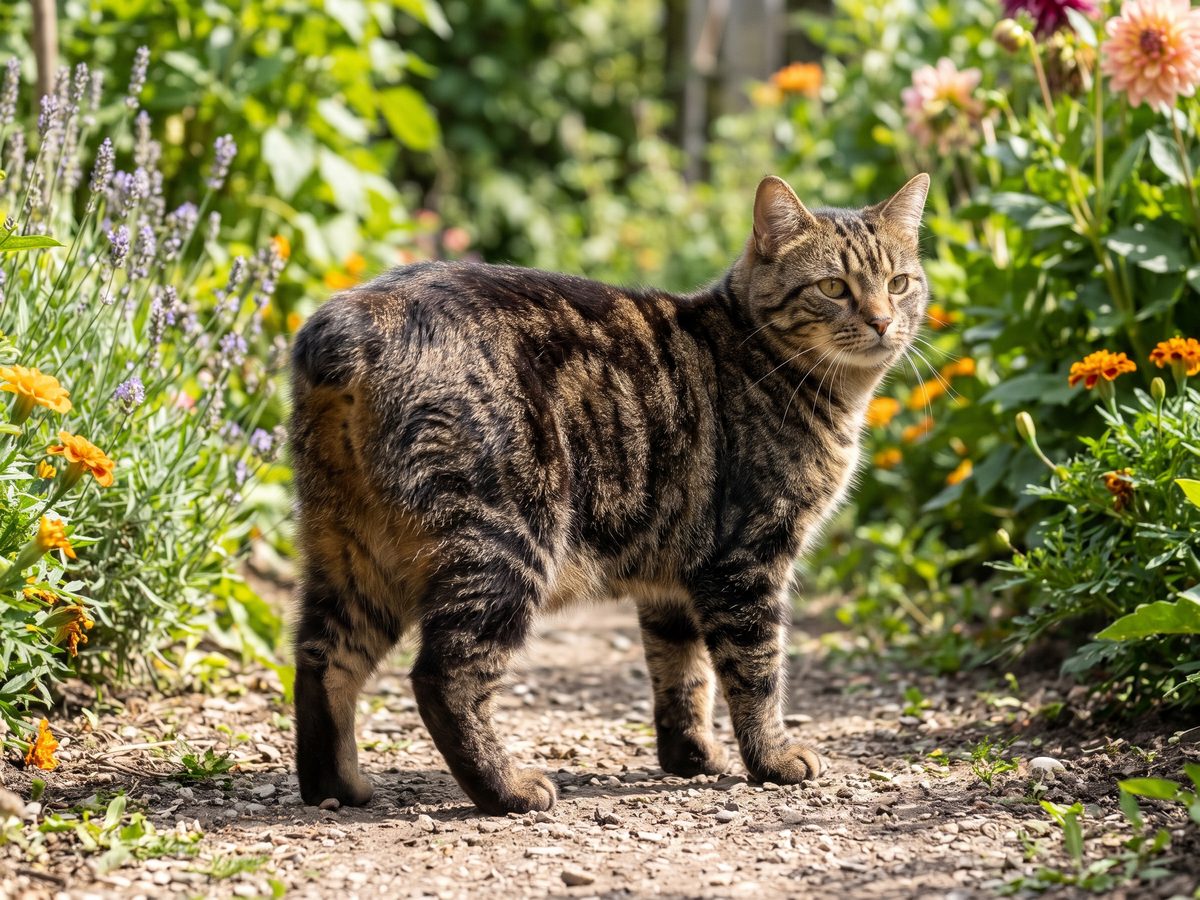
The Manx tail comes from a dominant gene, and tail length varies even within a litter: "rumpies" have no tail, "risers" a small bump, "stumpies" a short stump, and "longies" a tail of half to full length. Tail type is fixed at birth. Long-haired Manx are called Cymrics by some registries.
Personality and Play
Manx are typically sociable, affectionate and active, with a strong hunting instinct. Their powerful back legs make them good jumpers. Daily play with toys they can chase and catch keeps them busy; see our play guide.
Coat, Grooming and Shedding
The thick double coat needs a weekly brush, and more during seasonal sheds; long-haired Cymrics need combing two or three times a week to prevent mats. Our grooming guide covers the tools.
Gear for a Manx
Each button opens a search in your own country's Amazon store. As an Amazon Associate we earn from qualifying purchases.
A sturdy cat tree suits a strong jumper, and wand toys and toy mice give a keen hunter something to catch. A slicker brush handles the double coat. A low-entry litter box is worth considering in the first months while you watch for any problems.
Health: What to Discuss With Your Vet
Ask your vet to check your kitten's back, back legs, tail area and toileting at the first visit, and tell them straight away if you notice an unusual hopping walk, weakness in the back legs, or problems with peeing or pooping. Keep up the preventive care in our cat health basics.
Finding a Kitten or an Adult Cat
Choose an experienced, registered breeder who answers your welfare questions openly. Docking the tails of longy kittens for appearance is not something a good breeder does; rules differ by country, and it is illegal in many, including much of Europe. Adult Manx in rescues are another option, with the advantage that any spinal problems are usually already known.
Frequently Asked Questions
What to ask before falling for a tailless cat.
Are all Manx cats tailless?
No. Tail length varies from none to almost full length, even within one litter.
What is Manx syndrome?
A condition where the tailless gene shortens the spine too much, damaging the spinal cord and nerves. It can affect walking, the bowel and the bladder, and is most common in tailless rumpies.
How can I reduce the risk of a Manx with health problems?
Choose a breeder who never mates two tailless cats, can talk openly about Manx syndrome, and keeps kittens until they are a few months old. Have your vet check your kitten early.
Are Manx cats good pets?
Healthy Manx are often playful, sociable and dog-like companions that suit active families.
What is a Cymric?
A long-haired Manx. Some registries treat it as a variety of the Manx and others as a separate breed.
Related Reading
- Scottish Fold: another breed where a look comes with a welfare cost.
- Munchkin: what short legs mean for a cat.
- Cat health basics: preventive care for any cat.
Breed traits are tendencies, not promises. Book a check-up soon after your Manx comes home, and call your vet promptly about any change in walking or toileting.