Scottish Fold Cats: What the Folded Ear Means
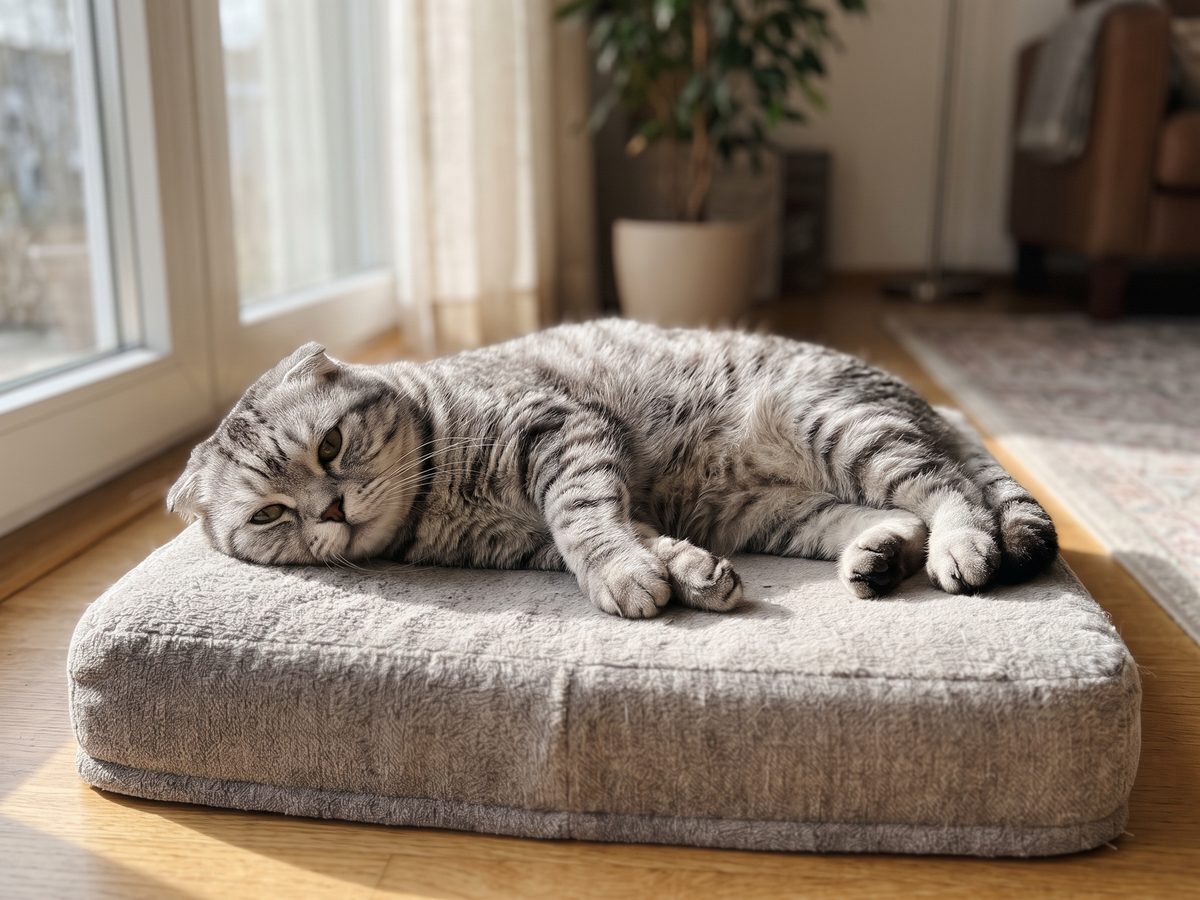
One column in this table carries more weight than the rest. Read the whole thing before falling for the ears.
| Ear type | Coat | Energy | Joint/cartilage note | Lifespan | Good with |
|---|---|---|---|---|---|
| Folded (dominant gene) or straight, same litter | Short or long, either coat type occurs | Moderate, generally easygoing | Every folded-ear cat is affected to some degree | Varies; joint comfort shapes quality of life | Calm, attentive households |
What Causes the Fold
The characteristic folded ear comes from a single dominant gene that affects how cartilage develops throughout a cat's body, not a trait isolated to the ear alone. That same gene causes both the look and the cartilage effects covered in the next section. They are not two separate stories, but one.
Straight-eared kittens in the same litter don't carry the fold gene. Cats with two copies of the gene (from fold-to-fold pairings) are usually affected more severely, but cats with one copy are affected too.
Osteochondrodysplasia, Named Plainly
Osteochondrodysplasia is the name for the abnormal cartilage development this gene causes, and it affects the joints, tail and limbs as well as the ears. International Cat Care, UFAW and the RSPCA all say that every cat with folded ears is affected, to differing degrees, and that it can cause painful joint disease. It often isn't obvious in a young kitten.
International Cat Care's view is that breeding cats with this mutation is unethical, and the UK's main registry, the GCCF, doesn't register the breed. This page names the condition because the fold and the joint effects are the same biology, not a coincidence worth glossing over.
How This Should Factor Into the Decision
If the folded ears are the draw, the kindest choice is a different look: a straight-eared cat, or another breed with the calm temperament you're after. Buying a folded-ear kitten creates demand for more of them.
Our companions we do not recommend guide covers other cases where a trait's appeal and its welfare cost pull in different directions, and this breed belongs in that same conversation. The Munchkin guide applies the same standard to a different trait, short legs tied to a skeletal condition, and is worth reading for anyone weighing a distinctive look against a real physical cost.
If You Already Have One
None of this is a reason for guilt if a Scottish Fold is already part of the household. It's simply the information a good ongoing care plan should be built around from here forward. A vet relationship focused on regular joint checks, instead of waiting for visible discomfort, gives the best read on how a specific cat's cartilage is holding up over time.
Keeping the cat at a healthy weight matters even more for this breed, since extra pounds add load to joints that are already working harder, and low-effort access to favorite resting spots beats requiring repeated jumps onto tall furniture. Cats hide pain well, so a reluctance to jump, an odd gait, a stiff tail or holding a leg up isn't something to wait out. Our when to call the vet page helps you judge how soon.
Comfort-Focused Gear for Fold Joints
A low-entry litter box removes an unnecessary daily jump for a cat whose joints may already carry extra load, and a small ramp or a short flight of steps up to a favorite couch or bed spares the impact a hard landing would otherwise put through those same joints.
An orthopedic bed with supportive foam suits a Scottish Fold at any age better than a thin cushion does, and a slow-feed bowl paired with consistent portion control helps manage the weight that bears so directly on this breed's ongoing joint comfort. None of this gear replaces a vet's hands-on read of how a specific cat's joints are holding up over time.
Frequently Asked Questions
Most questions here come down to what the fold means for the cat, and what to do about it.
What causes a Scottish Fold's ears to fold over?
A dominant gene that affects cartilage development throughout the body, not only in the ear. The same gene causes the cartilage and joint effects covered on this page; the two aren't separate issues.
Is the cartilage condition the same thing as arthritis?
Related but not identical. Osteochondrodysplasia affects how cartilage and bone develop, particularly around the joints, tail and limbs, and that can lead to painful joint changes over time. A vet or veterinary imaging is how this gets identified and monitored, not something visible from the outside.
Do all Scottish Folds have joint problems, or just some?
Welfare groups including International Cat Care, UFAW and the RSPCA say every folded-ear cat is affected, though severity varies a lot from cat to cat. Cats with two copies of the gene are usually affected worst.
What should an owner who already has a Scottish Fold do?
Build a relationship with a vet who monitors joint comfort proactively, keep the cat at a healthy weight since extra weight adds load to affected joints, and provide low-effort access to favorite resting spots instead of requiring jumps. None of this is a reason for guilt; it's simply what good ongoing care for this specific cat looks like.
Is it wrong to want a Scottish Fold because of how it looks?
Finding the look appealing isn't the problem this page raises. Going in without knowing what that look is connected to is. Making an informed choice, including seriously considering a straight-eared littermate or another breed entirely, respects the animal as much as it respects the appeal.
Are straight-eared kittens from Scottish Fold litters healthier?
Straight-eared kittens don't carry the fold gene, so they aren't affected by this condition. They can still have the usual health issues of any cat, so a vet check after you bring one home is a good idea.
Why does this guide take a firmer stance than most breed pages?
Because the trait that defines this breed's look is directly tied to a cartilage condition, which makes plain information more useful here than a purely aesthetic breed overview would be. The goal is an informed choice, not a discouraged one.
Related Reading
- Munchkin: short legs and welfare.
- Manx: the tailless gene.
- Senior cat checklist: low-effort access ideas.
This page explains a breed-wide condition; it can't tell you how your own cat is doing. A Scottish Fold that stops jumping, holds a leg oddly or seems reluctant to move needs a vet exam, not a shrug about "a calm cat", since discomfort can show quietly.