Munchkin Cats: A Clear Look at the Short Legs
One row here carries more weight than a cute photo ever could. Read the whole table before deciding.
| Leg length | Cause | Mobility note | Energy | Lifespan | Good with |
|---|---|---|---|---|---|
| Short, dominant-gene trait; standard-legged littermates also occur | Chondrodysplasia affecting the long limb bones | Agile but naturally limited jump height; arthritis-awareness applies | Playful, moderate to high | About 12–15 years | Households ready for comfort-focused furniture choices |
Chondrodysplasia, Named Plainly
The Munchkin's defining trait comes from a dominant gene that causes chondrodysplasia, a disruption in how cartilage converts to bone during growth that specifically shortens the long bones of the limbs. The shortened legs are not a separate feature sitting alongside the breed's temperament. They are a direct physical result of the same gene that gives the breed its name and its look. Some cat registries, including the UK's GCCF, don't recognize the breed for this reason.
Jumping, Mobility, and the Arthritis Question
Shorter limb bones change the mechanics of how a cat's weight and impact travel through its spine and joints, particularly during the kind of jumping and landing an active house cat repeats many times over an ordinary day. That altered mechanical load can push some individuals toward arthritis-type joint wear as the years pass, though severity swings widely from cat to cat, and plenty of Munchkins stay active and comfortable their whole lives without ever showing a problem.
A veterinary exam paired with imaging tracks how a specific cat's joints are actually faring over time; a young cat's energy level on any given day says almost nothing about what's coming later.
The Real Choice: It's the Cat, Not the Legs
Munchkin litters commonly include standard-legged kittens alongside short-legged ones, and a standard-legged littermate carries the exact same playful, people-oriented personality that draws most people to this breed in the first place, minus the mechanical trade-off. Taking that littermate seriously, or looking at an entirely different breed, doesn't cost anything if the temperament was the actual draw all along. The legs were never a requirement for getting it.
Our Scottish Fold guide makes the same case for a different breed carrying its own named skeletal cost, worth a read for anyone sorting out how much a look should count against a body's mechanics.
If You Already Have One: Comfort-First Care
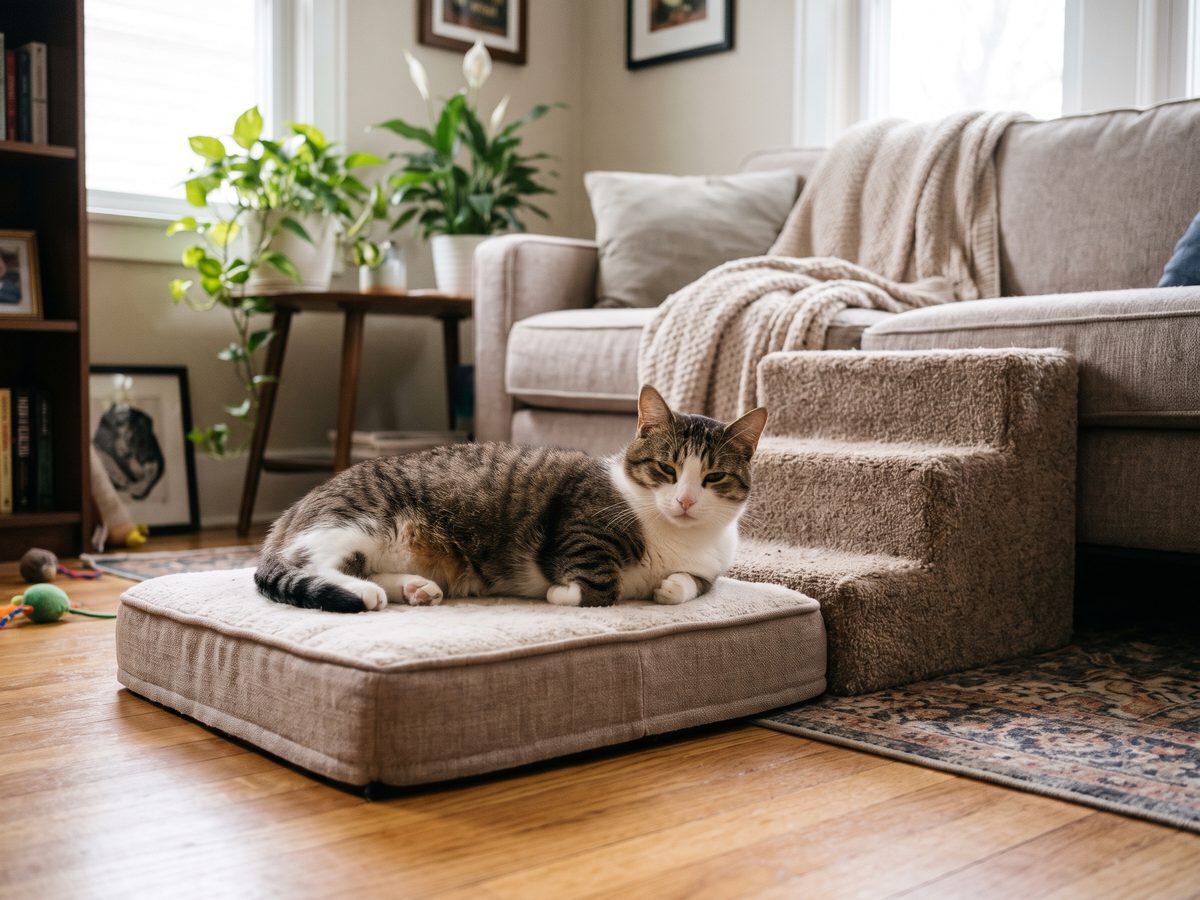
A Munchkin already sharing the household doesn't call for regret over any of the above. It calls for building the daily setup around what this particular body needs. Swap in a low-entry litter box, add ramps or a short run of steps to reach a favorite windowsill, and pick a cat tree with platforms spaced closer together than a standard-legged cat's tower would use, all of which cut down on the hard landings that accumulate strain year after year.
Furniture built with these lower, more gradual levels lives on this site's cat trees & scratchers guide, and keeping this breed lean counts double, since carrying extra pounds pushes even harder on limbs that are already at a mechanical disadvantage.
Low-Rise Living: Pet Stairs, Low Platforms, and Easy-Entry Boxes
Swapping in a low-entry litter box removes a daily jump that joints at a mechanical disadvantage don't need, and a short run of pet stairs to a favorite resting spot takes the impact out of a leap this body wasn't built to absorb over and over.
A cat tree spaced with closer, lower platforms fits this breed's reach far better than a tower sized for a standard-legged climber, and portioned meals through a slow-feed bowl keep extra pounds from stacking more pressure onto limbs already carrying more than their share. A vet's own hands-on check is still the real measure of how those joints are managing.
Frequently Asked Questions
Most people land here wanting to know exactly what chondrodysplasia does and whether it should change their decision.
What causes a Munchkin's legs to be short?
A dominant gene that causes chondrodysplasia, a form of abnormal cartilage and bone growth that shortens the long bones of the legs. Every short-legged Munchkin carries it; it isn't a matter of degree you can breed away while keeping the look.
Is chondrodysplasia painful for a Munchkin?
Not automatically, but the shortened limb structure changes how weight and impact travel through the spine and joints during jumping and landing, which can contribute to arthritis-like changes over time in some individuals. A vet exam and imaging, not a glance at a healthy-looking kitten, is how any developing joint issue actually gets identified.
Can a Munchkin jump and climb like a standard-legged cat?
To a real degree, yes. Many Munchkins are agile and willing climbers despite the shorter legs, though height and distance are naturally more limited than a standard-legged cat manages. Providing low, easy-access steps to favorite furniture reduces the repeated hard landings that add strain over years of jumping.
Why does breeding a Munchkin to another Munchkin matter?
Two copies of the short-leg gene do not survive to birth, so breeders pair a Munchkin with a standard-legged cat, never two Munchkins together. Ask any breeder how they plan their pairings.
Is it shallow to want a Munchkin just because of how it looks?
Wanting a cat for its looks isn't a problem in itself. Buying one without knowing what those looks come attached to is what this page pushes back on. A standard-legged littermate, or a different breed altogether, still hands over the same playful personality most Munchkin fans are chasing, and that option deserves real consideration before the leg length settles the decision.
What should a household that already has a Munchkin focus on?
Low-entry furniture and litter boxes that cut out unnecessary jumps, keeping the cat lean so joints already at a mechanical disadvantage aren't carrying extra pounds too, and a vet who checks for joint discomfort on a schedule instead of waiting for a visible limp to show up. Setting the household up this way isn't an apology for the breed. It's just what serves this particular body well.
Why does this page take such a direct stance on a breed some sites present as just cute?
Because the feature that gives this breed its whole silhouette traces straight back to a skeletal condition instead of some unrelated quirk, and describing it as merely adorable skips over facts a prospective owner ought to have before signing on. Stating it plainly is about informing that decision, not talking anyone out of it.
Related Reading
- Scottish Fold: another look with a welfare cost.
- Manx: what the missing tail means.
- Senior cat checklist: ramps and easy access.
This page explains a trait that runs through the whole breed; it says nothing about any one cat's health. A Munchkin that starts skipping jumps, walks stiffly or stops climbing has earned a vet visit. Don't chalk it up to a mellow personality: cats hide discomfort well.