Can You Harness Train a Cat?
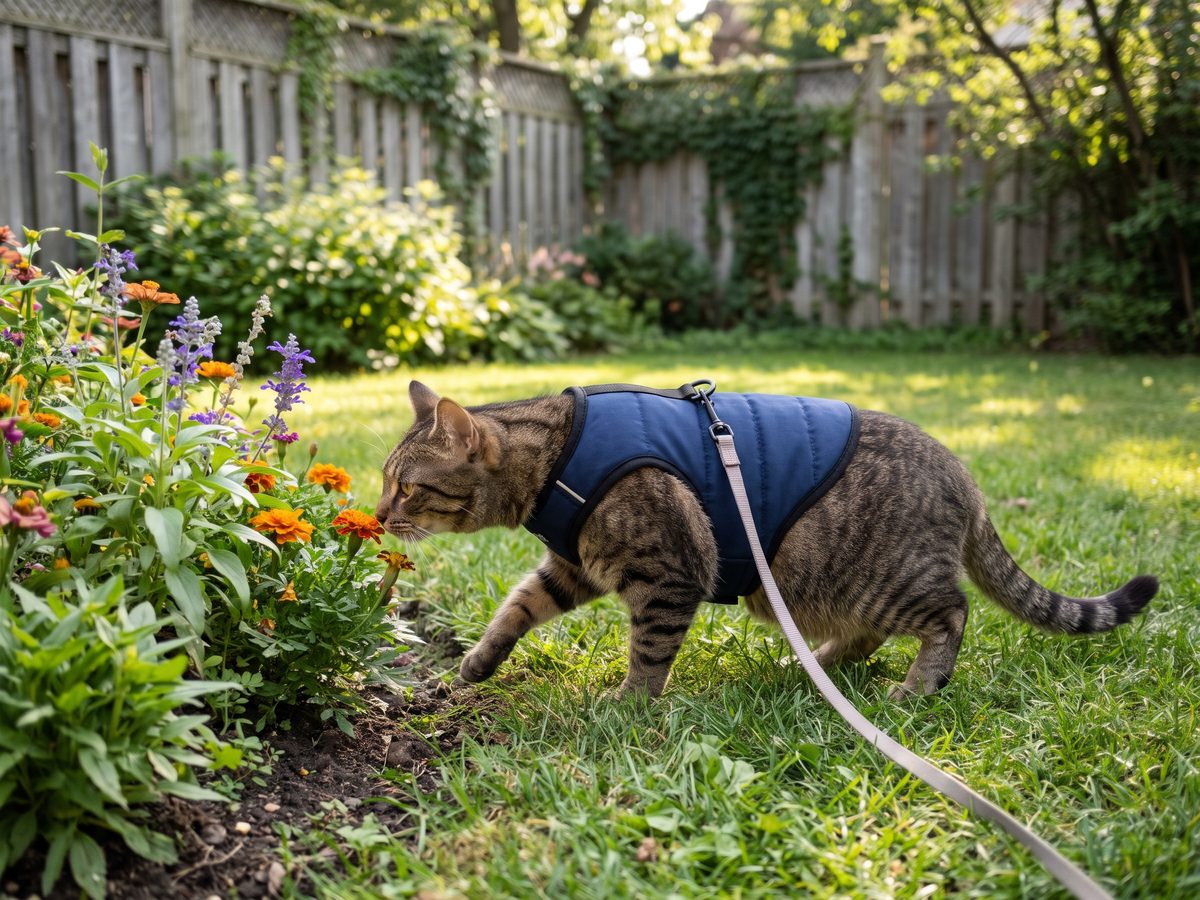
A cat should find each step below easy before advancing to the next one; struggling at any point means going back a step instead of pushing ahead.
- Days one and two: leave the unfastened harness near food or a favorite resting spot so the cat can sniff and investigate it without any pressure to interact further.
- Days three and four: drape the open harness briefly over the cat's back during a calm moment, paired with a treat, then remove it right away.
- Days five and six: fasten the harness loosely, only briefly and indoors, rewarding calm behavior and taking it back off before any struggling starts.
- Days seven through nine: extend fastened time gradually to five or ten minutes, letting the cat move around the house normally while wearing it.
- Days ten and eleven: attach a lightweight leash indoors without holding it, letting the cat drag it briefly under supervision to get used to the added weight and drag.
- Day twelve onward: hold the leash loosely indoors during short sessions before ever stepping outside, keeping tension minimal and following the cat's lead instead of guiding it.
- First outdoor session: choose a quiet yard, garden or enclosed patio, not a busy street, and let the cat set the pace entirely for a short first visit.
Realistic Expectations Before Starting
Not every cat accepts a harness, and individual temperament drives that outcome far more than anything an owner is doing wrong. Some cats settle within the first week of gentle practice, others take considerably longer, and a smaller share never stop flopping, freezing, or trying to wriggle free no matter how patient the approach. Going in with the expectation that this might not work for a particular cat prevents the frustration that comes from treating a slow or unsuccessful attempt as a personal failure.
A cat that never accepts a harness still has other routes to enrichment and safe outdoor access.
An Escape-Proof Fit Matters More Than the Style
A harness that's even slightly too loose gives a startled cat room to back out of it entirely, often at exactly the moment a leash and a fitted harness matter most, since a sudden noise or a passing dog can trigger a full-body twist that a loose harness simply can't hold through. Getting the chest and neck measurements right before buying, and rechecking that fit as a young cat grows or its winter coat comes in, heads off the way most harness outings go sideways.
Our harness-measuring guide covers taking those measurements accurately and checking a snug-but-comfortable fit once the harness is on, before any outdoor session is attempted.
Yard or Garden First, Not the Sidewalk
The first outdoor session belongs in a quiet, enclosed yard, garden or patio, not a street with traffic, other animals, and unfamiliar noise all competing for a cat's attention at once. A cat's response to the outside world in a harness for the first time is hard to predict, and a contained space limits how far a sudden bolt or freeze can go while everyone adjusts. Only once a cat moves comfortably and confidently in that low-stress setting does it make sense to consider a slightly busier walk, and plenty of cats stay perfectly happy sticking with yard or garden sessions for good.
Gear for a Gradual Harness Introduction
An H-style or vest-style cat harness, sized using the measuring guide's chest and neck steps, gives the desensitization protocol above the best starting odds, since a poor early fit can sour the whole process before it gets going.
A lightweight cat-specific leash pairs with it once the indoor leash stage begins, and small, high-value training treats make every session in the schedule above easier to reward well. A soft carrier or bag for the trip back inside also earns a spot on the shopping list, since a startled cat mid-session sometimes needs somewhere secure to be scooped into. None of this substitutes for the days-based pacing above; the right gear just removes avoidable friction along the way.
Frequently Asked Questions
Flopping over and picking the right harness style top the list of questions here.
Why does my cat flop over and refuse to move in a harness?
Flopping and freezing is an extremely common first reaction to the unfamiliar sensation of pressure across the body, not a sign the harness is causing pain. Most cats walk normally once they've had time indoors to get used to the feeling, though a small number never move past it.
Which harness style is easiest for a cat to accept?
An H-style or vest-style harness spreads pressure over a wider band of the body instead of squeezing it into one thin strap, and most cats find that spread-out fit noticeably easier to accept. A step-in design also avoids pulling anything over the head, which some cats resist strongly.
What tells me a harness is fitted correctly?
A snug harness should allow two fingers to slip comfortably underneath at the chest and neck, with nothing loose enough that a startled cat could wriggle its way back out. This site's harness-measuring guide covers taking accurate chest and neck measurements before buying.
Is it safe to let a harnessed cat explore off leash outdoors?
No. A harness and leash cover supervised, controlled outdoor time, and they don't stand in for an enclosed space like a catio. Letting a harnessed cat roam off leash removes the entire safety purpose of the harness in the first place.
What if my cat never accepts the harness, even after weeks of practice?
Some cats never settle into a harness no matter how gradual the process, and that's a legitimate outcome, not a training failure. A catio or window box gives an alternative route to outdoor access that doesn't depend on harness tolerance at all.
Should kittens start harness training earlier than adult cats?
Kittens often accept new sensations more readily than a set-in-their-ways adult, so starting young can make the process faster, though the same gradual days-based schedule still applies. An adult cat can still learn to tolerate a harness; it typically just takes longer.
Do cats need a different leash than dogs use?
A lightweight leash designed for a cat's harness attachment point works better than a standard dog leash, which is often heavier than necessary and can pull awkwardly on a cat-specific harness. Length matters too: a shorter leash gives more control during early outdoor sessions.
Related Reading
- Indoor or outdoor?: safer outdoor options.
- Clicker training: make each step easier.
- Catios and window boxes: outdoor time without a leash.
A cat that limps, favors a leg, or seems reluctant to move normally after wearing a harness needs a vet check, not an assumption that it simply dislikes the sensation. Panic that includes prolonged distress, drooling, or attempts to bite or scratch its way free means stopping the process there and reconsidering whether a harness suits that particular cat at all.