Can You Give an Indoor Cat Safe Outdoor Time?
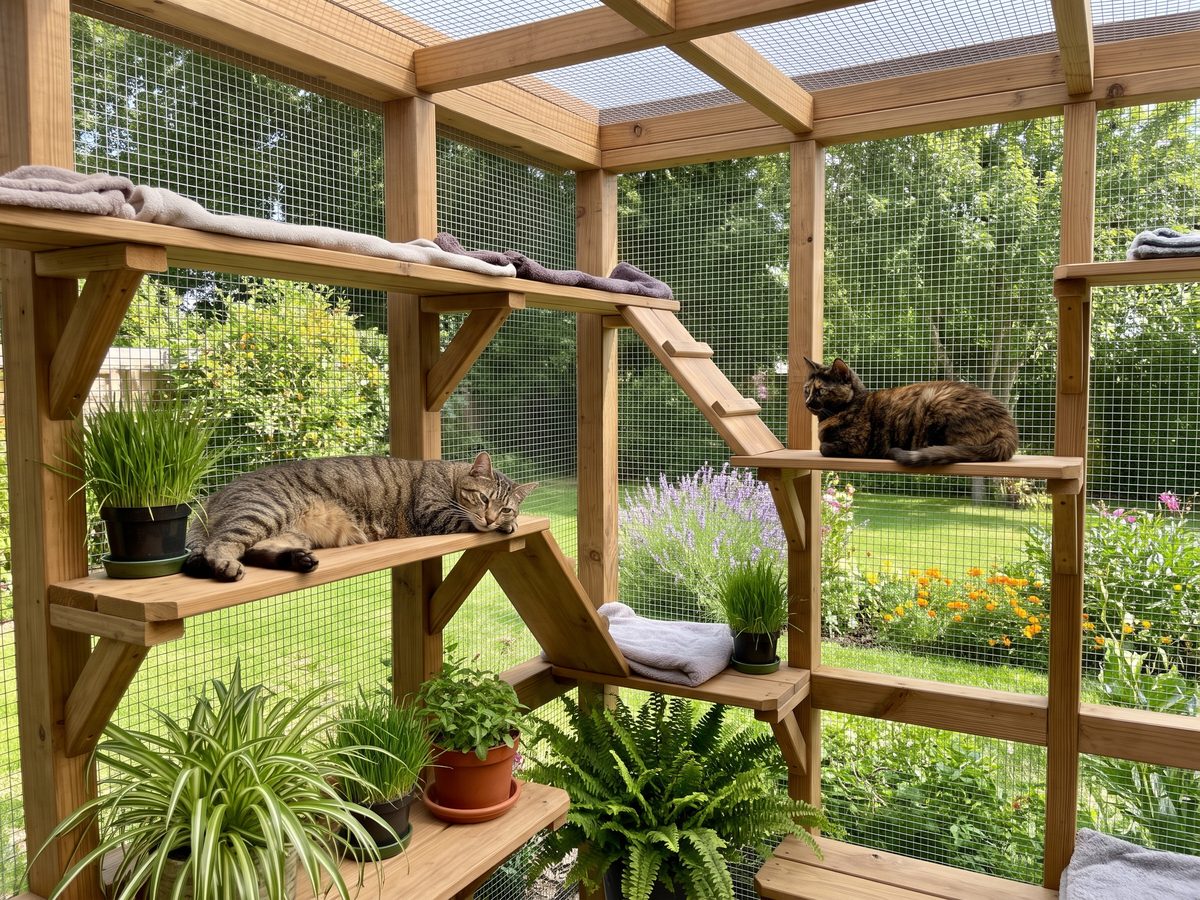
Outdoor access for an indoor cat runs along a scale, from a small window addition to a full enclosure.
| Class | Typical setup | Best suited to |
|---|---|---|
| Window box | A small enclosed box mounted directly on a window frame | Apartments and renters wanting a minimal footprint |
| Balcony or patio panel | Mesh screening enclosing an existing balcony or patio | Homes with an outdoor ledge already in place |
| Tunnel-connected catio | A small structure linked to the house by an enclosed tunnel | Ground-floor homes with some yard space |
| Full walk-in enclosure | A larger, freestanding screened structure a person can enter | Households with yard space and multiple cats |
Safety Principles That Apply to Every Class
Vaccinations, flea, tick and worming treatments: see your vet or a pet supply store with trained staff. They can tell you what an outdoor-access cat needs where you live.
Regardless of size, every safe outdoor structure shares the same basic requirements: full enclosure on every side, including the top, since a determined climber can scale surprising heights; secure attachment to the house or window frame that a cat's weight and clawing can't work loose over time; and mesh or bars spaced close enough that a cat's head can't fit through a gap.
Weather exposure also deserves attention before installation. Direct sun, wind, and rain all reach a structure that a household's own walls normally block, so a catio without any shade or a dry corner falls short no matter how solid its mesh or bar walls are.
Renter-Friendly Options
A window box that clamps or straps onto an existing window frame, with no drilling into the building itself, gives a renter real outdoor access without the structural changes a lease might prohibit. A portable, pop-up mesh enclosure that sets up on a patio or balcony for a supervised session and folds away afterward covers a similar need without becoming a permanent fixture at all. Either option still needs a lease check first, since even non-permanent additions sometimes fall under a building's rules about balconies, window exteriors, or common areas.
What a Catio Realistically Adds
A catio isn't a replacement for the vertical-territory and play routine on the indoor cat enrichment guide. It adds something indoor space can't fully replicate, namely fresh air, direct sun, and the sounds and smells of the outside world that a cat would otherwise only get through a closed window.
Some cats use a catio for hours once it's installed; others step out briefly and spend most of the day back inside, and both patterns are ordinary individual preference, not a sign the structure has failed. Checking the enclosure for gaps or wear before each use matters more across its lifetime than how well it was built on day one.
Gear Across the Catio Classes
A window-mounted box with a fully enclosed mesh frame covers the smallest, most renter-friendly class, while a larger tunnel-connected or walk-in enclosure suits a household with yard space and more than one cat to accommodate.
A portable, pop-up mesh tent offers a no-installation middle option for a supervised patio session, and a roll of extra mesh or hardware cloth is worth keeping on hand for patching a gap before it becomes an escape route. Whichever class fits the space available, checking the listed weight rating and enclosure material against how many cats will use it, and how big they are, matters more than the structure's overall footprint.
Frequently Asked Questions
Renters and whether a screen alone counts as safe are the two questions that surface first.
Is a window box actually safe, or is it just a small catio?
A well-built window box is a fully enclosed space, not an open ledge, so a cat can't fall or slip out the way it could on an unscreened sill. The main safety factor is secure attachment to the window frame and a fully enclosed mesh or bar structure on every open side.
Do renters have any real catio options?
Yes. A window box that clamps or straps to a window frame without drilling, or a portable pop-up enclosure moved onto a patio or balcony for supervised sessions, both avoid the permanent structural changes a landlord might object to. Checking a lease's pet and structure clauses first still matters before buying anything.
Can a cat get out of a catio?
A well-built, fully closed catio shouldn't allow escape, but gaps around a connecting tunnel, a door left ajar, or a panel that's come loose over time are the realistic failure points. Checking the full structure for gaps before each use catches most of these failure points while they're still minor.
Does a cat need to be trained to use a catio?
Most cats explore a new catio on their own once the door is open, drawn by the same curiosity that pulls them toward any new window or shelf. A nervous cat may need a few short supervised sessions before it settles into using the space independently.
How is a catio any different from just opening a window with a screen on it?
A standard window screen is built to keep insects out, not to hold the weight and force of a determined cat, and screens do fail under a cat pushing against them. A catio or purpose-built window box uses hardware rated for a cat's weight and clawing, which a household screen was never designed for.
Can multiple cats share one catio at the same time?
It depends on the cats and the space available, the same way it would indoors. Cats that get along inside generally manage a shared catio fine, while cats with existing tension may compete for the best spot. A larger enclosure with more than one perch reduces that competition.
Is a catio better than letting a cat roam free outside?
It depends on where you live and on the cat. An enclosure gives outdoor sights, smells and air without the traffic, predators, fights and getting lost that come with free roaming, and it protects garden wildlife. In places where outdoor access is the norm, such as much of the UK and Ireland, many cats roam safely too. A catio is a good middle ground either way.
Related Reading
- Indoor or outdoor?: weighing up outdoor access.
- Cats and garden wildlife: outdoor time without hunting.
- Harness training: supervised walks.
Ask your vet which vaccinations and parasite prevention suit a cat with outdoor time where you live, even inside an enclosure. A cat that seems distressed or overheated outside needs to come in, and a vet call if it doesn't recover quickly.