Fell Pony: Size, Temperament and Care
Who a Fell Suits
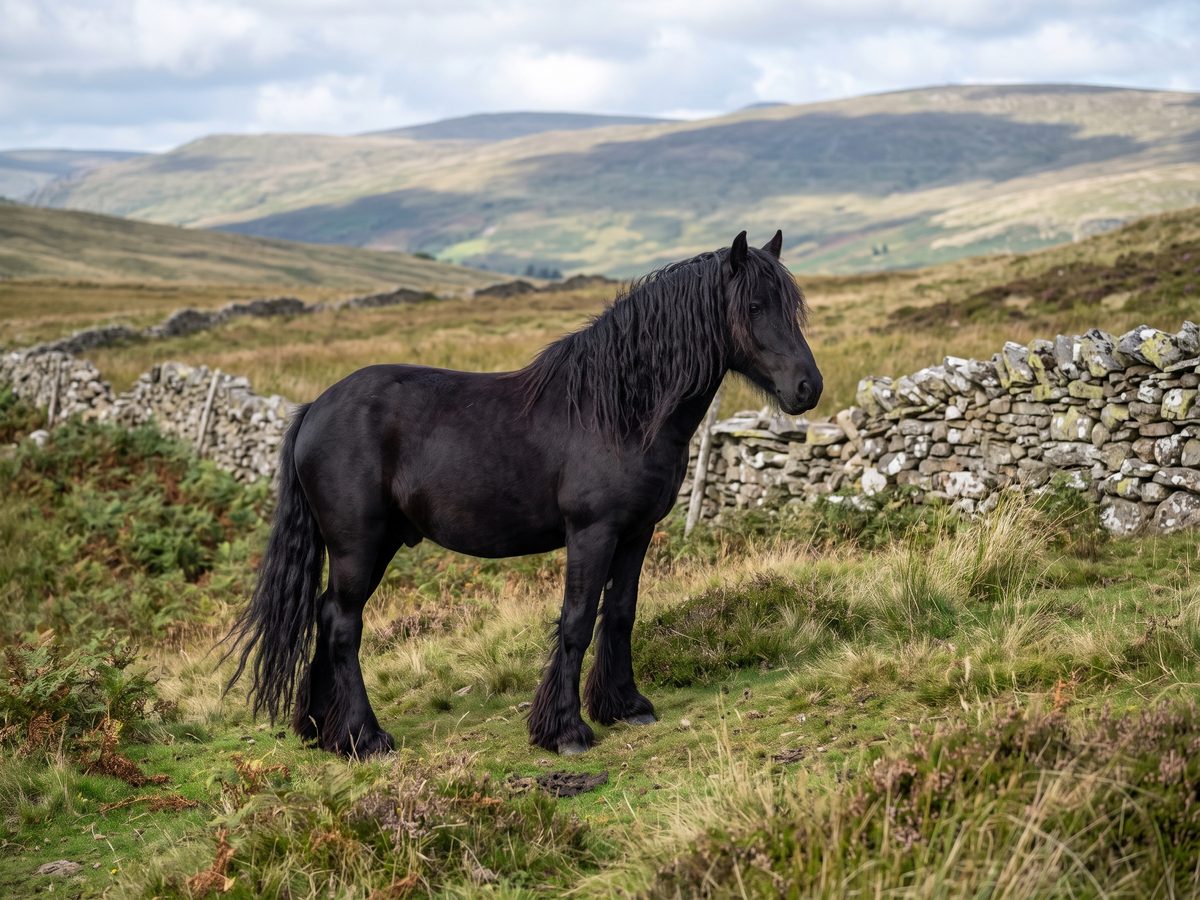
Fells suit adults and families who want a strong, sensible pony for hacking, trekking and driving, and riders who like a pony with character. They are popular driving ponies.
They are strong and clever, so consistent handling matters, and a young Fell is better for an experienced owner.
Pack Ponies of the North
Fell ponies come from the uplands of Cumbria and the north of England, where they worked as pack ponies, carrying loads such as lead and wool, and on hill farms. Herds still run on the fells.
The Fell Pony Society keeps the stud book. Queen Elizabeth II bred Fell ponies and was the society's patron, which brought the breed many admirers.
Feeding and Grazing
Like most native ponies, Fells evolved on poor, rough grazing and are very good at turning a little food into a lot of pony. On rich lowland grass that talent becomes a problem: they put on weight fast, and extra weight raises the risk of laminitis. Ask your vet whether your pony's grazing should be limited, especially in spring and early summer.
Base the diet on forage: grass in moderation and weighed hay, often in a small-hole haynet. Most need little or no bucket feed, just a ration balancer or mineral lick for vitamins and minerals, plus salt and fresh water. Read feeding horses forage first and body condition scoring.
Hooves, Teeth, Coat and Weather
Fells have hard, blue horn hooves. Pick them out daily and book the farrier every few weeks. Keep the feather clean and dry and check the skin underneath when grooming. Book a dental check at least once a year.
Their thick winter coat and long mane and tail handle hill weather well, so most healthy Fells with shelter don't need a blanket (rug) unless clipped.
Gear for a Fell Pony
Each button opens a search in your own country's Amazon store. As an Amazon Associate we earn from qualifying purchases.
Fells are broad for their height, so check that headcollars and blankets fit cob sizes. A small-hole haynet and weigh tape help with weight, and a grazing muzzle can help on spring grass if your vet suggests one. A feather or dandy brush keeps legs clean.
Company, Space and Handling
Fells need equine company and daily turnout, ideally on rough grazing or a track system rather than lush pasture. See grazing and pasture management.
Health: Preventive Care
Book a check-up soon after your pony arrives, and ask your vet about vaccinations and a worming plan guided by fecal egg counts. Plan for the farrier every few weeks and a dental check at least once a year. Score body condition every few weeks, by hand: weight creeps on quietly, especially on spring grass.
Worming, vaccinations and any medicines: see your vet or a pet supply store with trained staff. They can tell you what suits your pony and where you live.
Buying, Loaning or Rescuing
The Fell Pony Society, breeders and rehoming charities can help you find a pony. Have a vet do a pre-purchase examination, check the passport, and ask about traffic, driving experience and the farrier. See buying a horse.
Frequently Asked Questions
Strength, size and the famous feather.
How tall is a Fell pony?
Up to 14 hands (142 cm), with many around 13.2 hands (137 cm).
Can adults ride Fell ponies?
Yes. Fells are strong and carry adults well; they are also popular driving ponies.
What colors are Fell ponies?
Usually black, brown, bay or gray, with black the best known.
Do Fell ponies need special feather care?
Keep feather clean and dry, and check the skin underneath when grooming. Ask your vet if the skin looks sore.
Are Fells good-doers?
Very. Weigh hay, limit rich grass if your vet advises, and score body condition every few weeks.
Related Reading
- Dales pony: the Fell's taller neighbor.
- Highland pony: another strong native for adults.
- Horse grooming: brushes for feather and thick coats.
Breed traits are tendencies, not promises for the pony in front of you. If anything about your pony's health or behavior worries you, call your vet.