Loose-Leash Walking: How to Stop a Dog Pulling
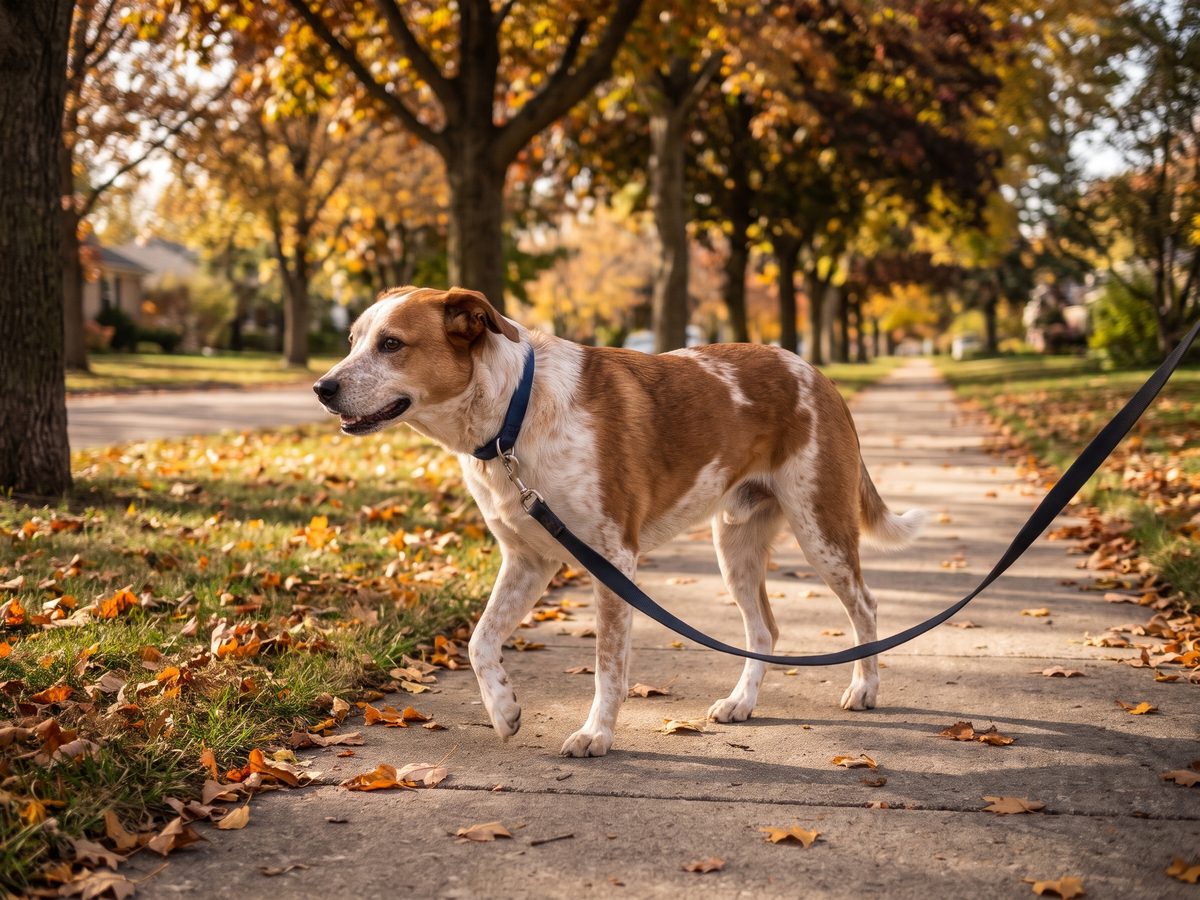
Why Dogs Pull
Dogs pull because it works. Every time a dog leans into the leash and still gets to the lamppost, it learns that pulling gets it there faster. That isn't defiance; dogs simply walk faster than we do and the world smells amazing. The fix is changing what pulling earns, not pulling back harder.
Two Methods That Work
- Stop-start: when the leash goes tight, stop and stand still. Don't pull back or repeat a cue. When your dog moves back and the leash goes slack, walk on. Moving forward is the reward.
- Direction change: when the leash goes tight, turn and walk the other way. When your dog catches up and the leash is loose, praise or reward, then carry on.
- Reward the right place: give a treat at your side often when the leash is loose, so that spot becomes the best place to be.
- Keep sessions short and finish on a few steps of nice walking.
Stop-start suits narrow sidewalks; direction changes suit open space. Mixing both in one walk is fine.
The Two Mistakes Behind Most Failures
- Inconsistency. Stopping for pulling on calm walks but letting it slide when you're in a hurry teaches your dog that pulling sometimes pays. Everyone who walks the dog needs to follow the same rule. On rushed days, a quick play session in the yard may be better than a walk where pulling wins.
- Expecting gear to do the training. Equipment can make pulling less effective, but the dog only learns when a tight leash stops the walk.
What Gear Can and Can't Do
A front-clip harness turns a pulling dog slightly to the side, which makes training much easier with a big or strong dog. A standard 4–6 foot (1.2–1.8 m) leash lets you feel the moment tension starts. Retractable leashes keep a constant pull on the dog, which teaches the opposite of what you want, so save them for later, if at all. We don't recommend prong, choke or shock collars. See collar vs harness vs front clip.
Gear That Backs Up the Training
Each button opens a search in your own country's Amazon store. As an Amazon Associate we earn from qualifying purchases.
A front-clip harness gives you a calmer start with a strong puller. A plain fixed-length leash lets you feel every change in tension. A treat pouch keeps rewards ready, and a reflective leash helps on early-morning or evening walks.
Frequently Asked Questions
Every puller's owner asks these.
How long does loose-leash training take?
A light puller may improve within a couple of weeks of consistent practice. A big dog with a long pulling habit can take a couple of months. Consistency matters more than anything else.
Will a front-clip harness stop pulling on its own?
It makes pulling less effective but doesn't teach your dog anything by itself. Pair it with stop-start or direction changes.
Should I use a retractable leash?
Not while training. The constant tension teaches your dog that pulling keeps the line moving.
My dog only pulls toward other dogs. Is that the same?
Not quite. Pulling and lunging at other dogs often has feelings behind it and may need distance-based work too. See leash reactivity basics.
Why does my dog pull harder when I start stopping?
A short burst of extra pulling is common while your dog tests whether the old strategy still works. If it keeps getting worse, get help from a qualified trainer.
Related Reading
- Recall training: the long-line method.
- Collars, harnesses and leashes: choosing walking gear.
- Leash reactivity basics: when walks get tense.
If your dog suddenly starts lagging, refusing walks or pulling to sit down, ask your vet to check for pain before you start training.