Recall Training: A Come-Back That Survives Squirrels
Build Value Before You Test It
A recall word is only worth what has followed it. Start where nothing competes: a hallway or a quiet room. Every time your dog comes, pay well with something special saved for recall, such as a tasty treat or a quick game, not the same kibble that's in the bowl.
Only when your dog comes instantly, again and again, do you add the next step. Adding distance and distraction at once is the most common reason recall training stalls. High-drive gundogs and scent hounds often need more practice at each stage.
Never Punish the Return
However long your dog took, the moment it arrives is a moment to celebrate. A dog that gets scolded or grabbed on arrival learns that coming back can end badly.
Calling your dog for something it dislikes, such as a bath, a nail trim or the end of a fun walk, does the same damage quietly. Walk over and collect your dog for those, so the recall word only ever means good news.
Long Lines Beat Trusting Too Soon
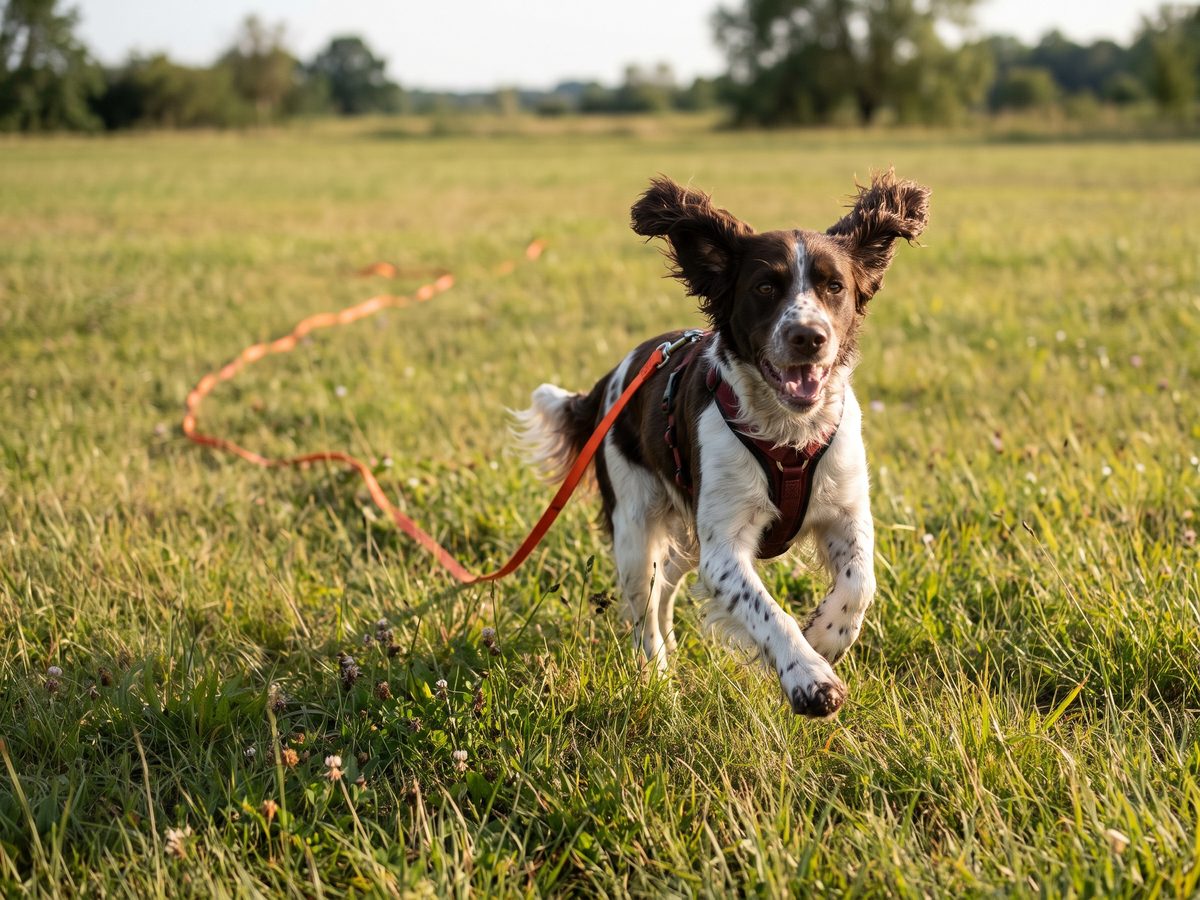
A long training line, usually 15–50 feet (4.5–15 m), gives your dog freedom while you keep a safety net. Jumping straight from a 6-foot (1.8 m) leash to full freedom removes that net just when your dog is least proven. Clip the line to a back-clip harness, not a collar, and wear gloves if your dog is big and fast.
If your dog still pulls hard on ordinary walks, work on loose-leash walking too.
An Emergency Recall
An emergency recall is a unique word or whistle you never use for anything else, always followed by the best reward your dog knows: a jackpot of several treats or its favorite game. Practice it now and then in a safe place, pay hugely every time, and it stays sharp for the day you need it.
Gear for Recall Practice
Each button opens a search in your own country's Amazon store. As an Amazon Associate we earn from qualifying purchases.
A long line is the core tool. A treat pouch that opens with one hand keeps rewards instant. A back-clip harness gives the line somewhere comfortable to attach. A whistle makes a clear emergency cue, and a GPS tracker is a backup for adventurous dogs.
Frequently Asked Questions
A dog that "mostly" comes back raises a lot of questions.
How long does it take to train a reliable recall?
The basics often click in a few weeks, but a recall that holds up against real distractions takes months of regular practice. Think of it as a lifelong skill to keep topping up.
My dog comes eventually. Isn't that good enough?
Not for the moments that matter, like a dog heading toward a road. Go back a step on the ladder and build a faster response.
Should I call my dog for things it doesn't enjoy?
No. Walk over and collect it instead, so the recall word only ever means good news.
Can an older dog learn recall?
Yes. Start at the foundation stage like a puppy. Adults often progress quickly.
Do I need a shock or vibration collar for recall?
No. We don't recommend punishment-based devices; the long-line, reward-based method works without them. See our guide to choosing a trainer for more.
Why does my dog ignore me at the dog park?
Usually because the recall was practiced with fewer distractions. Go back to the long line somewhere quieter and build up again.
Related Reading
- Loose-leash walking: calmer walks before long-line work.
- When to hire a trainer or behaviorist: choosing help.
- Dog training supplies: lines, pouches and whistles.
If a dog that used to come back reliably suddenly stops responding, especially an older dog, ask your vet to check its hearing before assuming it's stubbornness.