Leash Reactivity in Dogs: Distance, Calm and When to Get Help
Frustration or Fear?
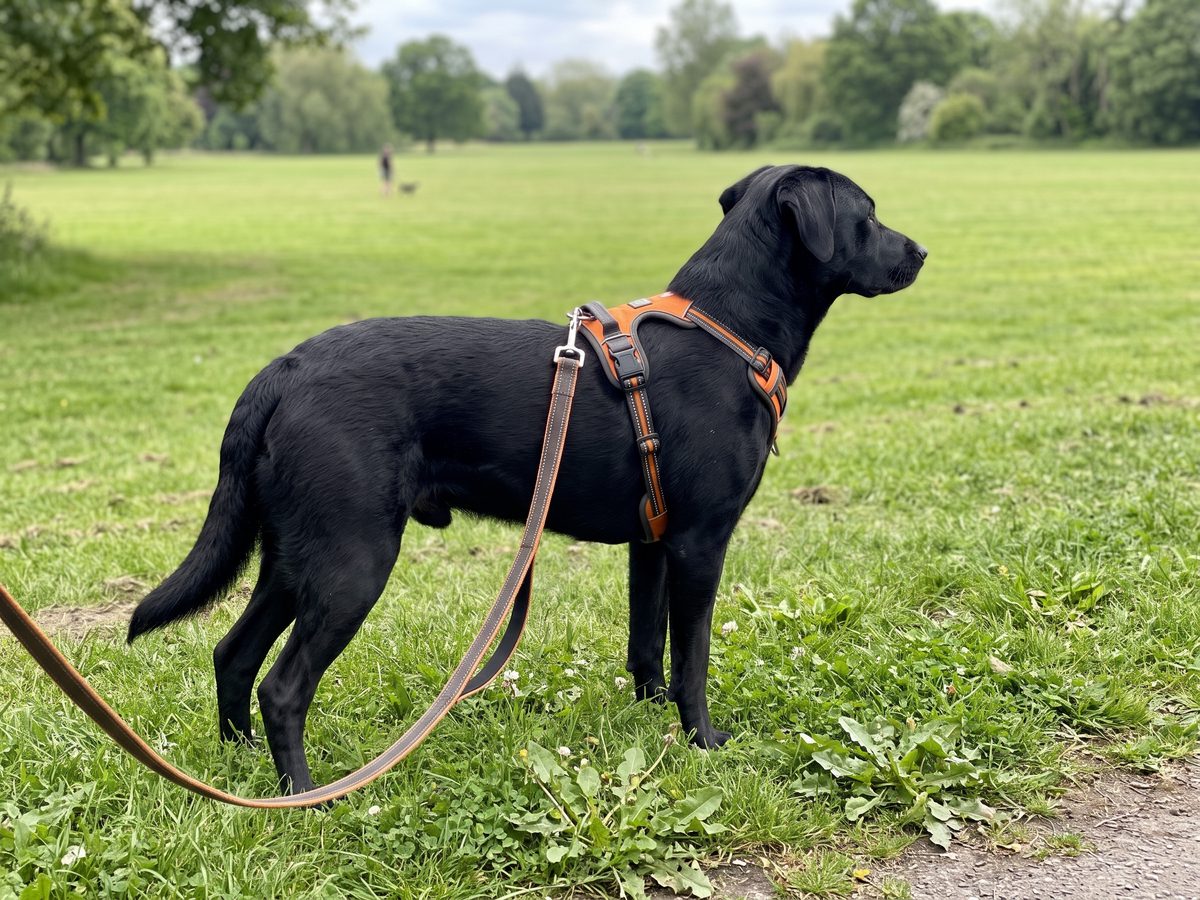
A frustrated dog often leans forward, wags and pulls toward the trigger while barking: it wants to get closer and the leash won't let it. A fearful dog tends to lean back, tuck its tail or try to get away while barking: it wants more space. You don't need the exact label to help. Both dogs do better with more distance and less pressure.
A Distance-First Walk Plan
- Scan ahead and spot likely triggers before your dog does.
- Make space early: cross the street, step into a driveway or turn around.
- Watch for the first small signs, such as a head turn or a stiff body, and add more space.
- Reward calm looking, and calm looking back at you.
- If your dog reacts anyway, calmly move further away and reset. Don't scold.
- End on a calm note, even if the walk is shorter than planned.
The Engage-Disengage Game
At a distance where your dog stays calm, mark and reward the moment it looks at the trigger. Then reward again when it looks back at you. Over many repetitions, seeing a trigger starts to predict good things, and looking back to you becomes a habit. This is the opposite of flooding, which forces a dog close to what scares it until it shuts down; we don't recommend that.
Thresholds and When to Get Help
Your dog's threshold is the point where it stops being able to think and simply reacts. Working below that line, at whatever distance it takes today, is what makes progress possible. It moves day to day with tiredness, stress and surroundings.
If a calm dog suddenly becomes reactive, see your vet first: pain or a change in sight or hearing can lower tolerance. Any bite or contact, or reactions that get worse despite distance, mean it's time for a qualified trainer or veterinary behaviorist. See when to hire a trainer or behaviorist.
Gear for Distance-Based Walks
Each button opens a search in your own country's Amazon store. As an Amazon Associate we earn from qualifying purchases.
A well-fitted front-clip harness gives more control in close calls without pressure on the neck. A hands-free waist leash leaves your hands free for treats. Soft, high-value treats make quick rewards easy, and a "give me space" leash sleeve can ask other people to keep their distance.
Frequently Asked Questions
Reactive dogs are common, and so are these questions.
Is leash reactivity the same as aggression?
Usually not. Most reactive dogs bark and lunge from frustration or fear, and many are relaxed off-leash. Any dog that has bitten needs professional help, though.
Will a harness fix reactivity?
No. It gives you more control but doesn't change how your dog feels. Distance and reward-based work do that.
How long does it take to improve?
Many owners see a calmer dog at a set distance within several weeks. Getting closer takes longer. Look for faster recovery, not perfection.
Why is my dog fine off-leash but reactive on-leash?
The leash removes a dog's normal choices to approach, circle or move away, and that can turn curiosity into frustration. The same distance work helps.
Should a reactive dog go to dog parks?
Busy dog parks are rarely a good place to practice, because you can't control distance. Choose quieter places.
Related Reading
- Loose-leash walking: general pulling.
- Introducing two dogs: calm, slow meetings.
- When to hire a trainer or behaviorist: choosing help.
A sudden change in behavior can have a medical cause. If your dog becomes reactive out of the blue, see your vet before starting training.