How to Clean a Dog's Ears Safely
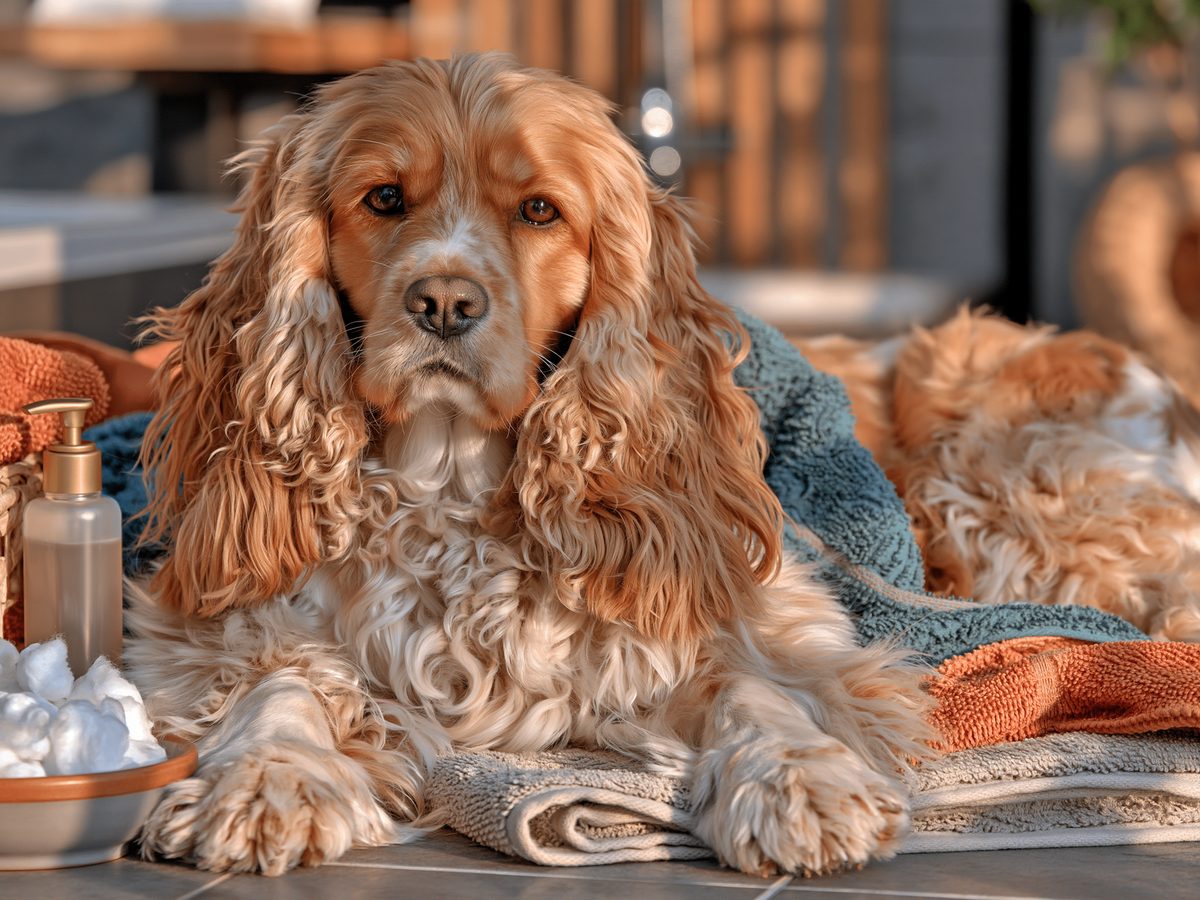
Six Steps, Outer Ear Only
- Gather a dog ear cleaner, cotton balls or gauze pads, a towel and treats. Sit somewhere your dog already feels relaxed.
- Lift the ear flap and squeeze cleaner into the opening of the canal, without pushing the bottle tip in.
- Gently massage the base of the ear for a few seconds so the cleaner works through wax.
- Step back and let your dog shake its head. Most of the loosened wax comes out this way.
- Wipe the folds and the opening with a cotton ball or pad. Never use a cotton swab.
- Give the treat, and stop the moment your dog seems uncomfortable.
Ask your vet or vet nurse to show you the first time. It takes a minute and makes the next hundred times easier.
Why the Outer Ear Is as Far as You Go
A dog's ear canal isn't straight: it runs down and then turns in toward the eardrum. Anything pushed in blind, such as a swab, a fingertip or a twist of tissue, tends to pack wax deeper rather than removing it, and can hurt the ear if your dog moves.
The folds just inside the flap and the opening of the canal are where everyday wax and dirt collect, and that's all you need to clean. If the ear looks dirty further in, that's for your vet to look at.
Gentle Beats Thorough
The skin inside the ear flap is delicate. Rub lightly, keep sessions short, and stop if your dog pulls away. Use only a cleaner made for dogs: household products such as hydrogen peroxide or rubbing alcohol can sting and irritate.
Floppy-eared breeds and dogs that swim tend to need cleaning more often. After swims and baths, dry the outer ear with a towel. Our Golden Retriever and Cocker Spaniel pages cover routines for two classic floppy-eared breeds.
An Ear-Care Kit
Each button opens a search in your own country's Amazon store. As an Amazon Associate we earn from qualifying purchases.
A routine dog ear cleaner, asked about at your next vet visit, is the main item. Cotton balls or gauze pads do the wiping, a towel catches the shake, and small, tasty treats turn the whole thing into something your dog looks forward to.
When Ears Need a Vet, Not a Clean
Stop cleaning and book a vet visit if you notice any of these: head shaking that doesn't settle, a smell, redness or swelling, discharge, a swollen ear flap, or your dog flinching when you touch near the ear. Cleaning a sore ear can make it worse and delay the right help.
Ear drops and ear treatments: see your vet or a pet supply store with trained staff. Your vet can examine the ear and tell you what it needs.
Frequently Asked Questions
All ears, no swabs. The common questions.
Is a cotton swab okay if I'm careful?
No. A swab can push wax deeper and hurt the ear if your dog moves suddenly. A cotton ball or gauze pad reaches everything you need to clean.
How often should I clean my dog's ears?
It depends on the dog. Upright, dry ears may rarely need it, while floppy ears or dogs that swim need it more often. Clean when you see wax building up, and ask your vet what suits your dog.
What if my dog won't hold still?
Keep sessions short, use treats, and practice handling the ears at calm moments, not only at cleaning time. A helper to hold and reassure your dog makes it easier.
Can I use hydrogen peroxide or alcohol?
No. Both can sting and irritate. Use a cleaner made for dogs.
My dog's ear flap swelled up. What should I do?
See your vet the same day. A swollen ear flap needs a vet to look at it.
Do puppies need their ears cleaned?
Less often than adults, but getting a puppy used to gentle ear handling early makes cleaning easy later on.
Related Reading
- Cooperative care handling: teaching a dog to enjoy being handled.
- Trimming dog nails: the other routine job.
- Dog grooming supplies: towels, brushes and more.
This is a routine for healthy ears. If an ear looks sore, smells or bothers your dog, see your vet.