Cat Urinary Health and Hydration
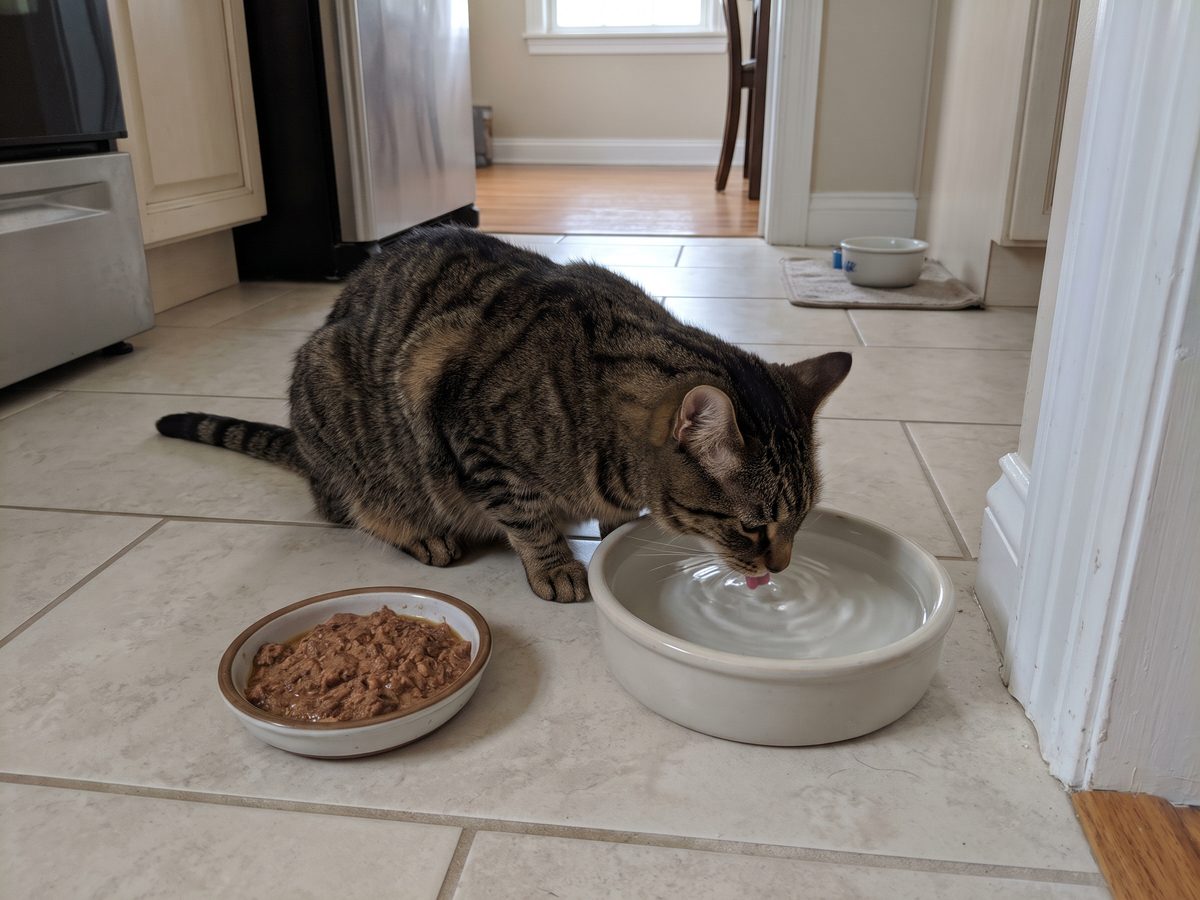
Hydration habits help in real ways. Here is what each one can and can't do.
| Habit | What it can do | What it can't do |
|---|---|---|
| More wet food | Add water with every meal | Fix a problem that's already there |
| Water fountain or extra bowls | Tempt some cats to drink more | Guarantee every cat drinks more |
| Enough litter boxes, less stress | Lower everyday stress in a multi-cat home | Replace a vet visit when something is wrong |
| A diet your vet recommends | Help a cat your vet has diagnosed, under their guidance | Suit a healthy cat, or replace the vet's plan |
Why Water Matters So Much for Cats
Veterinary diets, medicines and treatments: see your vet or a pet supply store with trained staff. They can tell you what suits your cat.
Cats descend from desert hunters that got most of their water from prey, and many still drink very little from a bowl. A cat on dry food alone can end up with concentrated urine, and vets often suggest more moisture as part of looking after the bladder.
Bladder problems are among the more common reasons cats see a vet, so it pays to set up good habits early, before anything goes wrong. Your vet is the person to ask about your own cat, especially if it has had a problem before.
Getting More Water Into Your Cat
Moving even part of a cat's diet to wet food raises total water intake, because every meal brings water with it. A spoonful of water stirred into wet food adds a little more.
Many cats drink more from moving water or from a wide, shallow bowl that doesn't brush their whiskers. Try several water stations around the house, away from food bowls and litter boxes, and change the water daily. Some cats prefer ceramic or stainless steel to plastic.
If your vet has diagnosed a urinary problem, they may recommend a special diet. Use exactly the food they name, and ask before you change it. Those diets aren't meant for healthy cats.
Stress and the Multi-Cat Home
Vets recognize stress as a factor in some bladder problems, particularly in indoor cats sharing a home with other cats. Too few litter boxes, competition for food and water, or a big change such as a move or a new pet all add to the load.
The usual guideline is one litter box per cat plus one spare, spread across separate rooms instead of lined up side by side. Vertical space, hiding spots and predictable routines all help too. Our multi-cat harmony guide covers the resource math in detail.
Supporting Hydration Day to Day
A stainless or ceramic fountain from a line like PetSafe Drinkwell tempts some cats toward the water in a way a still dish rarely manages on its own, and running it near a favorite resting spot, not tucked away, helps. Adding wet food from a brand like Weruva or Tiki Cat, even as a partial swap alongside dry food, boosts total water intake without a major diet overhaul. For a cat already diagnosed with a urinary problem, the food your vet recommends, used exactly as directed, comes before any general "urinary health" retail bag.
Frequently Asked Questions
The short answers, with your vet as the long one.
Can wet food alone prevent urinary problems?
No food prevents every problem, since stress, weight and the individual cat all play a part. Wet food is one helpful habit among several because it adds water to every meal.
Why are male cats more at risk?
A male cat's urethra is narrower, so it can block. A blocked cat can't pass urine at all, which is an emergency within hours, not days. Call a vet straight away if a male cat is straining.
Do urinary-support cat foods work?
Veterinary urinary diets are made for cats with a diagnosed problem and should be used only on your vet's advice. Everyday “urinary health” foods on store shelves are a different, less targeted product. Ask your vet which, if any, suits your cat.
Will a water fountain help my cat drink more?
Many cats drink more from moving water than from a still bowl. It isn't guaranteed for every cat, but it's a low-risk thing to try alongside wet food.
Which cats need the most attention to water intake?
Overweight, middle-aged, indoor-only and stressed cats, and cats in multi-cat homes, are often mentioned, and male cats carry the extra risk of a blockage. Any cat can have a problem, so the warning signs apply to every cat.
Is blood in the litter box always an emergency?
It always needs a same-day call to your vet. If the cat is also straining or passing little or no urine, treat it as an emergency and go now.
Related Reading
- Fountains, bowls and feeders: water setups.
- Wet vs dry food: moisture in the diet.
- When a cat stops using the box: what to check.
This page covers everyday hydration habits; it isn't veterinary advice. A cat that strains, cries in the litter box or passes little or no urine needs an emergency vet now, and blood in the urine needs a same-day call.