Why Cats Stop Using the Litter Box
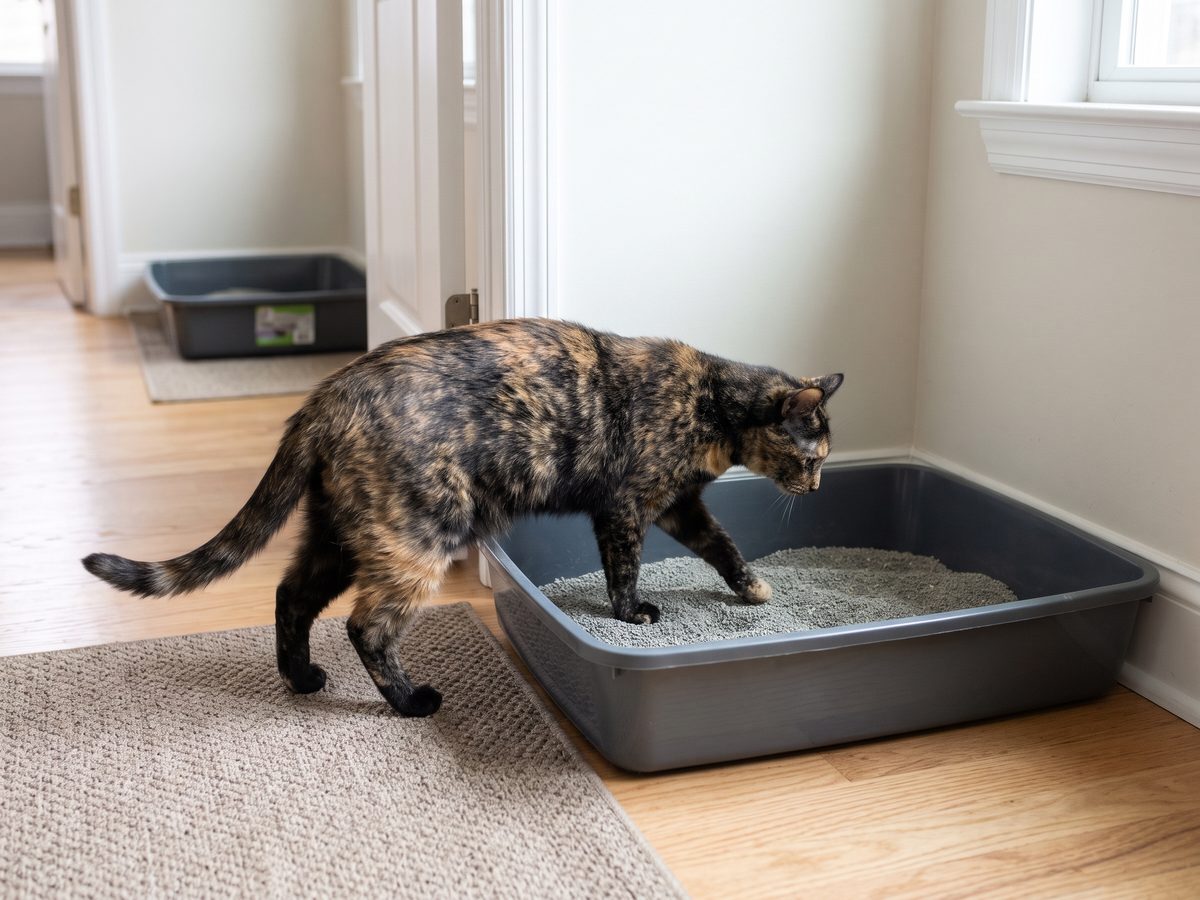
Work through these steps in order. Starting anywhere else risks missing a painful medical cause hiding behind what looks like a behavior problem.
- See your vet first, always. Pain and several common health problems can make a cat link the box with discomfort and avoid it.
- Once medical causes are ruled out, check the box count and placement. One box per cat plus a spare, spread across separate rooms, not clustered together.
- Reconsider the box type. A covered box, a high-sided box, or one with a smaller opening can quietly become unwelcome to a specific cat.
- Audit cleanliness. Daily scooping and a full litter change on a regular schedule matter more to a cat's sense of the box than owners often assume.
- Look for multi-cat competition or ambush spots. A confident cat guarding access, or a box tucked somewhere that leaves the user feeling exposed, can push a less confident cat elsewhere.
- Clean any soiled area with an enzymatic cleaner. Ordinary cleaners can leave a scent trail that pulls a cat toward that exact spot again outside the box.
Why Medical Causes Come Before Everything Else
Medicines and treatments: see your vet or a pet supply store with trained staff. They can tell you what suits your cat.
A cat that is straining, going in and out of the box, crying, or passing little or no urine needs a vet straight away. That can be an emergency, especially in male cats.
Less urgent changes still deserve a vet visit first. Stiff joints can make climbing into a high box painful, and some health problems make a cat need to go more often than it can reach the box. Treating avoidance as a behavior problem before your vet has checked your cat risks missing something that needs care.
Location and Box Type: The Two Most Overlooked Factors
A litter box tucked in a noisy laundry room, next to a loud appliance, or down a long, exposed hallway can feel unsafe to a cat that wants privacy without feeling trapped, and moving it to a quieter, more accessible spot sometimes solves the problem outright.
Box type carries equal weight: a covered box traps odor that a sensitive nose finds unpleasant, and a high-sided or small-opening box can be difficult for a senior cat or a larger breed to climb into comfortably. What worked for years can stop working as a cat ages or gains weight, so a box that once fit fine is worth a fresh look. Multiple boxes of different styles, at least temporarily, can reveal a clear preference faster than guessing.
Cleanliness Standards Most Owners Underestimate
Cats hold a famously high bar for a clean bathroom, and a box that feels acceptable to a person walking by can already feel unusable to a cat with a far sharper sense of smell. Scooping once or twice daily, not every few days, keeps a box within the range most cats tolerate, and a full litter change on a set schedule prevents the gradual odor buildup that daily scooping alone can miss.
Washing the box itself periodically with mild soap, not a strong-scented cleaner, matters too, since some scented products leave a residue cats find off-putting. A sudden drop in scooping frequency, even for a reasonable excuse like travel, is an overlooked, easy-to-miss trigger for a fresh avoidance habit.
Multi-Cat Competition and Ambush Spots
Where several cats share a home, one confident cat can effectively guard a shared box by lingering nearby or blocking the approach, and a less confident housemate may simply stop trying instead of risking a confrontation.
This is one reason the one-box-per-cat-plus-one guideline exists: enough boxes spread through the house means competition for a single resource becomes far less likely. A box positioned where a cat can be surprised or cornered by another pet, even without direct conflict, creates the same avoidance effect as physical competition does. Watching who actually uses which box, and when, often reveals a dynamic that's easy to miss when boxes are treated as interchangeable.
Setting Up a Box a Cat Actually Wants to Use
A larger, open, low-sided box gives a senior cat or a nervous cat an easier, less confrontational option than a cramped covered model, and adding a second or third box in a separate part of the house addresses both competition and access in one move. An enzymatic cleaner is worth keeping on hand specifically for any accident spot, since it breaks down the scent markers that draw a cat back to the same place. A litter mat helps manage tracking once the actual cause of avoidance has been addressed, though it won't solve an avoidance problem on its own.
Frequently Asked Questions
How quickly should I get a vet visit if my cat stops using the box?
A day or two after the change begins is reasonable for a cat that still seems otherwise well; same-day if there's straining, crying out, or no urine at all, since that can signal a blockage. Waiting weeks to see if it resolves on its own lets a painful medical cause go untreated.
Can moving the litter box cause a cat to stop using it?
Yes. Cats can be surprisingly attached to a specific location, and moving a box even a short distance sometimes triggers a boycott. If a move is necessary, shifting the box gradually over several days usually works better than relocating it all at once.
Does declawing make litter box problems more likely?
Some declawed cats develop an aversion to certain litter textures against sensitive paws, particularly right after the procedure, and this can turn into a lasting box avoidance if not addressed early. A softer litter during recovery, discussed with your veterinarian, can help prevent the habit from forming.
How many litter boxes do two cats need?
The standard guideline calls for one box per cat, plus a spare, so two cats generally means three boxes. Placement matters as much as count: spreading them across different rooms works better than lining them up together.
Is spraying on vertical surfaces the same problem as avoiding the box?
Not exactly. Spraying on a vertical surface, usually by an unneutered male or a stressed cat marking territory, is typically a different behavior from squatting to urinate or defecate outside the box. Both deserve a veterinary check to rule out a medical cause, since the plans for addressing each differ.
Will a covered litter box make the problem better or worse?
Reactions vary by cat. Some appreciate the extra privacy a cover offers, while others find a covered box trapping odor and feeling cramped, which can discourage use. If box avoidance started after switching to a covered model, trying an open box again is a reasonable next step.
Can a new baby or pet in the house trigger this?
Yes, a major household change (a baby arriving, another pet joining the home, even rearranged furniture) can unsettle a cat enough to affect litter box habits, especially alongside an existing stressor. Keeping the litter box setup stable and predictable during any household transition helps reduce the odds of a new problem starting.
Once the cause is fixed, will my cat go back to normal on its own?
Often yes, once any health problem has been dealt with or the trigger at home is fixed, though a cat that developed a strong aversion to a specific spot may need that area thoroughly cleaned with an enzymatic cleaner to fully return to normal. Persistent avoidance after the underlying cause is resolved is worth mentioning at a follow-up veterinary visit.
Related Reading
- Choosing cat litter: texture and scent.
- Litter boxes: size and type.
- Multi-cat harmony: enough boxes, spread out.
This page describes general reasons a cat may avoid the litter box; it can't tell you what's happening with your cat. Because painful and even life-threatening problems can look like a behavior problem, a vet exam comes first for any sudden change in litter box habits, and a cat straining, crying out or unable to urinate needs emergency care immediately.