Wet vs Dry Cat Food: Hydration, Teeth and Cost, Compared
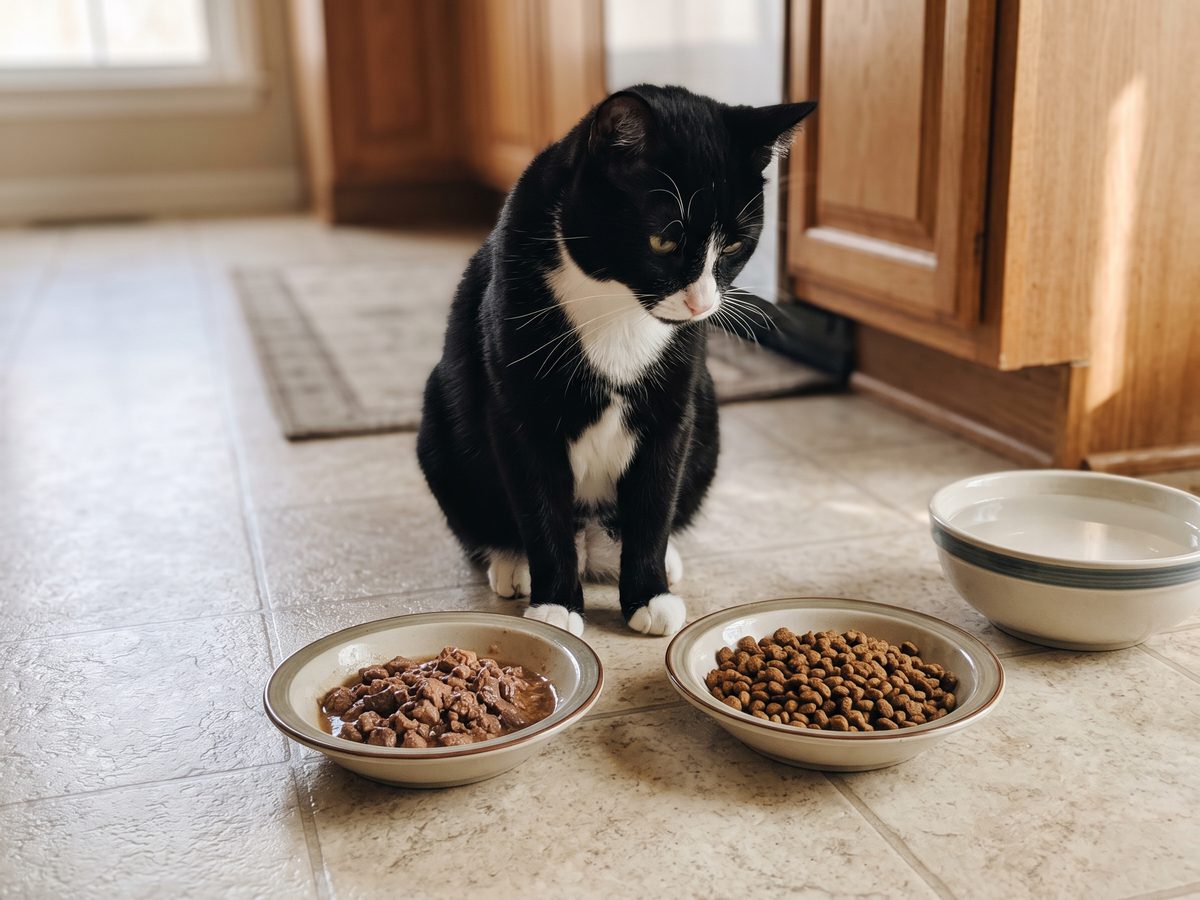
Here's how the two formats stack up on the questions owners actually ask about.
| Factor | Wet food | Dry food |
|---|---|---|
| Moisture per meal | High: a real water source on its own | Low: a cat must drink separately to make up for it |
| Cost per calorie | Higher, due to canning and shipping mostly water | Lower, easier to buy and store in bulk |
| Dental effect | None on its own | Minimal from regular kibble; more from dental-specific shapes |
| Leaving food out | Spoils quickly once served, especially in a warm room | Can sit out safely for free-feeding or grazing |
| Typical protein source | Pâté, gravy, or broth-style, often single-protein | Kibble blend, sometimes multiple proteins |
Water Intake, Kidneys, and Why Moisture Matters
Cats descend from a desert-adapted ancestor and never developed a strong thirst drive, so a cat fed only dry food often runs on the low end of hydration without showing any obvious sign of it. Wet food closes that gap simply by being mostly water, delivering water with every meal without depending on a cat to seek out the bowl. If your cat has kidney or urinary problems, your vet will advise on diet.
A cat eating only dry food can stay adequately hydrated if it drinks well, but many simply don't, which is the practical case for feeding at least some wet food. It isn't a judgment against kibble.
Does Kibble Clean a Cat's Teeth?
The idea that crunching dry kibble scrubs a cat's teeth clean is mostly marketing: most kibble pieces shatter on the first bite instead of scraping across the tooth surface, so the cleaning effect on regular dry food is smaller than many owners assume. Dental-specific kibble is engineered differently, built with a larger, fibrous piece that resists shattering so a tooth sinks into it and gets some real scrubbing before it breaks apart.
Wet food leaves no scrubbing effect at all, but it also isn't inherently worse for teeth than an ordinary bag of dry food once you set aside the dental-specific formulas. Brushing and dental treats do more for a cat's teeth than food format alone, regardless of which one is on the menu.
Cost Per Calorie, Not Just Price Per Can
Comparing a bag of kibble to a case of cans by sticker price alone is misleading, because wet food delivers far fewer calories per unit of weight once you account for how much of it is water. Dry food's lower cost per calorie is one reason it remains the base of most feeding plans, with wet food layered on top as a topper, a partial meal or an every-other-meal addition.
A cat that eats entirely wet food will cost more to feed than one on kibble at a similar body weight, a difference best budgeted for ahead of time. None of this makes dry food the "better" choice; it just changes the household budget math.
Building a Mixed-Feeding Routine
A common approach is kibble left out for grazing plus one or two measured wet meals a day, which balances the hydration benefit of wet food against the convenience and lower cost of kibble. Introduce any new format gradually over about a week, mixing it into the existing diet instead of swapping cold, since a sudden change in moisture and texture can cause loose stool even when nothing is nutritionally wrong. Watch total calories once wet food enters the routine, since it's easy to end up feeding more than a cat needs when portions are eyeballed from two different bags and cans.
A cat that won't touch wet food, or one that refuses to eat kibble at all, can still be fed well on either format alone provided what ends up in the bowl adds up to a complete, balanced diet.
Stocking Both Formats for a Mixed Diet
If you're leaning toward more wet food for the hydration benefit, a pâté-style case from a brand like Fancy Feast or Sheba Perfect Portions makes portion control simple, while brands such as Weruva or Tiki Cat market shredded and higher-protein recipes. For the dry side, an indoor-formula bag from Purina ONE, IAMS, or Hill's covers most healthy adult cats, and a dental-specific kibble is worth adding if brushing isn't happening regularly. Freeze-dried raw toppers from a brand like Stella & Chewy's or Instinct are a middle option for a cat that needs extra enticement to eat either format on its own.
Frequently Asked Questions
Is dry food bad for a cat's kidneys?
Dry food isn't harmful to healthy kidneys. If your cat has a kidney or urinary problem, or bloodwork has ever flagged one, ask your vet which food and how much moisture suit it.
Does dry kibble actually clean a cat's teeth?
Most kibble shatters on the first bite instead of scraping the tooth surface, so the cleaning effect falls well short of what the packaging implies. Dental-specific kibble shapes, built to resist shattering, do more for plaque control than a regular bag of dry food.
Can I mix wet and dry food in the same bowl?
Yes, plenty of owners feed both, either mixed in one bowl or as separate meals through the day. Mixing lets a cat get some of wet food's moisture benefit while keeping dry food's convenience for grazing between meals.
Why does wet food cost so much more per calorie?
Wet food is mostly water by weight, and packaging, processing, and shelf-stable canning all add cost that a bag of dry kibble doesn't carry. You're paying more per calorie for moisture and palatability, not for better nutrition on paper.
How long can wet food sit out before it spoils?
Most manufacturers recommend picking up an unfinished wet meal within an hour or so, especially in a warm room, since it spoils far faster than kibble left in a bowl. Refrigerate an opened can and let it come back toward room temperature before the next serving.
Will switching from dry to wet food upset my cat's stomach?
It can, especially in a cat used to grazing on kibble all day. Introducing wet food gradually over a week or so, mixed into the existing diet, usually avoids the loose stool a sudden full switch can cause.
Is freeze-dried raw food a middle ground between wet and dry?
Freeze-dried raw sits closer to dry food on moisture unless it's rehydrated with water before serving, in which case it can approach wet food's water content. Check the label, since some freeze-dried products are designed specifically to be rehydrated and others are meant to be fed as-is.
Do indoor cats need wet food more than outdoor cats?
Indoor cats tend to be less active and drink less overall, so the extra moisture in wet food can help offset a sedentary lifestyle's effect on weight and hydration. It isn't a strict requirement, but it's a reasonable reason to lean toward wet food or a mixed diet indoors.
Related Reading
- Cat food guide: choosing a food.
- How much to feed a cat: portions.
- Urinary health and hydration: why water matters.
This page compares food formats in general terms; it isn't a feeding plan for your cat. If your cat has stopped eating, is drinking noticeably more or less than usual, or is losing weight, call your vet instead of trying a different food.