Turkish Van Cats: Personality, Care and What to Expect
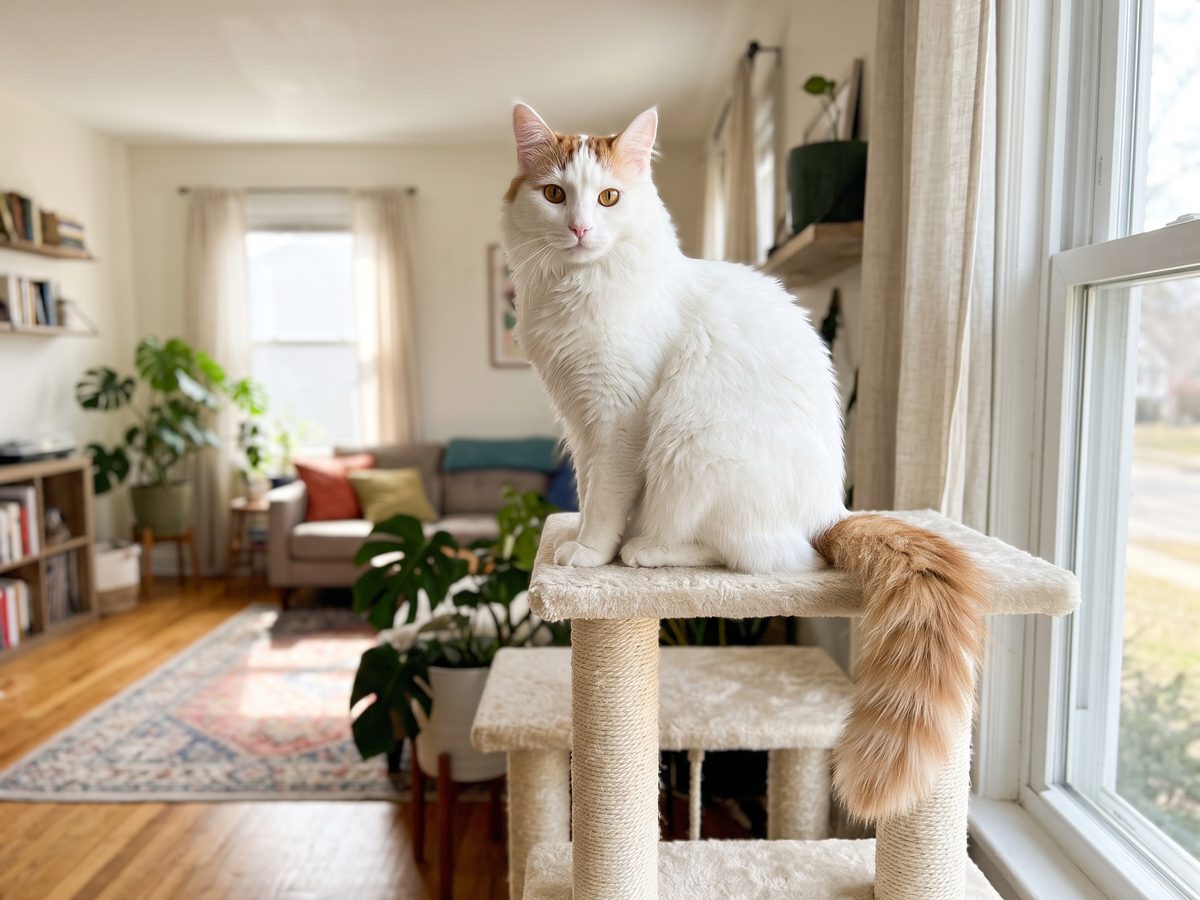
Who a Turkish Van Suits
Vans suit active households that enjoy an interactive, intelligent cat and can give plenty of play and climbing space. They are typically affectionate and like to be near their people, but many prefer sitting beside you to sitting on you.
They can be strong-minded and may not enjoy being picked up. A study in Finland found higher-than-average fearfulness and lower sociability among the Turkish Vans studied, so meet the parents and choose a breeder who socializes kittens well. Breed traits are tendencies; every cat is an individual.
Origin and the Van Pattern
The breed was developed in Britain from 1955, starting with cats a photographer brought home from Turkey; the GCCF recognized it in 1969, TICA in 1985 and the US Cat Fanciers' Association in 1994. It isn't the same as the Van cat of eastern Turkey, a usually all-white local cat that Turkey protects as a national treasure.
The "van" pattern means a white body with color only on the head and tail, in red, cream, black or blue, with tabby and tortie versions. Eyes can be amber, blue or one of each.
Personality and Play
Vans are energetic, curious and quick to learn, and many enjoy fetch and clicker training; see our clicker training guide. They need daily interactive play and things to climb, or they will find their own entertainment on top of the kitchen cupboards.
Coat, Grooming and Shedding
The silky, semi-long coat has no thick undercoat, so it mats less than many longhairs: a weekly comb is usually enough, more when it sheds its heavier winter coat. The tail becomes a full brush and the coat can take several years to develop fully.
The "Swimming Cat" Story
Vans are often called swimming cats, and some owners say theirs play in water bowls or follow them into the shower. Pet writers disagree on whether the breed likes water more than other cats, and today's Vans are mostly indoor pets. If yours is fascinated by water, a water fountain is a safer outlet than the bath. Never leave a cat unsupervised near a pool or pond.
Gear for a Turkish Van
Each button opens a search in your own country's Amazon store. As an Amazon Associate we earn from qualifying purchases.
A tall, heavy-based cat tree and wall shelves give a big climber somewhere to go. Puzzle feeders and a wand toy use up energy, a water fountain suits a water-curious cat, and a wide-toothed comb handles the silky coat.
Health: What to Discuss With Your Vet and Breeder
Van-patterned cats aren't considered especially prone to deafness, which is mainly linked to all-white cats with blue eyes. If you choose a solid white cat or a blue-eyed kitten, ask the breeder about hearing tests (BAER). Ask which other health checks they carry out, and keep up the preventive care in our cat health basics.
Finding a Kitten or an Adult Cat
Turkish Vans are not common, so you may wait for a kitten. Choose a registered breeder who raises kittens in the home and handles them a lot, and meet the parents if you can.
Frequently Asked Questions
The questions Van admirers ask most.
Do Turkish Vans really like water?
Some owners say theirs love playing with water, but pet writers disagree on whether the breed likes water more than other cats. A water fountain is a good outlet for a water-curious cat.
Are Turkish Vans lap cats?
Usually not. They are affectionate and like to be near their people, but many prefer sitting beside you.
How big do Turkish Vans get?
They are a large breed. TICA gives about 10–20 lb (5–9 kg) for males and 7–12 lb (3–5 kg) for females when fully mature at three to five years.
Are Turkish Vans and Turkish Angoras the same?
No. They are separate breeds; the Van was renamed in the UK and US partly to make the difference clear.
Are white Turkish Vans deaf?
Van-patterned cats aren't especially prone to deafness. Solid white cats with blue eyes are more likely to be deaf, so ask breeders about hearing tests.
Related Reading
- Norwegian Forest Cat: another big, climbing longhair.
- Indoor cat enrichment: keeping an active cat busy.
- Fountains, bowls and feeders: water ideas for curious cats.
Breed traits are tendencies, not promises. Book a check-up soon after your Van comes home and ask your vet what to watch for.