Selkirk Rex Cats: Personality, Care and What to Expect
Who a Selkirk Rex Suits
Selkirks suit people who want a relaxed, affectionate cat that enjoys company and cuddles. They tend to be tolerant and easygoing with families and other pets.
Despite the curly coat, they are not a good choice for people with cat allergies. Breed traits are tendencies; every cat is an individual.
Origin: A Curly Kitten in Montana
The breed began in 1987 with a curly-coated kitten born to a rescued cat in Montana. Her kittens showed the curl is dominant, so it can pass from one curly parent. Breeders developed the line with Persians, Exotic, British and American Shorthairs. TICA accepted the breed in 1992 and the US Cat Fanciers' Association in 2000, and the UK's GCCF has a breed standard.
Personality and Play
Selkirks are typically placid, social and people-oriented, with a playful streak. Short daily play sessions keep them active and stop them putting on weight; see our play guide.
Coat, Grooming and Shedding
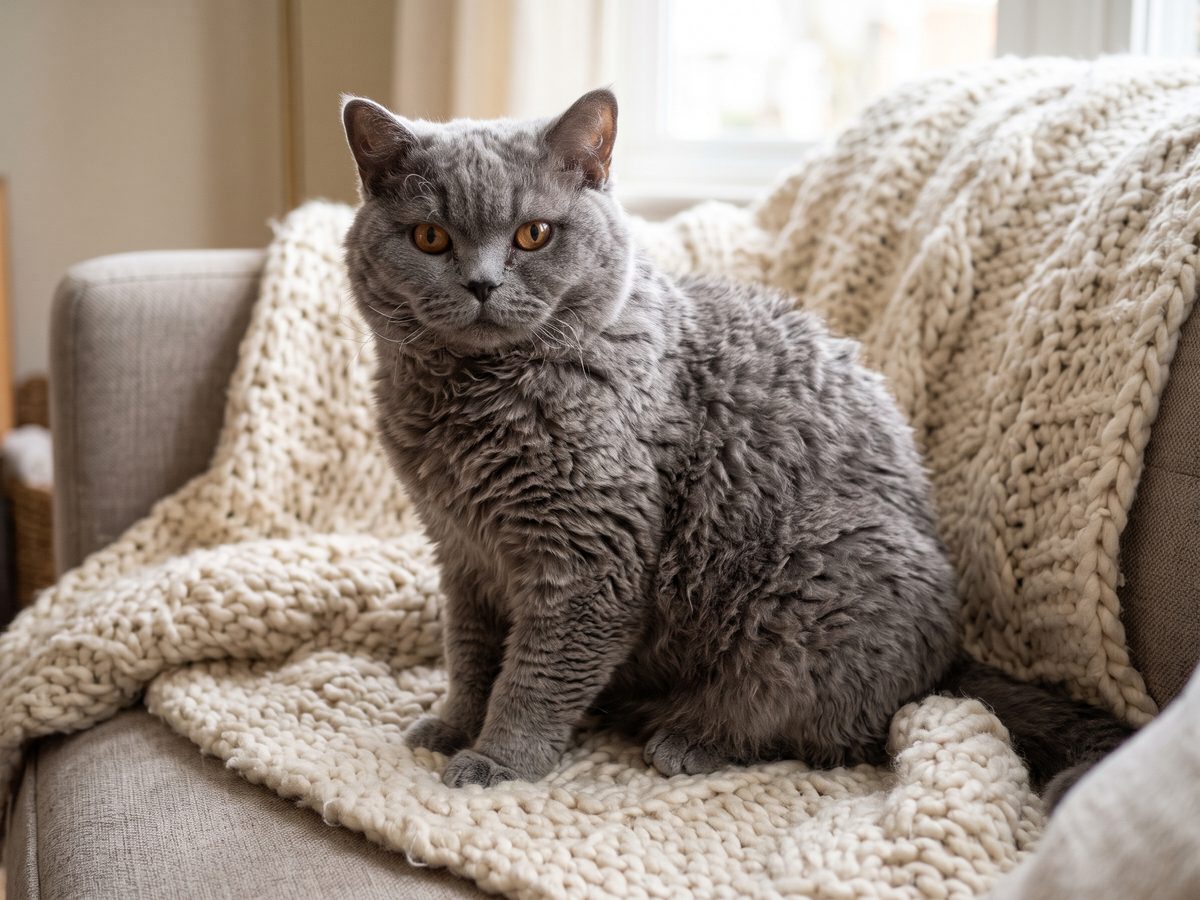
The curls are loose and random, most obvious around the neck, tail and belly, and vary with season, age and hormones. Comb gently with a wide-toothed comb once or twice a week; brushing too much straightens and frizzes the curls. Long-haired Selkirks need a little more attention to prevent mats.
The curly whiskers are fragile and break easily, which is normal. Some Selkirks make more ear wax, so check and gently clean the outer ear regularly, and some have slightly greasy coats that benefit from an occasional bath.
Home Setup: Indoors, Outdoors and Climbing
Selkirks are adaptable and generally happy indoors with company, play and a cozy spot. See our indoor or outdoor guide for the choices.
Gear for a Selkirk Rex
Each button opens a search in your own country's Amazon store. As an Amazon Associate we earn from qualifying purchases.
A wide-toothed comb is kinder to curls than a brush. A gentle, cat-safe shampoo helps with the occasional bath, and cotton pads make ear checks easy. A wand toy keeps a laid-back cat active, and a soft bed suits a cuddler.
Health: What to Discuss With Your Vet and Breeder
There are no known health problems specific to the Selkirk Rex, but it can inherit problems from the breeds used to develop it, including polycystic kidney disease (PKD) from Persian lines and a heart muscle condition (HCM) from British Shorthair lines. In the UK, GCCF-registered breeding cats must be DNA-tested for PKD or come from tested parents. Ask any breeder for test results and heart-screening history.
Ask your vet about ear care and what to watch for, and keep up the preventive care in our cat health basics.
Finding a Kitten or an Adult Cat
Choose a registered breeder who health-tests and lets you meet the mother. Not every kitten in a litter has curls; straight-coated Selkirks make equally lovely pets.
Frequently Asked Questions
What curly-cat fans ask first.
Is the Selkirk Rex hypoallergenic?
No. Despite the curly coat, Selkirks are not a good choice for people with cat allergies. The only test is time with the actual cat.
How do you groom a Selkirk Rex?
Gently, with a wide-toothed comb once or twice a week. Too much brushing straightens and frizzes the curls. Check the ears regularly.
Are Selkirk Rex cats cuddly?
They are known for a placid, social and cuddly nature, though every cat is an individual.
Do all Selkirk Rex kittens have curly coats?
No. Some kittens in a litter have straight coats; they have the same temperament.
What health tests should a Selkirk breeder do?
Ask for PKD DNA test results and heart-screening history, because these problems can come from the breeds used to develop the Selkirk.
Related Reading
- Devon and Cornish Rex: the other curly breeds.
- British Shorthair: one of the Selkirk's ancestors.
- Cat grooming: tools for every coat.
Breed traits are tendencies, not promises. Book a check-up soon after your Selkirk comes home and ask your vet about kidney and heart screening.