Moving House With a Cat: A Calm Plan for Before, During and After
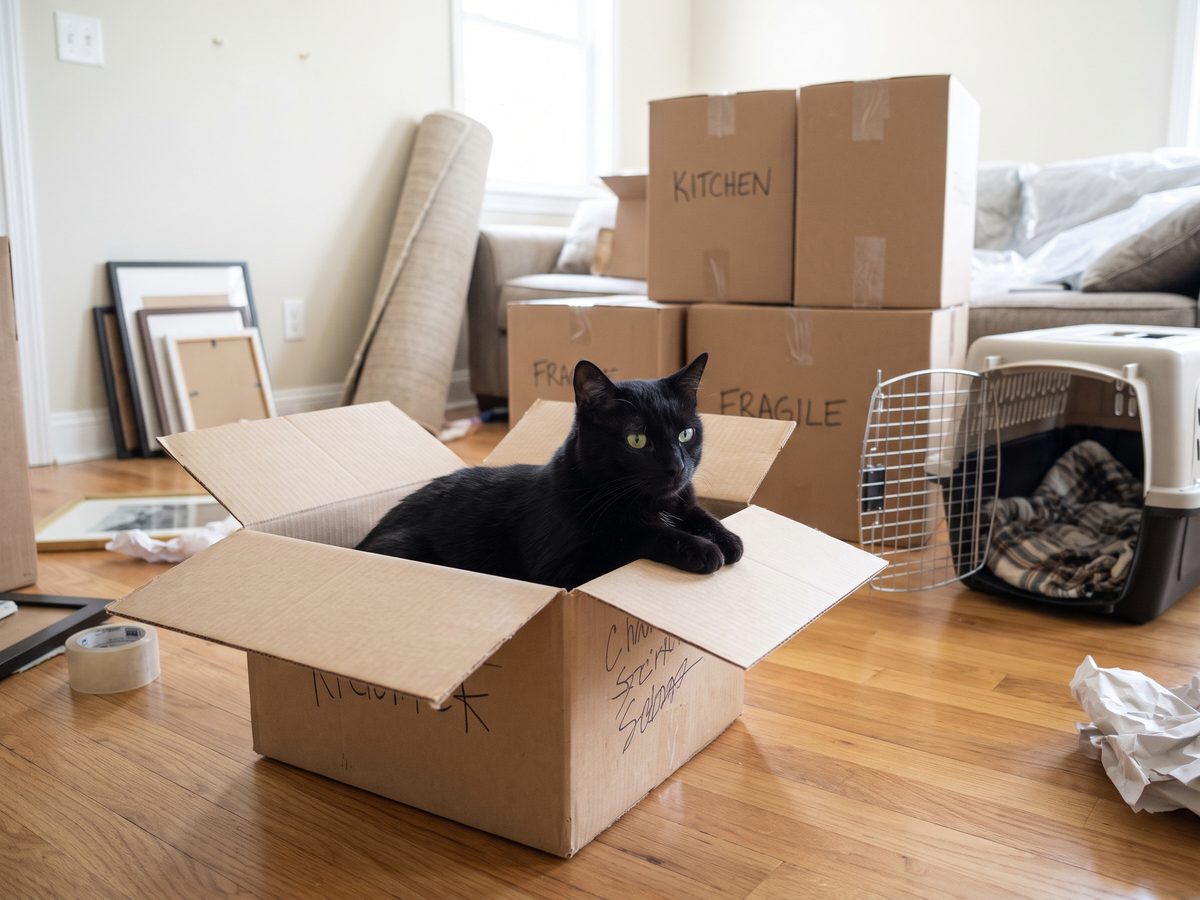
In the Weeks Before
Vaccinations, travel paperwork and any calming medicines: see your vet or a pet supply store with trained staff. Your vet can tell you what your cat needs for the journey and the destination.
Leave the cat carrier out with a blanket and treats inside so it becomes a den, not a warning; our clicker training guide shows how to teach a cat to walk in. Bring boxes in gradually so the house doesn't change overnight, and keep meal times and play the same.
If your cat is nervous, has a health problem, or the journey is long, talk to your vet well before the move. If you're moving to another country, start early: many countries require a microchip, vaccinations and paperwork, sometimes months in advance. Check the destination's official government rules.
Moving Day
Moving day is noisy, with doors open for hours. Before the movers arrive, shut your cat in a quiet room with its litter box, water, bed and carrier, and put a sign on the door saying it stays closed. Some owners book a cattery for a day or two either side of the move, which many cats find less stressful than the chaos.
Feed a small meal a few hours before traveling instead of a full one, so your cat travels on a settled stomach. Move your cat last, in its carrier, secured in the car, never loose and never in the moving van.
The Safe Room at the New Home
Set up one quiet room before your cat arrives: litter box (with some used litter from the old box, so it smells familiar), food, water, bed, a hiding place, a scratching post and something that smells of home, such as an unwashed blanket. Then bring your cat in, close the door and open the carrier.
Let your cat come out when it's ready. Many cats hide for a day or two, which is normal. Once it's eating, using the litter box and exploring the room confidently, open up the rest of the house one room at a time, ideally when things are quiet.
Moving Kit for Cats
Each button opens a search in your own country's Amazon store. As an Amazon Associate we earn from qualifying purchases.
A secure, comfortable carrier is the most important item. A covered bed gives your cat somewhere to hide in the safe room, and a pheromone diffuser plugged in before arrival may help some cats settle. Keep a spare litter box and a breakaway collar with your new phone number ready.
When Can an Outdoor Cat Go Out?
Keep a cat that goes outdoors inside for at least a few weeks so it learns that the new home is its base. Some cats have tried to return to their old home, especially if it's nearby. When you start, choose a quiet time before a meal so your cat comes back hungry, go out with it for short spells, and build up gradually. Keep it in at night.
Make sure your cat is microchipped with your new address and phone number before the first trip out. Our indoor or outdoor guide covers whether to change your cat's lifestyle at the same time, and if the new area has local rules on roaming cats, now is the time to check.
Update the Microchip
Contact your microchip database with your new address and phone number as soon as you know them, and change the ID tag on your cat's collar too. Rules differ by country: in England, keeping your cat's microchip details up to date is a legal requirement, and elsewhere your national government or local council can tell you what applies. If your cat gets lost after the move, tell local vets, shelters and the council, and check sheds and garages near both your new and old homes.
Settling In
Keep routines as familiar as you can: same food, same feeding times, same litter. Some cats are more clingy or more vocal for a while; others hide. Play daily to help your cat relax and explore. Our general moving with pets guide covers the wider planning.
If your cat stops eating, keeps hiding after the first week or two, or starts going outside the litter box, call your vet. Stress can trigger health problems as well as behavior changes.
Frequently Asked Questions
The questions people ask with the boxes half packed.
How long should I keep my cat indoors after moving?
At least a few weeks is the usual advice, so your cat learns the new home is its base. Then start with short, supervised trips before a meal, and keep it in at night.
Should my cat go to a cattery on moving day?
Many cats find a cattery calmer than a house full of movers and open doors. If you keep your cat at home, shut it in a quiet room with a sign on the door.
My cat is hiding in the new house. Is that normal?
Yes, for the first few days. Keep it in one safe room with its familiar things and let it come out in its own time. Call your vet if it isn't eating or using the litter box.
Will my cat try to go back to our old home?
Some cats do, especially if the old home is nearby. Keeping your cat in for a few weeks and building up outdoor time slowly makes it less likely.
Do I need to update my cat's microchip?
Yes, with your new address and phone number as soon as you know them. In England it's a legal requirement to keep the details up to date.
Related Reading
- Moving with pets: the wider moving plan.
- Carriers, travel and ID: choosing a carrier and collar.
- Indoor or outdoor?: deciding how your cat will live.
Talk to your vet before a move if your cat is nervous, unwell or facing a long journey, and call them if your cat stops eating or seems unwell after the move.