How Much Should You Feed a Cat?
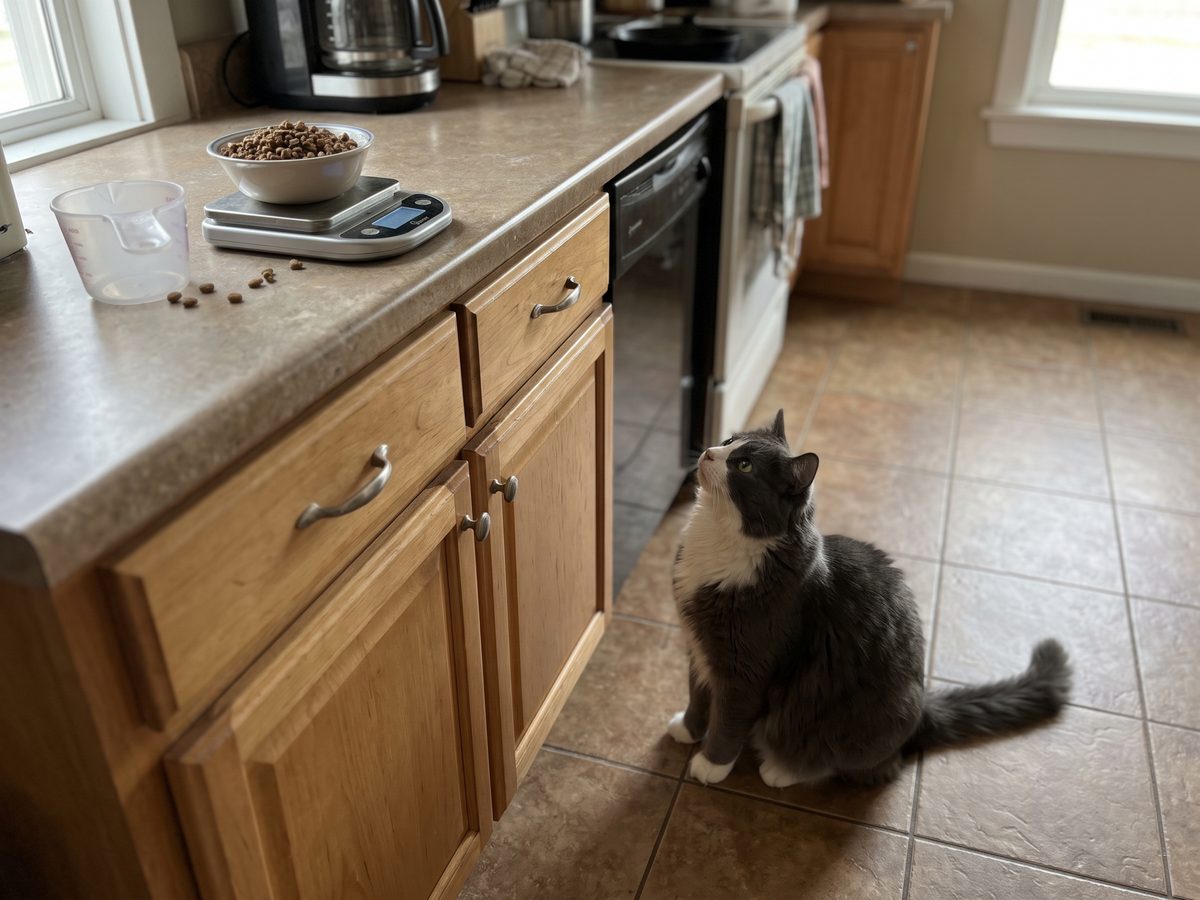
This method works with any bag or can, without needing a memorized calorie number.
- Find the label's calorie figure. Every product states calories per cup or per can somewhere on the bag or label. Another brand's chart won't transfer, since density varies by brand and recipe.
- Estimate a target weight, not just current weight. A cat that's carrying extra weight should be fed toward a leaner target, which a body-condition check helps you judge.
- Use the product's own feeding chart as a starting range. Split the total across two or three measured meals instead of one large bowl.
- Recheck body condition after a few weeks. Ribs that are easy to feel but not visible, plus a waist visible from above, are the target look for most adult cats.
- Adjust the amount gradually based on what you find. Small, steady changes work better than a sudden cut or increase.
Calorie Density: Why One Scoop Isn't One Scoop
A cup of one brand's kibble and a cup of another's can carry noticeably different calorie counts, since density depends on ingredients, moisture content, and how the kibble is shaped and packed. This is why a feeding amount copied from a friend's bag, an old container, or a general online chart often overfeeds or underfeeds a cat on a different food entirely.
Wet food adds another layer, since a small can of pâté and a larger can of broth-style food can land at very different calorie totals despite looking similar in size. The only figure worth trusting is the one printed on the exact product currently in the bowl, checked again any time the food changes.
Reading a Feeding Chart Without Overthinking It
Most feeding charts list a range by adult body weight, giving a starting amount, not an exact rule for every cat of that size. A lean, active cat may do better toward the top of that range, while a sedentary indoor cat often starts nearer the bottom, and neither choice is wrong as a first attempt. Charts are also written around a food fed on its own, so if treats, a topper, or a second food are part of the routine, the base amount usually needs trimming to compensate.
Treat the chart number as a first guess to be adjusted, not a target to defend once body condition tells a different story.
Body Condition: The Check a Bathroom Scale Can't Do
Body condition scoring is a simple hands-on habit: run a hand along the ribcage and feel for ribs that are easy to find but not sharply visible, then look at the cat from above for a visible, if gentle, waist behind the ribs. A rounded belly with no waist at all usually points toward reducing the daily amount, while ribs and spine that are easy to see or feel through very little padding points the other way.
This check matters more than a number on a scale, since two cats at the same weight can carry it very differently depending on frame size and muscle. Checking monthly, and after any food change, catches a drifting trend long before it becomes an obvious problem. A naturally dense-bodied breed like the British Shorthair makes this hands-on habit especially useful, since a heavy coat and sturdy frame both hide early gain from a casual glance.
When a Cat's Weight Needs a Veterinary-Guided Plan
A cat that's clearly overweight, clearly underweight, or losing or gaining weight without an obvious dietary cause benefits from a structured plan built alongside a veterinarian instead of an indefinite home guess. Your vet can check for a medical cause, set a target weight for that cat's frame, and suggest a food that keeps a cat satisfied on fewer calories.
This matters especially for weight loss: cutting food too fast can make an overweight cat seriously ill, because cats don't cope well with sudden fasting. A supervised plan with regular weigh-ins beats an unmonitored bigger cut made on a hunch.
Tools That Make Portion Control Easier
A basic kitchen scale gives dry food portions more precision than any measuring cup ever will, and a set of nested scoops earns its keep once you've settled on an amount you want to repeat every day without weighing. For a household prone to overfeeding, a microchip or app-connected auto feeder locks in a set portion per meal and helps in multi-cat homes where bowls get shared.
A slow-feed puzzle bowl slows down a fast eater and adds a little activity to a meal, which can help a cat on a reduced-calorie plan feel more satisfied with the same amount of food.
Frequently Asked Questions
My cat always acts hungry after eating. Should I feed more?
Acting hungry right after a meal is common cat behavior and isn't a reliable sign that the portion was too small. Check body condition over a few weeks instead of responding to begging meal by meal, since a cat that's already at a healthy weight rarely needs more food just because it asks.
How do treats fit into a cat's daily feeding amount?
Treats should count toward the day's total, not sit outside it, since a cat's stomach doesn't know the difference between a meal and a snack. A simple habit is trimming a small amount from the regular meal portion on days when treats are given generously.
Is a kitchen scale necessary to feed a cat correctly?
A scale isn't required, but it removes the guesswork a measuring cup leaves in, since kibble pieces vary in size and density from one bag to the next and rarely pack a cup the same way twice. If you're troubleshooting a weight problem, weighing food for a couple of weeks gives you a far more reliable baseline than eyeballing a scoop.
Should kittens be fed the same way as adult cats?
No. A growing kitten typically needs more frequent meals and a kitten-formula food with a different calorie density than an adult maintenance diet. Follow the kitten food's own label guidance by current weight and check in with your veterinarian at routine kitten visits to confirm growth is on track.
Is it fine to leave dry food out all day for free-feeding?
Free-feeding works for some lean, active cats but is where many indoor cats quietly gain weight, since it's hard to track how much was actually eaten. Measured meals, even just two a day, make it far easier to notice a gradual weight change before it becomes a bigger problem.
Do senior cats need less food than younger adults?
Many senior cats need somewhat fewer calories as activity naturally drops, but some older cats lose weight and need more support instead, especially if a health condition is involved. Track body condition and weight instead of assuming age alone tells you which direction to adjust.
How often should I reweigh or recheck my cat's body condition?
A monthly hands-on check is a reasonable habit for most healthy adult cats, done more often during a deliberate weight-change program. Any noticeable weight change between checks, gained or lost without a diet change, is worth mentioning at the next veterinary visit.
Can two cats in the same house safely share one feeding amount?
Rarely. Different cats usually need different amounts based on their own size, age, and activity level, and a shared bowl makes it impossible to know who is eating what. Separate bowls, feeding times, or a microchip feeder solve this in most multi-cat households.
Related Reading
- Cat food guide: choosing the food.
- Cat treats: fitting treats into the day.
- Neutering your cat: portions after neutering.
This page offers a general framework, not a feeding plan or weight-loss program for a specific cat. A cat that's carrying a lot of extra weight, looks too thin, has stopped eating, or is gaining or dropping pounds for no clear reason needs a vet visit before you change amounts on your own. Cutting calories too fast on a heavy cat can make it seriously ill, so weight loss needs supervision, not a home experiment.