Caring for a Senior Dog: Comfort, Health and Joy
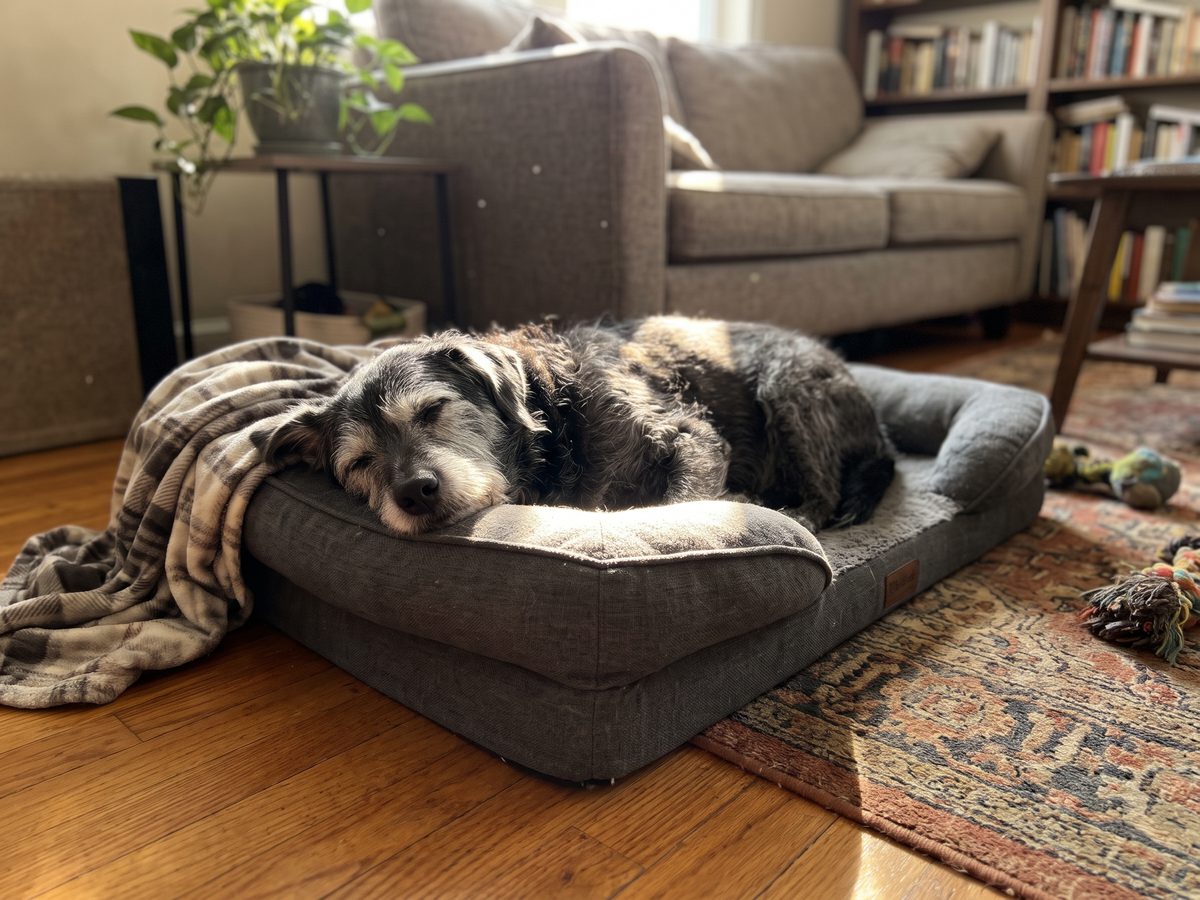
When Is a Dog Senior?
There's no single age. Large and giant breeds tend to age sooner than small ones. Ask your vet when your dog should move to senior check-ups, which are often more frequent than once a year.
Vet Checks and Early Signs
Regular checks help catch problems early. Mention changes such as drinking more, accidents indoors, stiffness, lumps, bad breath, weight change, cloudy eyes, deafness, restlessness at night or confusion. These can be "just old age", but often your vet can help.
A Comfortable Home
- A thick, supportive bed in a warm, draft-free spot.
- Rugs on slippery floors.
- Ramps or steps for cars and sofas.
- Raised water and food bowls only if your vet advises.
- Night lights and a predictable routine for dogs whose sight or memory is fading.
Comfort Kit for an Older Dog
Each button opens a search in your own country's Amazon store. As an Amazon Associate we earn from qualifying purchases.
A supportive low-entry bed, non-slip rugs, a car ramp, a harness with a handle to help on steps, and puzzle toys for gentle brain work.
Gentle Exercise and Brain Games
Shorter, more frequent walks on softer ground suit most older dogs. Sniff walks, scent games and puzzle feeders keep the brain busy without strain. Keep weight lean; see weight and body condition.
Teeth and Food
Dental care matters more with age; keep brushing and ask your vet to check the mouth. Some older dogs need fewer calories; others lose weight. Your vet can advise on diet; see puppy, adult and senior food.
Pain relief, joint supplements and medicines for older dogs: see your vet or a pet supply store with trained staff. Never give human medicines to a dog.
Frequently Asked Questions
Gray muzzles, common questions.
At what age is a dog a senior?
It depends on size: often around six to eight for giant breeds and later for small breeds. Ask your vet.
How often should an older dog see the vet?
Many vets suggest more frequent checks for seniors, often every six months. Ask your vet.
Should my old dog still go for walks?
Usually, yes: shorter, gentler and more often. Your vet can advise if your dog has stiff joints.
Is stiffness just old age?
Not necessarily. Your vet can check for causes and talk through what helps.
Related Reading
- Joint care for dogs: a joint-friendly home.
- Supportive beds: for older dogs.
- Dog health basics: the preventive checklist.
Older dogs can hide discomfort. If your dog seems in pain, confused or unwell, call your vet.