Supportive Dog Beds for Older and Larger Dogs
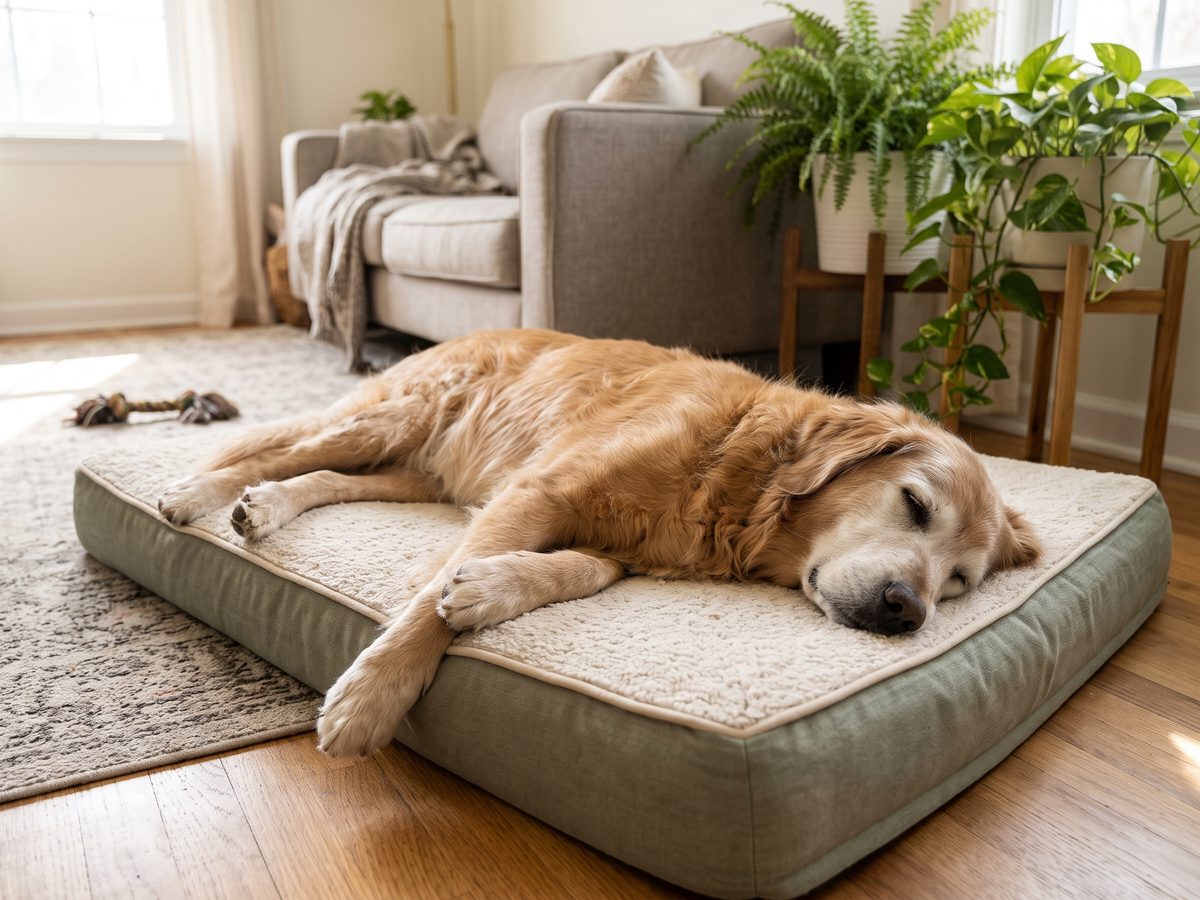
What Good Support Looks Like
Press your knee or fist into the middle of the bed. If you can feel the floor, so can your dog. Good foam springs back slowly and keeps its shape over months. Words like "orthopedic" on a label aren't a standard, so judge the foam, not the marketing.
Foam Types
- Memory foam: molds to the body and spreads pressure; often used as a top layer.
- High-density support foam: firmer, keeps shape well, often the base layer.
- Egg-crate foam: cheaper, airier, but flattens faster under big dogs.
- Fiber-filled cushions: soft and cozy, but usually go flat and lumpy for heavy dogs.
For a large dog, look for foam thick enough that a firm press doesn't reach the floor, and check the maker's weight guidance.
Size to How Your Dog Sleeps
Measure your dog lying stretched out, nose to tail, and add about 4 inches (10 cm). Sprawlers need a flat mattress; curlers may like a bolster to lean on. A low front edge or no sides at all makes getting on and off easier for a stiff dog. Put the bed somewhere warm, quiet and away from drafts, with a non-slip rug in front if your floors are smooth.
Start Before Your Dog Needs It
Large breeds and dogs heading into their senior years benefit from a supportive bed early, before stiffness appears. It's also easier for a dog to get used to a new bed while it's comfortable and moving well. See joint care for dogs for other home changes.
Shopping for a Supportive Bed
Each button opens a search in your own country's Amazon store. As an Amazon Associate we earn from qualifying purchases.
A thick memory-foam mattress suits sprawlers and big dogs. A low-entry design helps stiff dogs step on and off. A waterproof inner cover protects the foam, and a non-slip rug in front of the bed helps on smooth floors.
Stiffness and Limping Belong With Your Vet
A bed can make a dog more comfortable, but it doesn't treat anything. If your dog is slow to get up, stiff after rest, limping, or reluctant on stairs, book a vet visit. Your vet can find the cause and talk through what will help.
Pain relief, joint supplements and other treatments: see your vet or a pet supply store with trained staff. Never give a dog human painkillers.
Frequently Asked Questions
A good night's sleep, at any age.
Do supportive beds help older dogs?
Many older dogs seem more comfortable on thick, supportive foam, and it's easier on bony joints than a thin cushion or the floor.
How thick should the foam be?
Thick enough that you can't feel the floor when you press into it. Heavier dogs need thicker, denser foam.
Is "orthopedic" a standard?
No. It's a marketing word. Judge the foam type, thickness and how well it springs back.
My dog won't use the new bed. What now?
Put it where your dog already likes to sleep, add a familiar blanket and reward your dog for lying on it.
Related Reading
- Dog beds and furniture: all bed types.
- Joint care for dogs: weight, exercise and home changes.
- Puppy, adult and senior food: feeding older dogs.
If your dog is stiff, limping or in pain, book a vet visit; a bed is for comfort, not treatment.