Resource Guarding in Dogs: Prevention and Safety
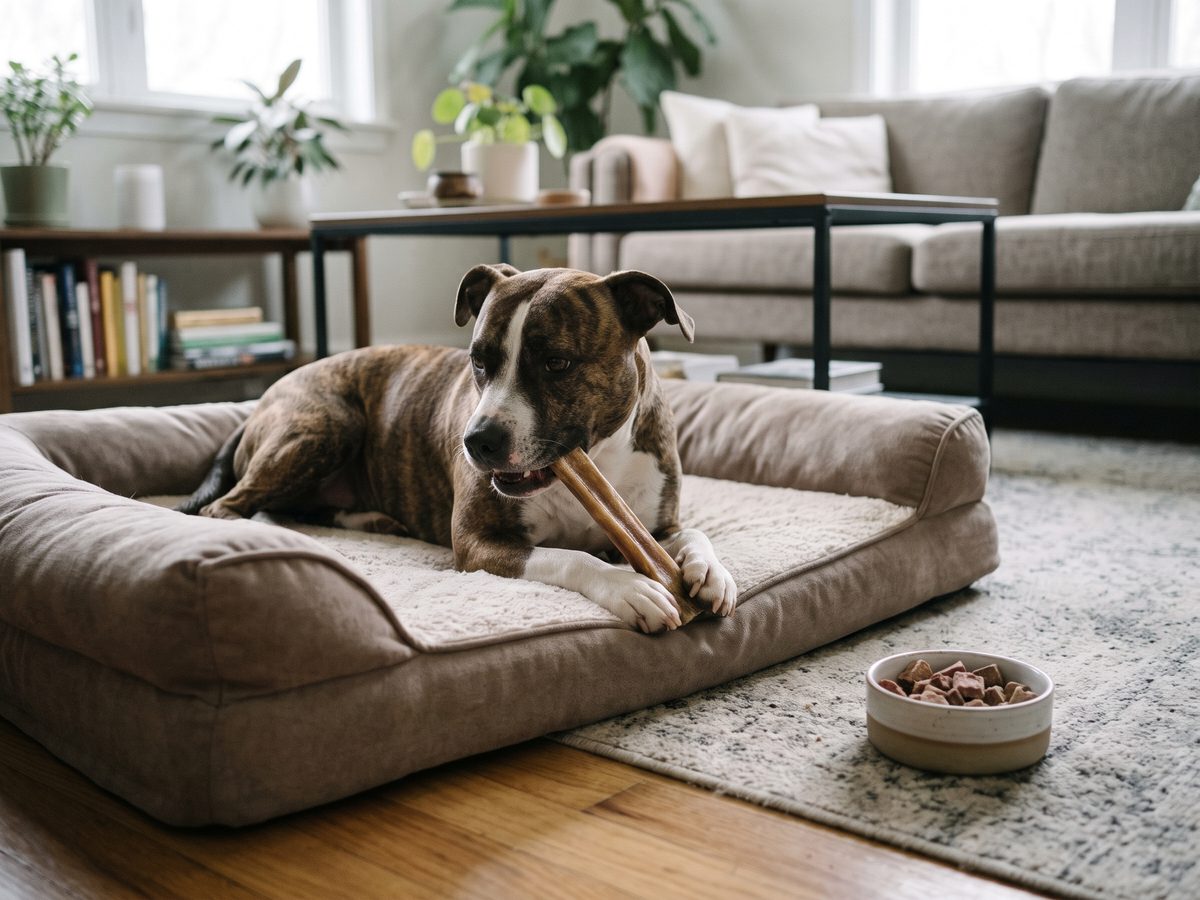
Why Dogs Guard
Guarding things worth having makes sense to a dog, as it does to most animals. A dog that stiffens when someone reaches for its dinner isn't broken; it's worried about losing something valuable. The aim is to change that worry, not to win a contest.
Prevention: The Trade-Up Habit
Old advice says to put your hands in a puppy's bowl so it "gets used to it". That often backfires, because hands near the bowl start to predict losing food. Trade up instead, practicing when nothing much is at stake:
- Walk past while your dog eats or chews something low value.
- Toss a tasty treat near the bowl or chew without reaching for anything.
- Walk away. Your approach now means "something extra".
- Repeat at random times, then practice swapping a toy for a treat.
Don't use this to take something your dog is already guarding hard; that's a different, riskier situation.
Keeping Children Safe
Don't rely on children remembering rules when they're excited. Feed your dog in a crate or separate room, give bones and long chews only when children aren't around, and use a baby gate around your dog's resting area. Teach children never to touch a dog that is eating, chewing or sleeping. See dogs and children.
Never Punish the Growl
A growl is a warning: "I'm uncomfortable, please back off." Punishing it doesn't remove the worry, only the warning, and a dog that learns not to growl may go straight to a snap next time. Calmly give space, then work on the cause. If your dog has snapped or bitten, or guarding is getting worse, get a qualified trainer or veterinary behaviorist involved; see when to hire a trainer or behaviorist.
Gear for Safe Management
Each button opens a search in your own country's Amazon store. As an Amazon Associate we earn from qualifying purchases.
A baby gate or crate gives your dog a private place to eat and chew. A treat pouch keeps trade-up rewards ready. Lick mats and puzzle feeders give your dog long-lasting things to enjoy in its own space.
Frequently Asked Questions
Guarding worries a lot of owners. These answers help.
Does resource guarding mean my dog was badly raised?
No. It shows up in all kinds of dogs and homes. It's a natural instinct that can be managed and improved.
Isn't trading up just bribery?
It's teaching your dog that people near its things are good news. Over time, the worry fades and the guarding with it.
What if my dog grabs something dangerous?
Trade for something better, such as a handful of treats scattered on the floor, rather than chasing or prying its mouth open. Practice "drop it" swaps in calm moments.
When do I need a professional?
If your dog has snapped or bitten, if guarding is getting worse, or if there are children in the home and you're worried. Don't wait.
Related Reading
- Dogs and children: safe rules for kids.
- Introducing two dogs: guarding between dogs.
- Puppy biting and mouthing: normal puppy teeth.
Sudden guarding in a dog that never did it before can be linked to pain. If you see it, talk to your vet.