How to Introduce Two Dogs Safely
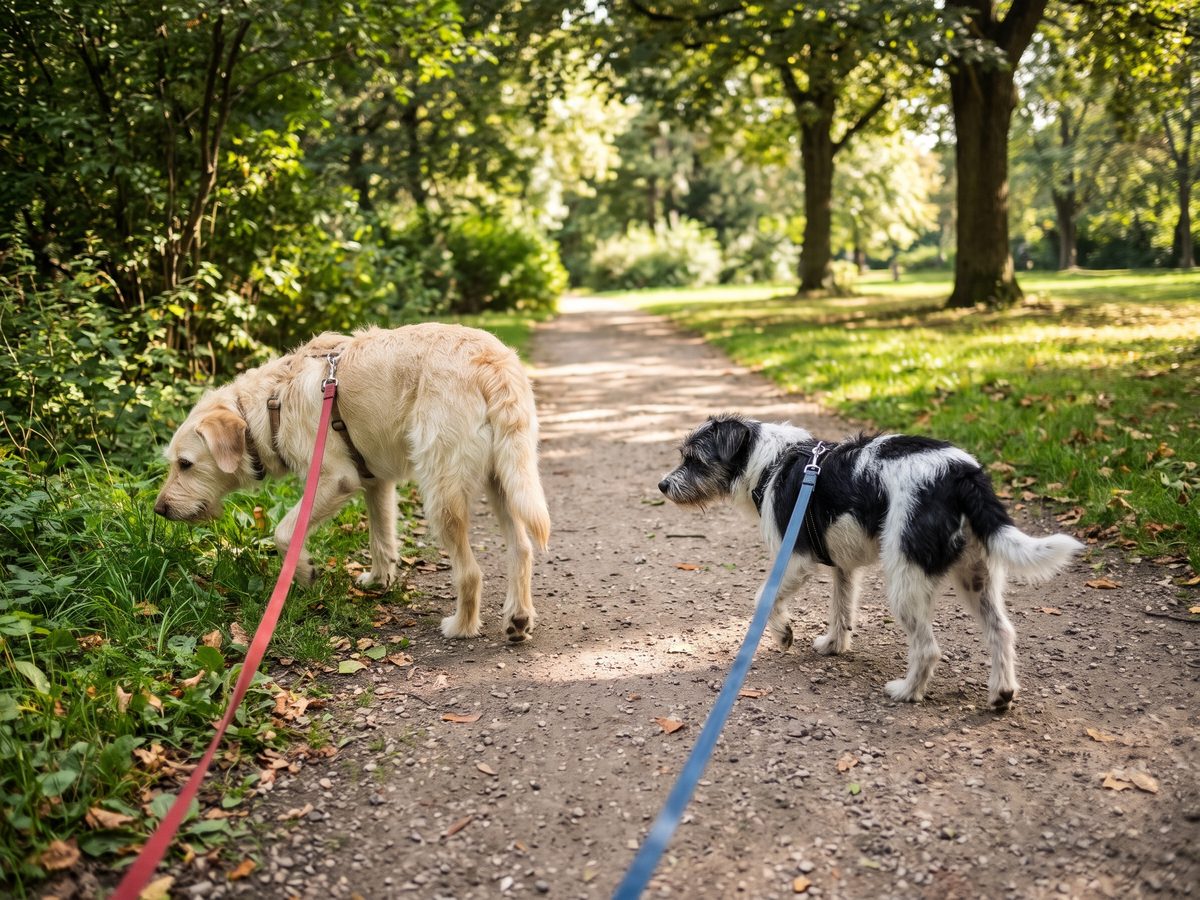
Meet on Neutral Ground
- Choose a quiet place neither dog thinks of as home, such as an unfamiliar street or a calm park.
- Have one handler per dog, both on loose leashes, and start well apart.
- Walk in the same direction, closing the gap only while both dogs stay loose and relaxed.
- Allow a brief sniff with slack leashes, then call both dogs away happily after a few seconds.
- Repeat over more than one session before the home introduction, if you can.
Parallel Walking: Together Without Pressure
Walking side by side lets each dog get used to the other without a face-to-face greeting. Watch body language: soft, wiggly bodies and sniffing the ground are good signs; staring, stiffening, raised hackles or freezing mean add more distance. See leash reactivity basics if either dog struggles on a leash.
Bringing It Home: The First Weeks
- Walk into the yard or garden together before going indoors.
- Pick up toys, chews and bowls before the new dog arrives.
- Feed the dogs apart, in separate rooms or crates.
- Give each dog its own bed and a place to retreat; baby gates help.
- Supervise time together and keep it short at first. Separate them when you're out.
- Give the resident dog one-to-one time so it doesn't lose out.
See resource guarding basics for more on food and toys.
If Tension Shows Up
Preventing a fight is far better than breaking one up, which is why slow pacing and managing resources matter so much. If a serious scuffle happens, don't reach in with your hands; put a barrier such as a board or a chair between the dogs, or make a loud noise. Keep them apart afterward and get professional help before trying again.
Gear for a Calm Introduction
Each button opens a search in your own country's Amazon store. As an Amazon Associate we earn from qualifying purchases.
Baby gates let dogs see each other without full contact. A second crate and a second bed give each dog its own space. Separate bowls and a treat pouch for each handler make the first weeks smoother.
Frequently Asked Questions
Two dogs, one home, common questions.
How long does it take for two dogs to settle?
The first meeting can go well in an hour, but settling in together usually takes several weeks. Rushing full-time contact is a common reason matches go wrong.
Does sex matter when choosing a second dog?
Often, opposite-sex pairs get on more easily, though every dog is different. Some breeds are known for difficulties with same-sex dogs.
What about a puppy and an older dog?
Protect the older dog's rest. Use gates and give the puppy its own play outlets, so the adult isn't pestered all day.
Should I let them "sort it out"?
No. Step in calmly, add distance and manage resources. Repeated tension needs professional help.
Related Reading
- Resource guarding basics: food and toys.
- Crates, gates and pens: managing space.
- When to hire a trainer or behaviorist: getting help.
If either dog is hurt in a scuffle, even slightly, see your vet; small puncture wounds can be deeper than they look.