Great Dane: Size, Temperament and Everyday Care
Sizing Up the Commitment
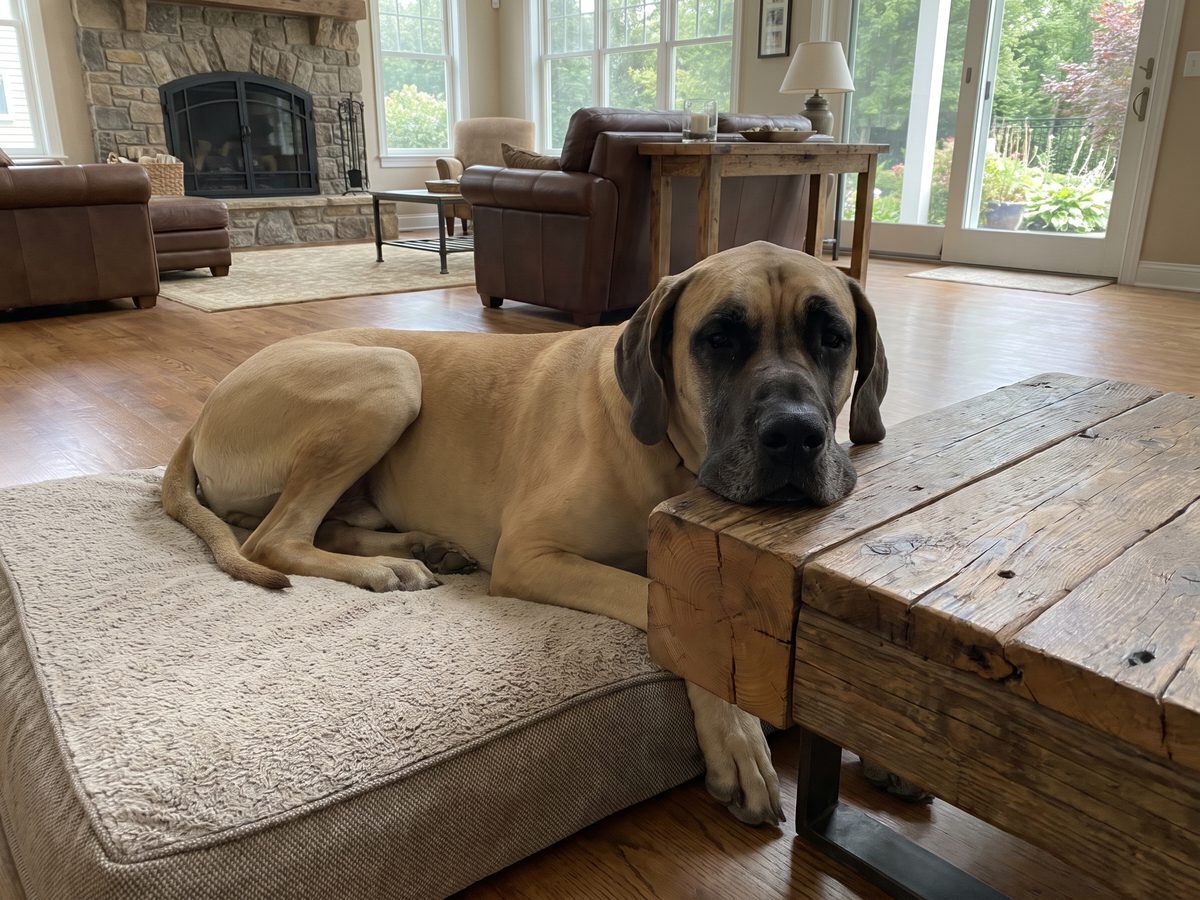
Danes are usually gentle, friendly and affectionate, and many think they're lapdogs. They suit people with room for a big dog to lie down and turn around, a vehicle it fits in, and the strength to manage a dog that may outweigh them.
Everything costs more for a giant: food, beds, crates, insurance, medicines and boarding. Get insurance quotes and price a crate and bed before you commit.
Growing a Giant Slowly
Great Danes grow fast, and steady growth is kinder to developing joints than rapid growth. Feed a complete large or giant-breed puppy food, weigh portions, and keep your puppy lean rather than chubby. Ask your vet when to switch to adult food. While it grows, avoid lots of jumping, stairs and long, hard runs; ask your vet or breeder how much exercise suits its age.
Bloat: The Emergency to Know
Large, deep-chested breeds like the Great Dane are at higher risk of bloat, a life-threatening stomach emergency.
Go to a vet straight away, day or night, if your dog's belly looks swollen, it retches or tries to vomit without bringing anything up, drools heavily, is restless or seems in pain. Don't wait to see if it passes.
Ask your vet about feeding routines that may lower the risk, such as smaller meals and rest around exercise, and whether any preventive procedure is worth discussing for your dog.
Gear Sized for a True Giant
Each button opens a search in your own country's Amazon store. As an Amazon Associate we earn from qualifying purchases.
A giant-breed puppy food supports steady growth. An extra-large, supportive bed spares big joints. A sturdy harness made for giant breeds gives control, an XXL crate gives a puppy a safe den, and a car ramp saves lifting a dog that weighs as much as a person.
Health: What to Ask the Breeder and Your Vet
In the UK, The Royal Kennel Club lists hip and elbow scoring, eye testing and a DNA test for inherited myopathy of Great Danes as best practice for breeders. Ask breeders about heart checks in the parents too, and see the results.
Book a check-up soon after your dog comes home, and ask about vaccinations, neutering timing for a giant breed, and a parasite plan. Giant dogs age sooner than small ones, so regular check-ups matter.
Worming, flea and tick products and joint supplements: see your vet or a pet supply store with trained staff. Doses depend on weight, and giant dogs need the right product.
Frequently Asked Questions
Big dog, big questions.
How long do Great Danes live?
The Royal Kennel Club gives a lifespan of under 10 years, shorter than smaller breeds. Good breeding, a lean body and regular vet care help.
What is bloat?
A life-threatening stomach emergency that deep-chested breeds are prone to. If your dog's belly swells or it retches without bringing anything up, go to a vet straight away.
Can a Great Dane live in an apartment?
Some do, as they are often calm indoors, but they need space to lie flat and turn round, easy access outside, and daily walks.
Are Great Danes good with children?
Usually gentle, but a young Dane's size can knock children over. Supervise and teach calm greetings early.
What should a Great Dane puppy eat?
A complete large or giant-breed puppy food, in weighed portions. Ask your vet when to switch to adult food.
Related Reading
- Newfoundland and Bernese: two more gentle giants.
- Puppy, adult and senior food: feeding by life stage.
- Crate sizing guide: measuring for a big dog.
Breed traits are tendencies, not promises. Know the bloat signs, and call your vet at once if you see them.