Poodle and Doodle Grooming at Home Between Clips
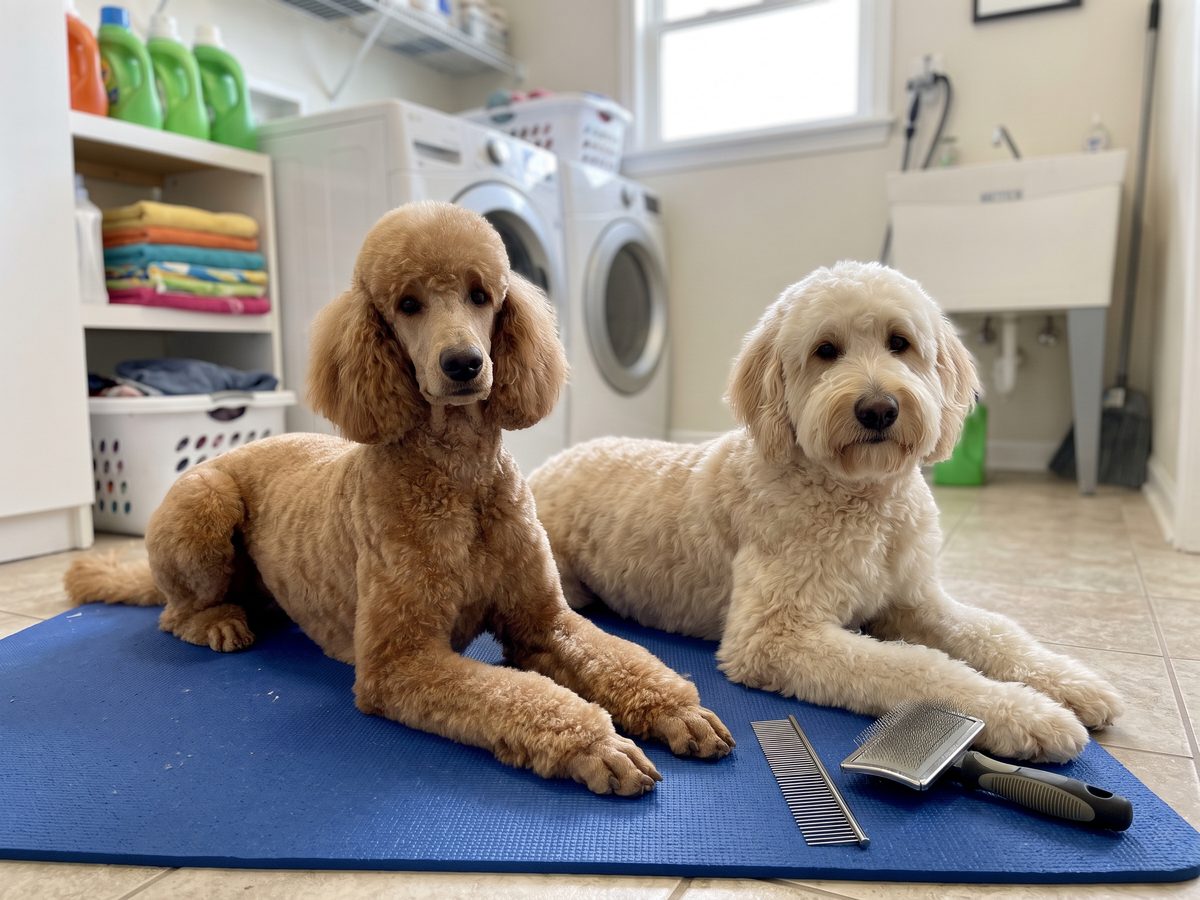
The Home Routine
- Brush two or three times a week with a slicker brush, in small sections, lifting the coat so you reach the skin. This is called line brushing.
- Comb through with a metal comb. If the comb catches, there's a tangle the brush missed.
- Check the hot spots for mats: behind the ears, the armpits, the collar or harness line, the belly and the back legs.
- Tidy paws and the hygiene area about every couple of weeks with small clippers or round-tipped scissors.
- Keep the eyes clear by trimming hair around them with round-tipped scissors, or ask your groomer to.
Catching Mats Early
A mat starts as a small knot you can feel before you see it. Work a little detangling spray into it and tease it apart with your fingers before combing; don't drag a comb straight through. A tight mat close to the skin is uncomfortable for the dog and is best left to a groomer, who may need to clip it out. Never cut a mat out with pointed scissors: dog skin is thin and easy to nick.
Bathing and Drying
Many owners bathe every few weeks between grooms. Brush out every tangle first, because water tightens knots into mats. Use a dog shampoo, rinse until the water runs clear, then dry thoroughly; a damp curly coat mats fast. A towel then a pet dryer on a cool or low setting works well, brushing as you dry.
Low-Shedding, Not Allergy-Free
Curly coats trap loose hair, which is why Poodles and many doodles leave little fur around the house. Dog allergens come mainly from saliva and skin, though, so a low-shedding coat doesn't guarantee an allergic person won't react. See doodles explained.
Home Grooming Kit for Curly Coats
Each button opens a search in your own country's Amazon store. As an Amazon Associate we earn from qualifying purchases.
A good slicker brush and a metal comb do most of the work. Detangling spray helps with small knots. Quiet cordless clippers and round-tipped scissors handle paws and face, and a pet dryer gets a thick coat properly dry.
Working With Your Groomer
Book the next appointment before you leave, so the gap never stretches. Tell your groomer how much home care you can realistically do; a shorter clip may suit a busy household better. Start handling paws, ears and face when your puppy is young so grooming stays easy; see cooperative care handling. If you notice sore skin, lumps or a smell under the coat, mention it to your vet.
Frequently Asked Questions
Curls are lovely until they knot. The common questions.
Can I skip the groomer and clip my dog myself?
Some owners learn to, but it takes practice and the right equipment, especially around the face and paws. Many combine home tidy-ups with a few professional clips a year.
How do I know a mat is forming?
Your comb catches, or you feel a firm knot near the skin. Check behind the ears, the armpits and the collar line every couple of days.
How often should I bathe a doodle?
Every few weeks is common between grooms. Brush out tangles first and dry thoroughly.
Is a Poodle hypoallergenic?
No dog is truly allergy-free. A low-shedding coat may help some people, but it's not a guarantee.
Can a Poodle go six weeks between grooms?
Yes, with brushing at home two or three times a week in between. Without that, mats are likely.
Related Reading
- Doodles explained: F1, F1b and coats.
- Dog grooming supplies: the full kit.
- Trimming dog nails: the other regular job.
If you find sore, red or broken skin under a mat, see your vet before more grooming.