How to Trim a Dog's Nails Without Hitting the Quick
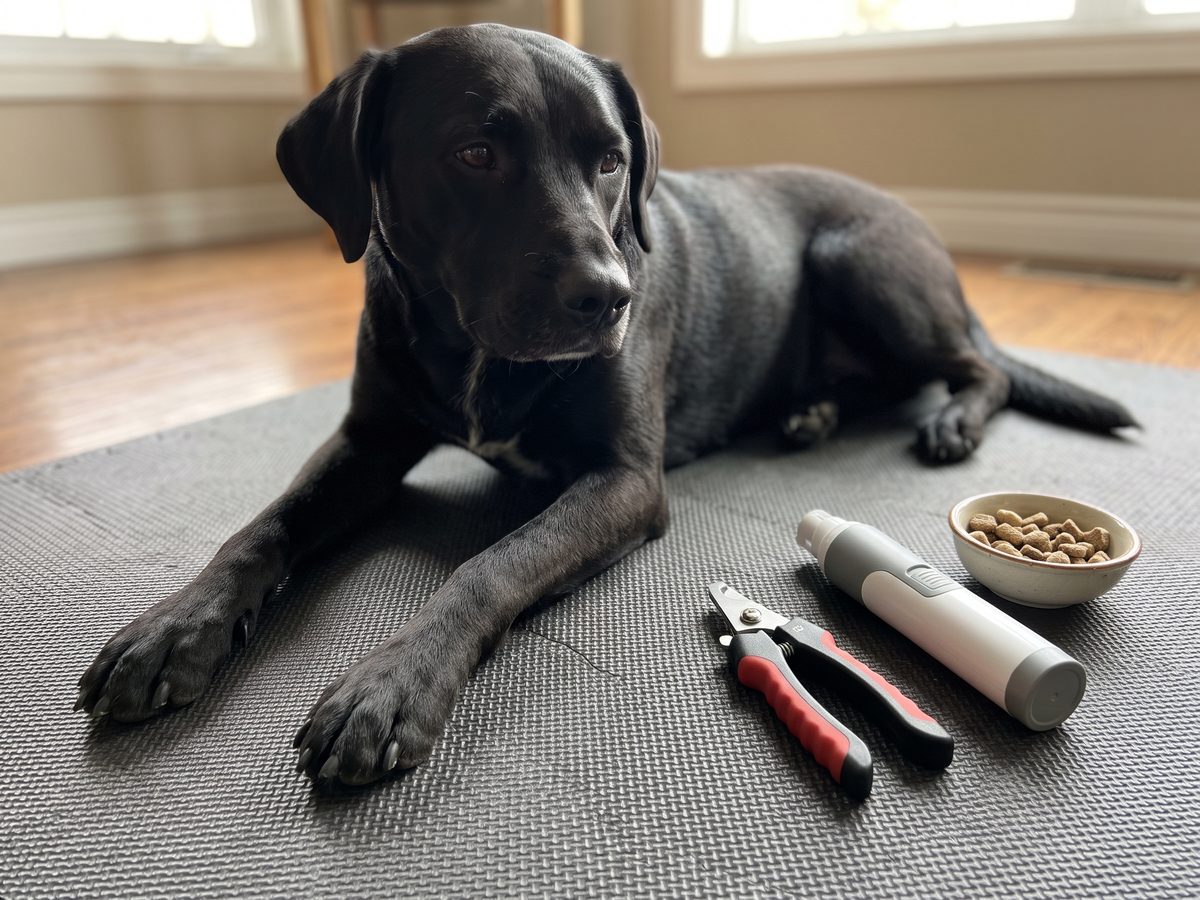
Step by Step
- Choose a calm moment and a non-slip surface, with treats ready.
- Hold the paw gently and press the pad lightly to extend the nail.
- Trim a thin slice from the tip, at a slight angle following the nail's curve.
- Treat. Do one nail, one paw or all of them, depending on how relaxed your dog is.
- Don't forget dewclaws, higher up on the inside of the leg, which don't wear down.
A good rough guide: if you can hear nails clicking on a hard floor, they're probably due a trim.
Clippers or Grinder?
- Scissor-style clippers suit most dogs and give good control.
- Guillotine clippers suit small dogs with thin nails.
- A grinder files the nail down gradually, gives a smooth edge and suits dogs that hate the clip. Introduce the noise slowly, and keep long fur away from it.
Keep blades sharp; blunt clippers squeeze the nail.
Extra Care With Black Nails
You can't see the quick in a dark nail, so take tiny slices and look at the cut end each time. Pale or chalky means keep going; a softer, darker dot appearing in the center means stop. A grinder is often easier for black nails. If you're unsure, ask your vet or a groomer to show you.
Building Calm Paw Handling
Many dogs dislike nail trims because of the handling, not the clip. Practice touching and holding paws for a second at a time with treats, then show the clippers, then touch them to a nail, all before you cut anything. See cooperative care. Little and often beats a wrestling match.
Setting Up for Nail Trims
Each button opens a search in your own country's Amazon store. As an Amazon Associate we earn from qualifying purchases.
Clippers sized for your dog, or a quiet grinder, do the work. A lick mat keeps your dog busy and happy, a non-slip mat gives steady footing, and tiny treats reward each nail.
When a Nail Needs a Vet
If you cut the quick, stay calm: press a clean pad of gauze or a cotton ball firmly on the tip for a few minutes. Call your vet if it keeps bleeding. See your vet, too, for a split, torn or ingrown nail, a swollen toe, or a dog that limps after a trim. Your vet or a groomer can trim nails for a dog that's too worried for home trims while you work on handling.
Products to stop bleeding and any treatments: see your vet or a pet supply store with trained staff. They can advise what to keep in your kit.
Frequently Asked Questions
Snip, treat, repeat. The common questions.
How often should I trim my dog's nails?
Every few weeks for most dogs, more often if they don't walk much on hard ground. If they click on the floor, they're due.
What if I cut the quick?
Press clean gauze firmly on the nail tip for a few minutes. If it keeps bleeding, call your vet.
Is a grinder better than clippers?
Neither is better for every dog. Grinders suit dogs that hate clipping and are easier on black nails; clippers are quicker.
Can long nails shorten over time?
Yes. Frequent small trims encourage the quick to recede, so nails can gradually be kept shorter.
Related Reading
- Cooperative care: calmer handling.
- Dog grooming supplies: clippers and grinders.
- Dog first-aid kit: what to keep handy.
If a nail is split, bleeding a lot or your dog limps, see your vet.