Doodles Explained: What Labradoodles, Goldendoodles and Cavapoos Really Are
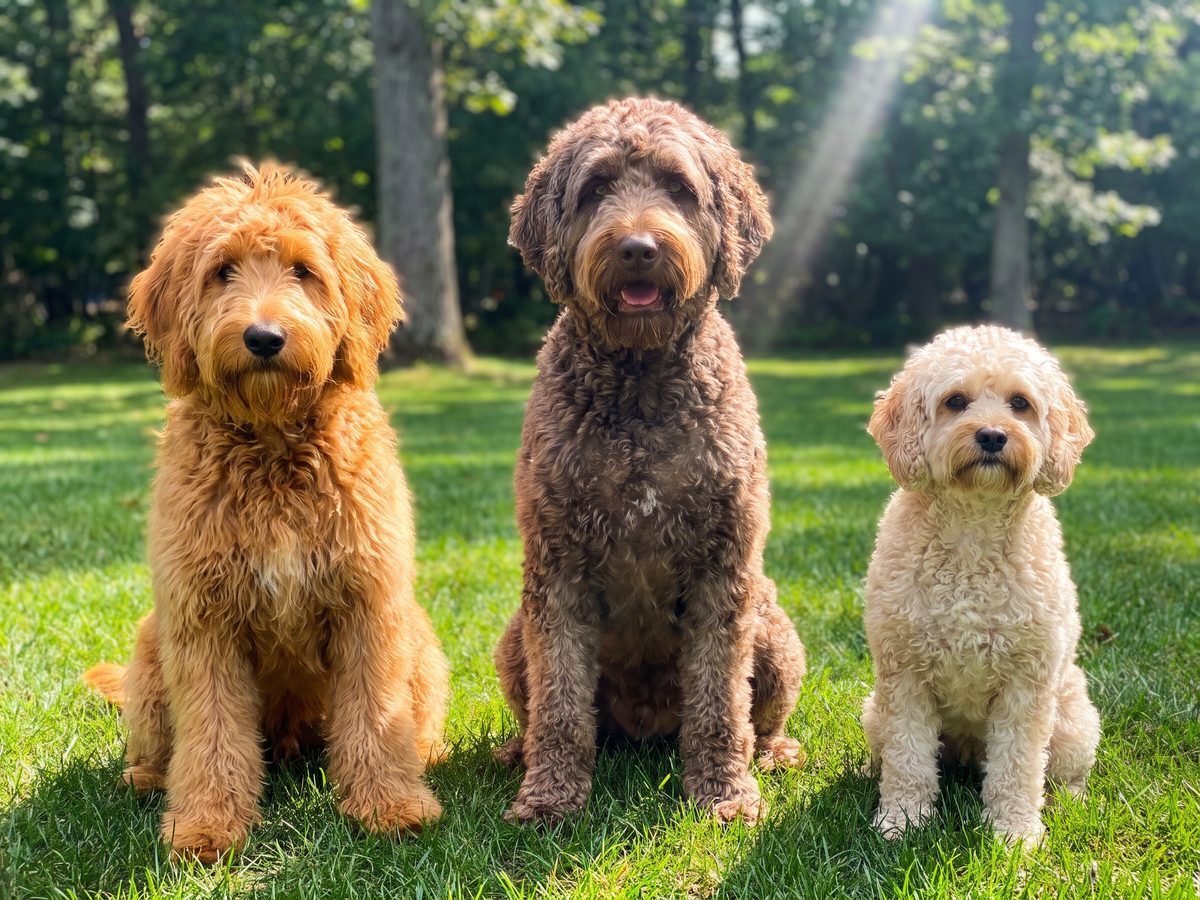
A Cross, Not a Breed Standard
A Labradoodle (Labrador × Poodle), Goldendoodle (Golden Retriever × Poodle), Cockapoo (Cocker Spaniel × Poodle) or Cavapoo (Cavalier King Charles Spaniel × Poodle) inherits from both parents. Two puppies from the same litter can grow into quite different adults. That doesn't make a doodle a lesser choice; it makes the breeder's description of likely ranges, and the parents themselves, very important.
F1, F1b and Multigen in Plain Words
- F1: a first cross of two purebred parents. Coats vary widely, from fairly straight to wavy.
- F1b: an F1 dog bred back to a Poodle. Curlier, lower-shedding coats are more likely, but not certain.
- Multigen: doodle bred to doodle over several generations. Some breeders aim for more predictable results this way.
None of these labels guarantees a coat, size or temperament.
Low-Shedding Is Not Allergy-Free
A curly coat traps loose hair inside the curls, so less ends up on the floor. But the proteins that trigger dog allergies come mainly from saliva and skin, not the hair itself, so no dog is guaranteed to be safe for an allergic person. If someone in your home has a dog allergy, spend real time with the individual dog before you commit, and talk to a doctor.
The Grooming Commitment
Curly and wavy coats mat quickly. Most doodles need brushing down to the skin several times a week and a professional groom every 6–8 weeks. Let either slide and a painful mat often ends in a full shave-down. Budget for grooming from day one; our Poodle and doodle grooming page has the home routine.
Tools for a Coat You Can't Fully Predict
Each button opens a search in your own country's Amazon store. As an Amazon Associate we earn from qualifying purchases.
A slicker brush and a metal comb are the essentials for any doodle coat. A detangling spray helps with small knots, round-tipped scissors keep the face tidy between grooms, and an absorbent towel speeds up drying after muddy walks.
Choosing a Doodle Puppy or Rescue
Ask to meet the mother, and the father if possible, and ask the breeder for health test results for both parent breeds: for example hip, elbow and eye checks for the retriever side and the tests the Poodle's breed club recommends. Be wary of anyone promising an exact size, a "non-shedding" coat or "hypoallergenic" puppies. Doodle rescues also exist, often with adult dogs whose coat and temperament you can see. See rescue vs breeder.
Worming, flea and tick products: see your vet or a pet supply store with trained staff. They can tell you what suits your dog.
Frequently Asked Questions
Curls, allergies and grooming top the list.
What's the difference between an F1 and an F1b doodle?
An F1 is a first cross of two purebreds; an F1b is an F1 bred back to a Poodle. F1b puppies are more likely to have curly, lower-shedding coats, but it isn't guaranteed.
Are doodles hypoallergenic?
No dog is truly allergy-free. A low-shedding coat may help some people, but meet the individual dog before committing if anyone at home has allergies.
How often does a doodle need grooming?
Brushing several times a week at home and a professional groom about every 6–8 weeks.
Can a breeder guarantee my puppy's size and coat?
No. A good breeder can describe likely ranges from the parents and earlier litters. An exact promise is a warning sign.
Are there doodle rescues?
Yes. Many adult doodles need new homes, often because of grooming costs or energy levels their owners didn't expect.
Related Reading
- Poodle and doodle grooming: the home routine.
- Labrador Retriever and Golden Retriever: the other parents.
- Mixed-breed and rescue dogs: what you can predict.
Crossbred traits are tendencies, not promises. Ask your vet to check skin, ears and coat at each visit, especially under all that curl.