Siberian Husky: Temperament, Coat and Everyday Care
Who a Husky Suits
Huskies are friendly, playful and sociable, usually with people and other dogs alike. They suit runners, hikers and people who enjoy dog sports such as canicross or bikejoring, and homes with a very secure yard or garden.
They are a hard fit for long days alone, small pets (many have a strong chase drive), anyone who needs reliable off-leash recall, or a hot climate without air conditioning. Most are poor guard dogs and many "talk" with howls and woos rather than barks.
Exercise, Heat and Pulling
The Royal Kennel Club suggests more than two hours of exercise a day for an adult. Huskies were born to run and pull, so canicross, bikejoring or scootering with proper harnesses can be a great outlet once your dog is fully grown and your vet agrees.
That thick coat makes heat hard work. In warm weather, exercise only in the cool of early morning or late evening, give shade and water, and skip hard exercise on hot days.
Escape Artists and Recall
Huskies are famous for digging under, climbing over and slipping through fences, and for running a long way once out. Before a Husky comes home:
- Check the fence is high and solid, with no gaps, and dig-proof at the bottom.
- Never leave a Husky alone outside for long.
- Keep it on a leash or long line in open spaces; many never have safe off-leash recall.
- Keep the microchip details and ID tag up to date.
The Double Coat: Never Shave It
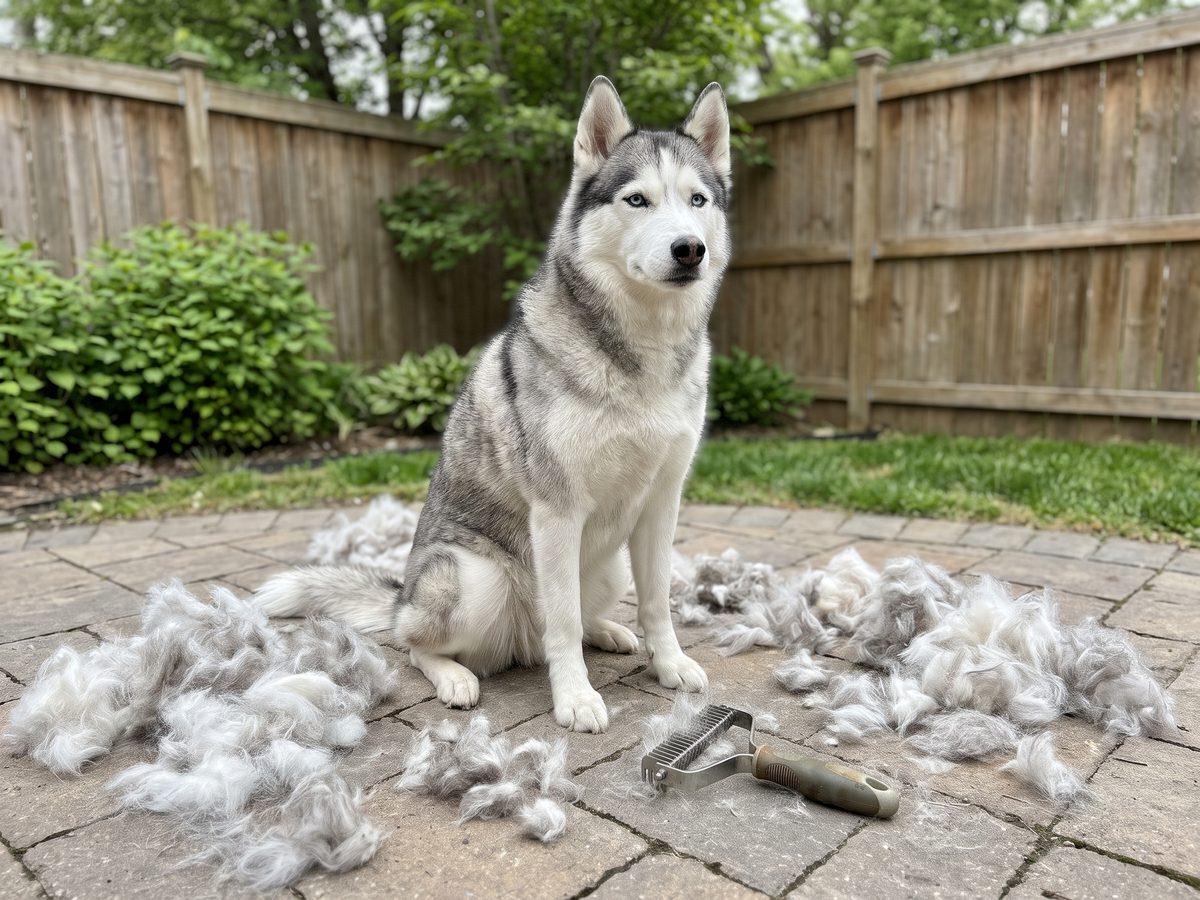
A soft, dense undercoat sits under a straight outer coat. Together they insulate against cold and help protect the skin from sun and heat. Shaving strips that out, and the coat often grows back patchy or uneven.
- Most of the year: brush once or twice a week with a slicker brush.
- When the coat "blows" (usually twice a year): use an undercoat rake every day or two until the loose fur is out. Expect clouds of it.
- Bathing: only occasionally, and dry the coat right through.
Our grooming double-coated dogs page covers tools and technique.
Gear for a Husky
Each button opens a search in your own country's Amazon store. As an Amazon Associate we earn from qualifying purchases.
An undercoat rake and slicker brush handle the coat. A pulling harness and a bungee leash make canicross comfortable for both of you. A long line helps with recall practice, and a GPS tracker gives peace of mind for a dog famous for escaping.
Health: What to Ask the Breeder and Your Vet
In the UK, The Royal Kennel Club lists eye testing (including gonioscopy) as good practice for Siberian Husky breeders and hip scoring as best practice. In the US, ask for OFA hip results and eye exams. Ask to see results for both parents.
Book a check-up soon after your dog comes home, and ask about vaccinations, neutering and a parasite plan, including ticks if you run in woods and long grass.
Worming, flea and tick products: see your vet or a pet supply store with trained staff. They can tell you what suits your dog and where you run.
Frequently Asked Questions
Fur, fences and freedom come up most.
Should I shave my Husky in summer?
No. The double coat helps protect against heat and sun as well as cold, and shaved coats often grow back unevenly. Brush out loose undercoat and keep your dog cool and shaded instead.
Can Huskies be off the leash?
Many can't be trusted off-leash in open spaces, because the urge to run is strong. Use a long line and securely fenced areas.
Are Huskies good with cats?
Some live happily with a cat they grew up with, but many have a strong chase drive. Introduce very carefully, and be cautious with small pets.
Do Huskies shed a lot?
Yes, especially when the coat blows, usually twice a year. Daily raking during those weeks keeps it manageable.
Can a Husky live in a warm climate?
Some do, with air conditioning, shade, water and exercise only at the coolest times of day. Heat is hard work for this breed.
What's the difference between a Siberian Husky and an Alaskan Malamute?
They are separate breeds. The Malamute is larger and heavier, built for hauling loads; the Husky is lighter and built for speed over distance. Both need similar coat care and secure fencing.
Related Reading
- Grooming double-coated dogs: rakes and blowouts.
- Akita and Shiba Inu: other spitz-type breeds.
- GPS collars vs tracker tags: finding a runaway.
Breed traits are tendencies, not promises. If your Husky struggles in the heat or seems unwell, call your vet.