German Shorthaired Pointer: Temperament and Everyday Care
Who a GSP Suits
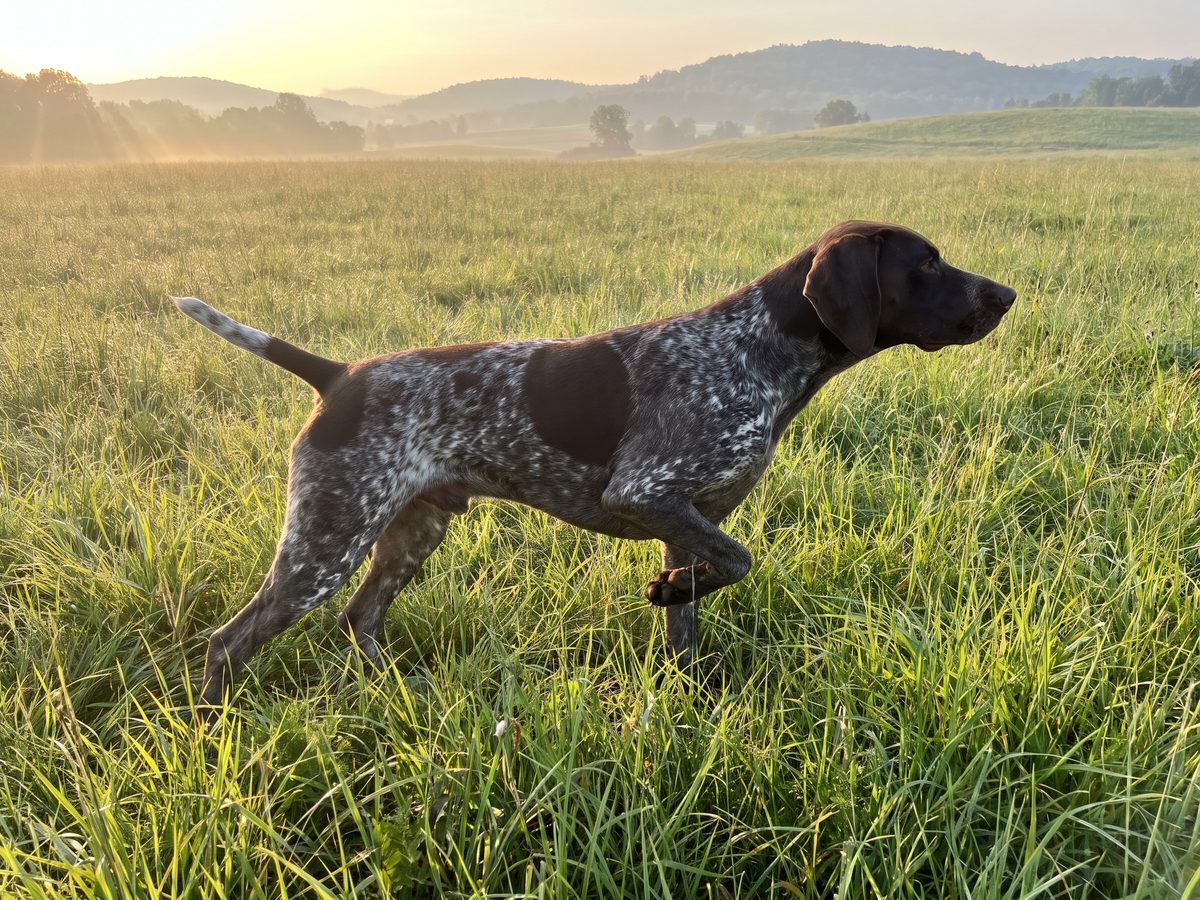
GSPs are friendly, eager and full of energy. They suit people who run, hike, cycle with a dog or do dog sports, and who want a dog that is sociable indoors too.
They are a hard fit for long days alone or a quiet routine. A bored, under-exercised GSP can be noisy and destructive, and puppies and adolescents are a lot of dog.
The Exercise Most New Owners Underestimate
The Royal Kennel Club suggests more than two hours a day for an adult. That means real running and sniffing time, not just a stroll, plus training and play. Swimming, scent work and retrieving games all suit the breed. Build up hard exercise gradually, and ask your vet or breeder what suits a growing puppy.
Bird Drive and a Nose That Doesn't Switch Off
GSPs were bred to find and point game birds, and that instinct is strong. Recall can vanish when a bird takes off. Practice with a long line, use secure fields for free running, and keep your dog on a leash near livestock and during bird nesting seasons where rules ask you to. Many will also chase cats and small pets. See recall training.
A Velcro Dog at Home
Indoors, many GSPs like to be wherever you are, ideally touching you. Teach your dog to settle on its own bed and to be alone for short, growing periods from puppyhood, so it can cope when you go out. See separation anxiety basics.
Gear for a High-Drive Gundog
Each button opens a search in your own country's Amazon store. As an Amazon Associate we earn from qualifying purchases.
A long line is essential for safe recall practice. A hands-free running leash lets you run together. A training dummy suits a born retriever, a durable bed gives a big dog somewhere to settle, and a high-visibility vest helps on walks in the countryside.
Health: What to Ask the Breeder and Your Vet
In the UK, The Royal Kennel Club lists hip and elbow scoring and eye testing as best practice for GSP breeders. In the US, ask for OFA hip and elbow results. Ask to see results for both parents.
As a deep-chested breed, ask your vet about feeding routines around exercise. Book a check-up soon after your dog comes home, and ask about vaccinations, neutering timing and a parasite plan, including ticks if you walk in long grass and woodland.
Worming, flea and tick products: see your vet or a pet supply store with trained staff. They can tell you what suits your dog and where you walk.
Frequently Asked Questions
Energy, recall and cuddles come up most.
How much exercise does a GSP need?
More than two hours a day for most adults, with running, sniffing and training. A short walk won't satisfy this breed.
Can a German Shorthaired Pointer live in an apartment?
It's possible with an owner who exercises the dog a lot every day, but it's rarely easy. Outdoor space and nearby countryside help.
Are GSPs good with cats?
Some live happily with a cat they grew up with, but many have a strong chase instinct. Introduce carefully and supervise.
Are GSPs good family dogs?
For active families, often very good. They are affectionate and sociable, but bouncy, so supervise with small children.
Do GSPs shed?
Yes, a moderate amount all year. A weekly brush keeps it under control.
Related Reading
- Recall training: the long-line method.
- Dalmatian: another tireless runner.
- Dog enrichment ideas: scent games and more.
Breed traits are tendencies, not promises. If your GSP's belly swells, it retches without bringing anything up, or it seems in pain after eating, go to a vet straight away.