Separation Anxiety in Dogs: Building Alone Time Step by Step
Make Leaving Boring
Dogs learn the leaving routine fast: keys, coat, shoes, bag. A dog that already expects to be left may start pacing before you reach the door. Break the link by doing those things with no departure: pick up the keys and sit down, put on a coat and make a cup of tea. Keep comings and goings calm and low-key, without big goodbyes or excited hellos.
Build Alone Time in Steps Your Dog Can Win
Start tiny: step outside and come back in within seconds. Only add time once that step is easy for your dog, not because a set number of days has passed. If your dog shows stress, go back to a shorter step. Progress is rarely a straight line, and that's fine.
While you're training, try to avoid leaving your dog for longer than it can cope with. A dog sitter, a friend, daycare or a dog walker can bridge the gap.
Something Great Before the Door Closes
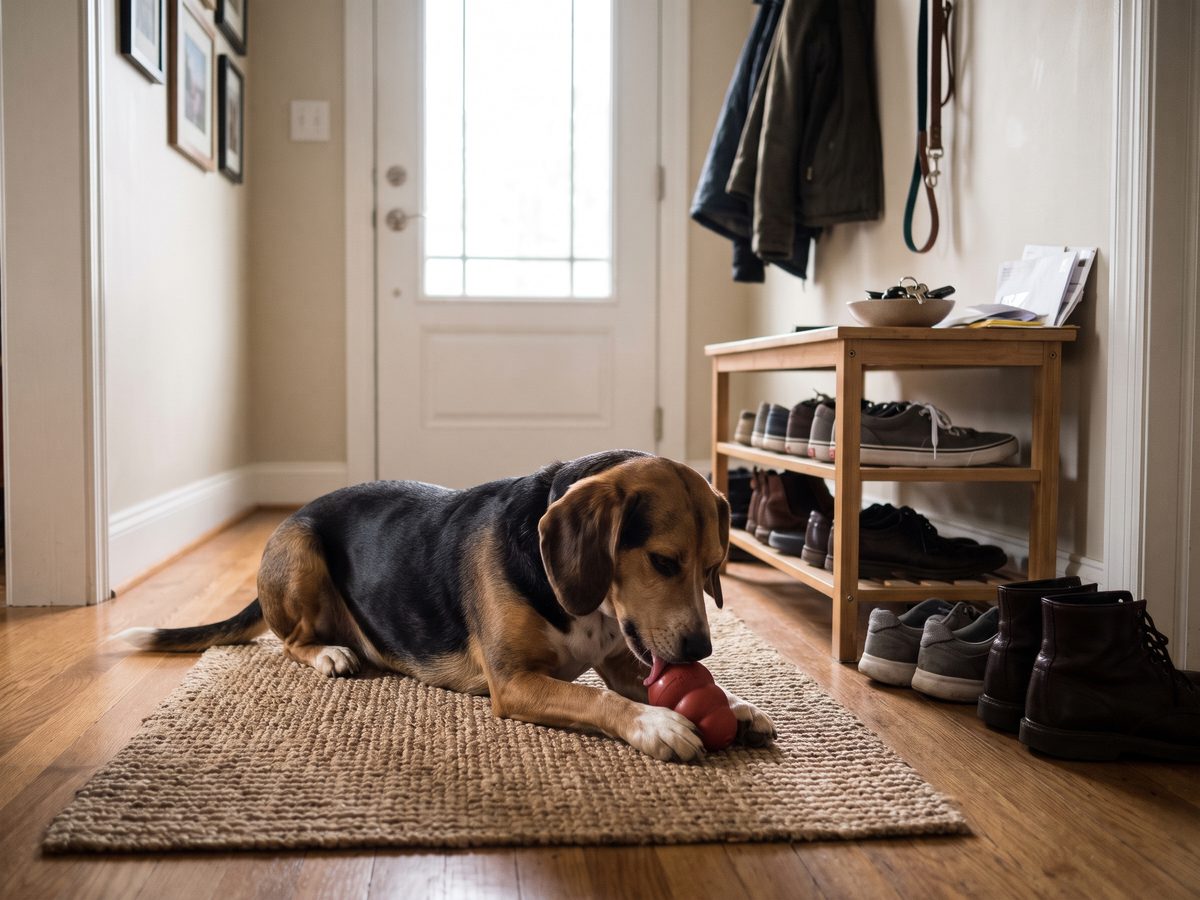
Hand over a frozen stuffed toy or a lick mat a few minutes before you leave, so the best part of the day starts as you go. A walk and a sniff beforehand helps a dog settle. A pet camera shows what really happens: some dogs fuss briefly then sleep, which is very different from a dog that panics for the whole time.
When a Crate Helps and When It Doesn't
A crate can comfort a dog that already loves it and only fusses mildly; see crate training without tears. For a dog in real panic, a crate can make things worse and lead to injury from escape attempts. If your dog tries to break out, use a safe room or pen instead and get professional help.
Gear for an Alone-Time Plan
Each button opens a search in your own country's Amazon store. As an Amazon Associate we earn from qualifying purchases.
A pet camera shows you how your dog really copes. Stuffable rubber toys and lick mats give a long-lasting, calming job. A baby gate makes a safe room without the confinement of a crate.
When to Get Professional Help
See your vet if your dog panics when alone: howling or barking the whole time, destroying doors or windows, injuring itself, soiling in a house-trained dog, or drooling and panting heavily. Your vet can rule out other causes and talk through all the options, and may refer you to a veterinary behaviorist or qualified behavior consultant. See when to hire a trainer or behaviorist.
Calming products and anxiety medicines: see your vet or a pet supply store with trained staff. Your vet can check your dog and suggest what suits it.
Frequently Asked Questions
Being left is hard for some dogs. These questions come up most.
How do I tell normal fussing from real separation anxiety?
A dog that whines briefly and then settles is coping. Nonstop distress, destruction at exits, self-injury or accidents mean it's struggling; talk to your vet.
Will getting a second dog help?
Sometimes, but often not. Many anxious dogs miss their person, not just company. Work on the anxiety first.
How long does it take?
It varies from weeks to months. Small, successful steps are faster in the end than pushing too far.
Should I crate a dog with separation anxiety?
Only if your dog already loves its crate and stays calm in it. A panicking dog can hurt itself trying to escape.
Are there calming products that help?
Ask your vet or a pet supply store with trained staff. Your vet can check your dog and talk through all the options.
Related Reading
- Crate training without tears: building a den.
- Dog enrichment ideas: long-lasting jobs.
- Storm and firework fear: when the fear is noise.
A sudden change in how your dog copes alone can have a medical cause. If you notice one, talk to your vet.