Birman Cats: A Gentle Companion in Colorpoint Silk
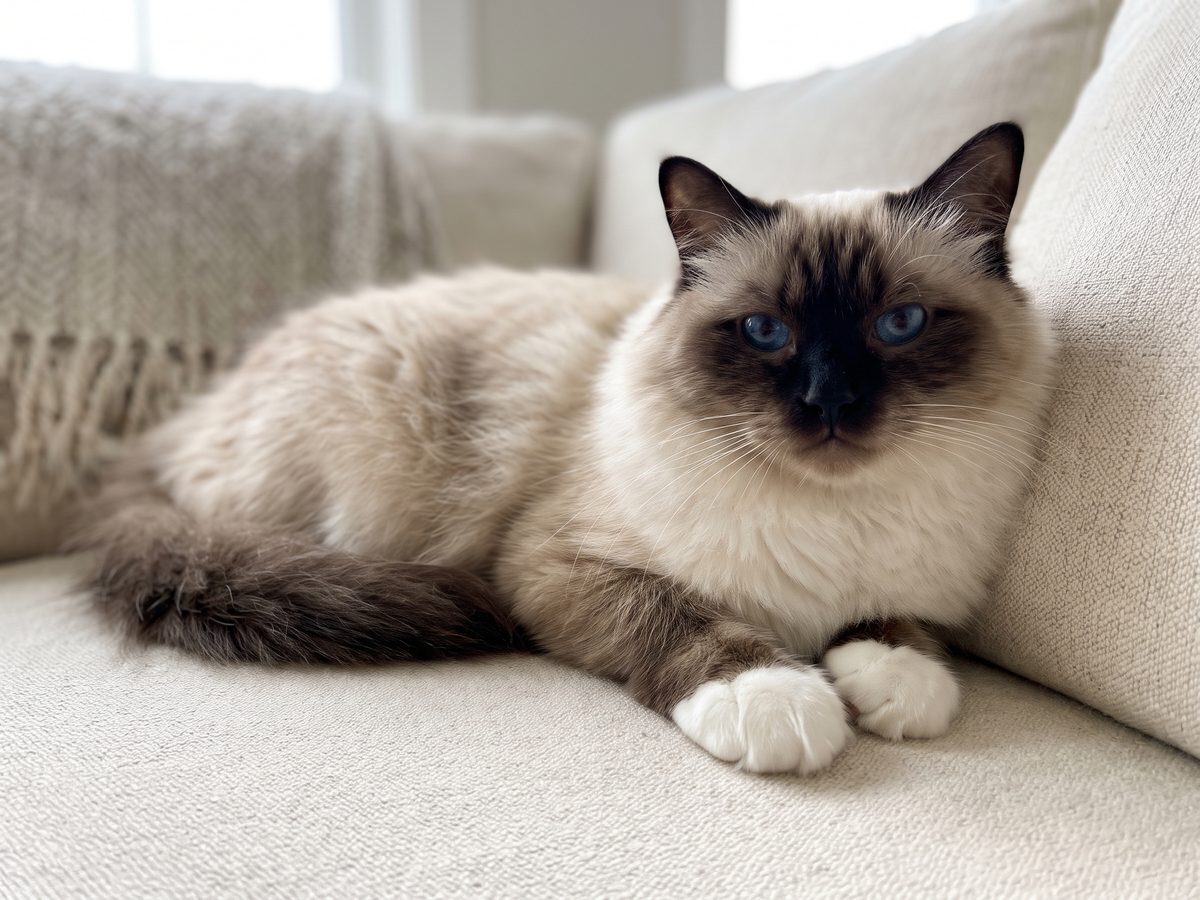
Gentle, moderate-maintenance and quietly devoted: the snapshot below covers the basics.
| Coat | Grooming | Temperament | Energy | Lifespan | Good with |
|---|---|---|---|---|---|
| Silky semi-longhair, colorpoint with white paws | A few sessions weekly, moderate | Calm, steadily affectionate | Low to moderate | About 12–16 years | Quiet, predictable households |
A Gentle, Steadily Companionable Temperament
A Birman's affection comes across as calm, consistent presence, without either the constant vocal demands of a more talkative breed or the near-total independence of a more aloof one. This cat generally enjoys being near people without requiring constant physical contact, making it an easy fit for a household somewhere between wanting a lap cat and wanting a fully self-sufficient one.
That same gentle nature means a Birman tends to do best in a calmer home, since it doesn't have the thick skin some more boisterous breeds bring to a loud, unpredictable environment.
A Silky Coat With Surprisingly Little Bite
A Birman's semi-longhair coat carries a silkier texture and a lighter undercoat than a Persian's dense, fine fur, and that combination resists tangling far better without needing daily intervention. A few focused sessions a week with a wide-tooth comb, paying attention to the leg feathering and the ruff where tangles start first, generally keeps a Birman's coat in good shape without turning grooming into a daily chore.
Our Persian care guide covers that breed's considerably heavier daily-comb requirement, useful for seeing just how much lighter this breed's coat upkeep actually runs by comparison.
The White Gloves, and Why They're Just a Look
Every Birman carries white paws, often called "gloves," whatever the color pattern on the rest of its coat. They are a defining, breed-standard trait, not a random marking. The gloves don't call for any special grooming or care beyond what the rest of the coat needs, and they hold no particular medical significance either, despite how often the trait gets described as if it were something extra to manage.
What matters more practically for paw health is the same for a Birman as for any cat: a periodic check for cuts, mats between the toes, or embedded debris after outdoor access.
A Quiet-Home Fit, More Than a Busy One
A Birman's easygoing nature holds up best in a calmer, more predictable household, not one with constant noise, frequent visitors, or a chaotic daily rhythm. This isn't a fragile or nervous breed by any means, but its steady, gentle temperament shows most consistently when the environment doesn't constantly demand adjustment or startle it with sudden change.
Young kids in the home can still work well given supervision and gentle handling, since a Birman's tolerant nature extends readily to children who treat it with a light touch, provided the household's overall pace stays reasonably settled.
The Quiet Essentials: Silky-Coat Upkeep and Soft Landings
A wide-tooth comb does more for this breed's lighter, silkier coat than any heavy-shedding rake sized for a denser undercoat, and a soft-bristle brush finishes the job without pulling at healthy fur. A calm, quiet cat tree tucked into a low-traffic corner suits this breed's easygoing energy far better than an elaborate multi-level tower built for a more athletic climber.
A soft throw over a favorite resting spot gives a Birman one more reason to settle there. A cozy covered bed rounds things out as somewhere private to retreat during a noisier stretch of the day.
Frequently Asked Questions
Most first questions on this page land on coat upkeep next to a Persian's, and on whether a quiet home makes a difference.
Are Birmans a good match for a first-time cat owner?
Often yes, since the breed's easygoing, companionable temperament and moderate coat upkeep don't demand the intense grooming schedule or high-energy household some other breeds need. A first-timer still does best starting the brushing habit in week one instead of only picking it up once mats have already set in.
Is a Birman's coat as much work as a Persian's?
No. A Birman's silkier texture and lighter, less dense undercoat resist matting considerably better than a Persian's fine, thick coat does. A few sessions a week with a comb generally keeps a Birman tidy, without the daily commitment a Persian's coat tends to require.
What are the signature white paws called, and do they need special care?
The white "gloves" on all four paws are a defining breed trait, not a marking that needs special upkeep. They need the same care as the rest of the coat. A paw check after outdoor access still matters for any cat, gloved or not.
Does a Birman do well in a busy, loud household?
Generally better suited to a calmer, more predictable home than a loud, high-traffic one, since this breed's gentle temperament leans toward steady companionship, not constant chaos. A quieter household lets the breed's naturally affectionate nature show more consistently.
How social are Birmans with other pets in the house?
Usually accommodating, given a proper introduction. This breed's calm nature covers other cats and dogs about as comfortably as it covers people. A gradual, structured introduction still matters regardless of how easygoing a specific cat's temperament seems.
Are Birmans prone to any particular health conditions?
This breed carries a documented risk of hypertrophic cardiomyopathy, the heart-muscle-thickening condition that shows up across several pedigree cat breeds, and a vet's heart scan can pick it up before an owner would notice anything at home. Asking a breeder about a specific line's cardiac testing history is a reasonable question to bring to the conversation.
How is a Birman actually different from a Ragdoll?
Two separate breeds that only share a colorpoint look on the surface. A Ragdoll grows considerably larger and carries the well-known flop-when-held trait, while a Birman stays medium-sized with its own quieter, steadier way of showing affection.
Related Reading
- Ragdoll: another gentle colorpoint.
- Cat grooming: combs for a silky coat.
- Persian: a heavier coat to compare.
This guide describes typical temperament and coat care only; heart screening is a job for your vet. A normally social Birman that starts avoiding the household, breathing hard, or going suddenly listless needs to see a vet promptly, not be written off as a quiet phase.