Domestic Longhair Cats: Coat Care and Combing Time
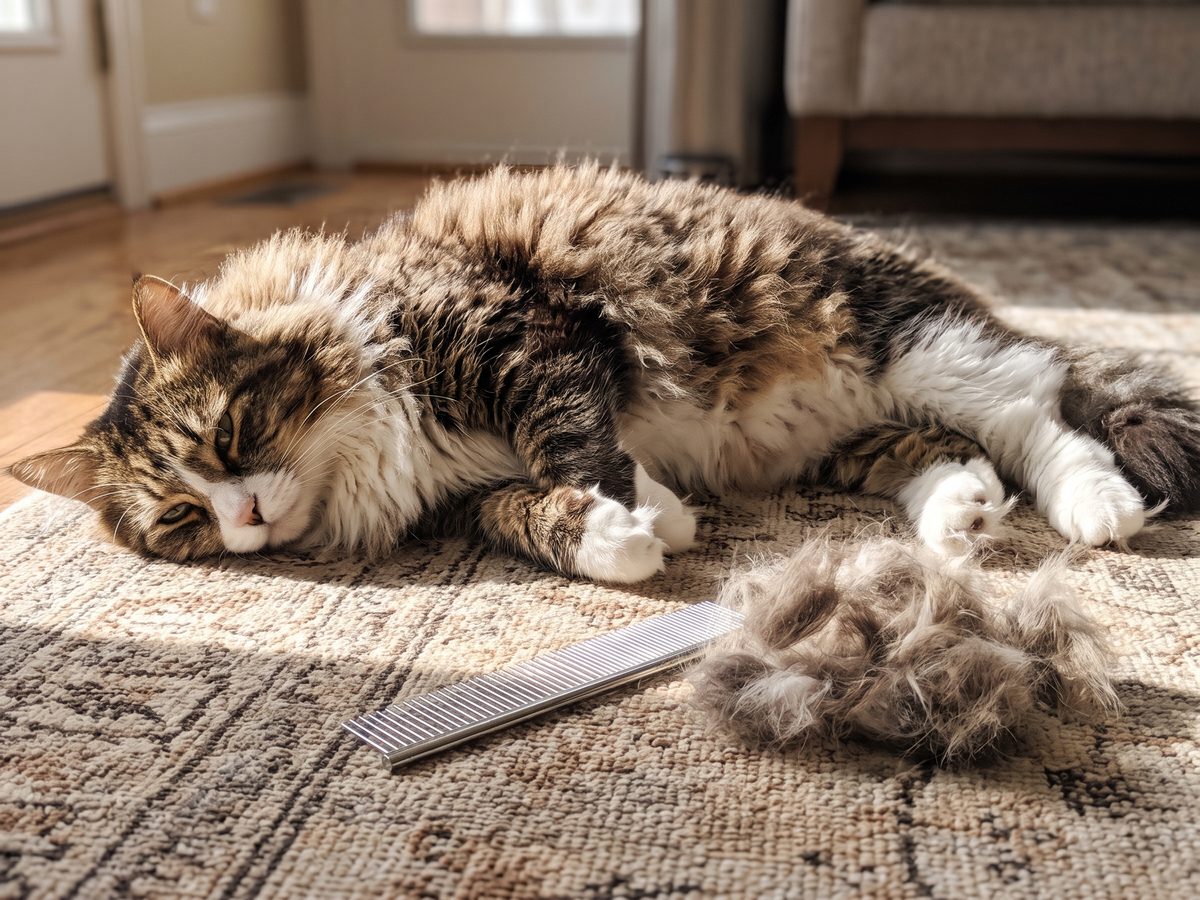
A longhair without a breed standard still has real coat-care math. Here's what it looks like.
| Coat | Grooming time | Shedding | Energy | Lifespan | Good with |
|---|---|---|---|---|---|
| Long, semi-long possible; texture varies widely | A few minutes most days, more during shed seasons | Moderate year-round, heavy in spring and fall | Low to high, varies by individual cat | Often 13–17 years or more | Most households willing to comb regularly |
Is This Coat Type Right for Your Household?
Anyone willing to comb most days gets along fine with this coat type, since the plush, dramatic look it's known for comes bundled with that time cost regardless of pedigree. A first-time cat owner can absolutely take this on, as long as the grooming habit starts in week one instead of getting treated as optional. Catching up on a coat that's already matted takes far more effort than staying ahead of the tangles.
Wanting the look without accepting the time behind it is the one real mismatch here: skip combing for several days running on a coat this long and the tangles show up fast, then demand real work to sort out.
The Daily-Comb Reality
A domestic longhair's coat needs more than the occasional brush a shorthair gets away with. Realistically, a few focused minutes most days spent on the friction points where mats form first keeps the whole coat manageable without ever requiring a lengthy grooming session. Skipping several days in a row is usually the gap where a loose tangle sets into a real mat, at which point combing alone often isn't enough and cutting the mat out becomes the only comfortable option.
Our cat grooming guide covers brush and comb types in more depth, but the core habit here is frequency over intensity: a little, often, beats a long session once a week.
Where Mats Start, and Heading Them Off
The area just behind each ear, the armpits, and the belly and britches take the heaviest friction from a cat's own movement and self-grooming, which makes those the spots worth checking even on a day the full coat gets skipped. A wide-tooth comb followed by a slicker brush handles most early tangles without needing to cut anything, provided the tangle gets caught before it packs down tight against the skin. A coat that keeps matting in the same spots despite consistent combing, or one with mats hiding skin irritation underneath, is worth a look from a professional groomer or a vet, instead of repeated at-home attempts that risk nicking skin.
Seasonal Shedding
Most domestic longhairs push out a noticeably heavier volume of undercoat during spring and fall, a concentrated few weeks where the amount of loose fur in the house can catch a first-time longhair owner off guard. Stepping up brushing frequency during those windows, instead of keeping a flat year-round schedule, catches the extra fur before it either mats into the remaining coat or ends up scattered across every dark piece of furniture in the house. Outside those seasonal pushes, shedding settles back down to a steadier, more manageable baseline that a normal combing routine handles without much extra effort.
Our Siberian cat guide covers a pedigree breed whose triple-layer coat sheds in an even more concentrated seasonal burst, useful contrast for seeing how a single-layer longhair coat differs from a working, cold-climate one.
The Vet-Side of a Mixed-Ancestry Coat
A domestic longhair's mixed ancestry means there's no single inherited condition tied to the coat type itself the way there sometimes is with a specific pedigree breed. What matters more practically is that a full coat hides physical changes (weight loss, skin lumps, matting that conceals irritation underneath) more easily than a short one does, so a hands-on check during combing effectively doubles as a basic health scan. Routine vet check-ups remain the reliable way to track weight and skin condition over time.
Gear for the Daily Comb-Through
A wide-tooth comb for the first pass and a slicker brush to finish handle the bulk of what a domestic longhair's coat needs on a normal day, and a dedicated mat splitter or de-matting tool earns its keep for the friction spots that tangle first.
A soft grooming glove suits a cat that shies away from a brush but still enjoys being petted, letting loose fur come away during ordinary handling, and a stainless shedding rake helps considerably during the heavier spring and fall pushes without pulling at healthy coat the way a cheap plastic version often can.
Frequently Asked Questions
Grooming frequency and where mats start are what most new longhair owners want to know upfront.
Is a domestic longhair basically an unofficial Maine Coon?
No. A domestic longhair is a non-pedigree cat that happens to carry the longhair gene, with no documented ancestry tying it to any specific breed. A Maine Coon is a recognized pedigree breed with its own standard; the two can look similar, but only one comes with traceable lineage.
How often does the coat actually need combing?
Daily, for most cats, even if it's only a few focused minutes on the areas that mat first. Skipping several days in a row is usually when a small tangle turns into a mat that needs cutting out instead of combing loose.
What areas mat first on a longhair cat?
The area just behind each ear, the armpits, and along the belly and britches see the most friction from movement and grooming licks, so mats tend to start there first. Checking those specific spots even on a day when a full comb-through gets skipped catches most problems early.
Is a shorter cut ever the right call for a longhair coat?
Sometimes, particularly for a heavily matted coat past the point where combing out is realistic or comfortable for the cat. A professional groomer trained in cat lion-cuts can do this safely; owner attempts with scissors on a squirming cat risk cutting skin, not just fur.
How much worse does shedding get during seasonal coat changes?
Noticeably worse, usually spring and fall, when the coat pushes out its old undercoat in a concentrated stretch of a few weeks. Stepping up brushing frequency during those windows keeps loose fur from ending up matted into the remaining coat or scattered across furniture instead.
Do hairballs happen more with a longhair coat?
Generally yes, since more fur ingested during self-grooming means more hair passing through the digestive system. Regular combing that removes loose fur before the cat swallows it during grooming ranks among the more effective ways to cut down hairball frequency without changing anything about diet.
Can a longhair coat hide weight changes the way a Persian's can?
Yes, a full coat makes weight loss or gain harder to spot by eye alone, so running a hand along the ribs and spine now and then pays off here in a way it simply wouldn't for a shorthair cat. A vet check is still the reliable way to track weight over time.
Related Reading
- Cat grooming: combs and mat tools.
- Hairball control: brushing first.
- Moggies and domestic shorthairs: the short-coated cousins.
This guide covers routine coat care, not skin problems. A coat that mats heavily despite consistent combing, hides sores or lumps, or starts thinning deserves a vet visit, not just more grooming.