Hairball Control: Food, Gel, Brushing or More Wet Food?
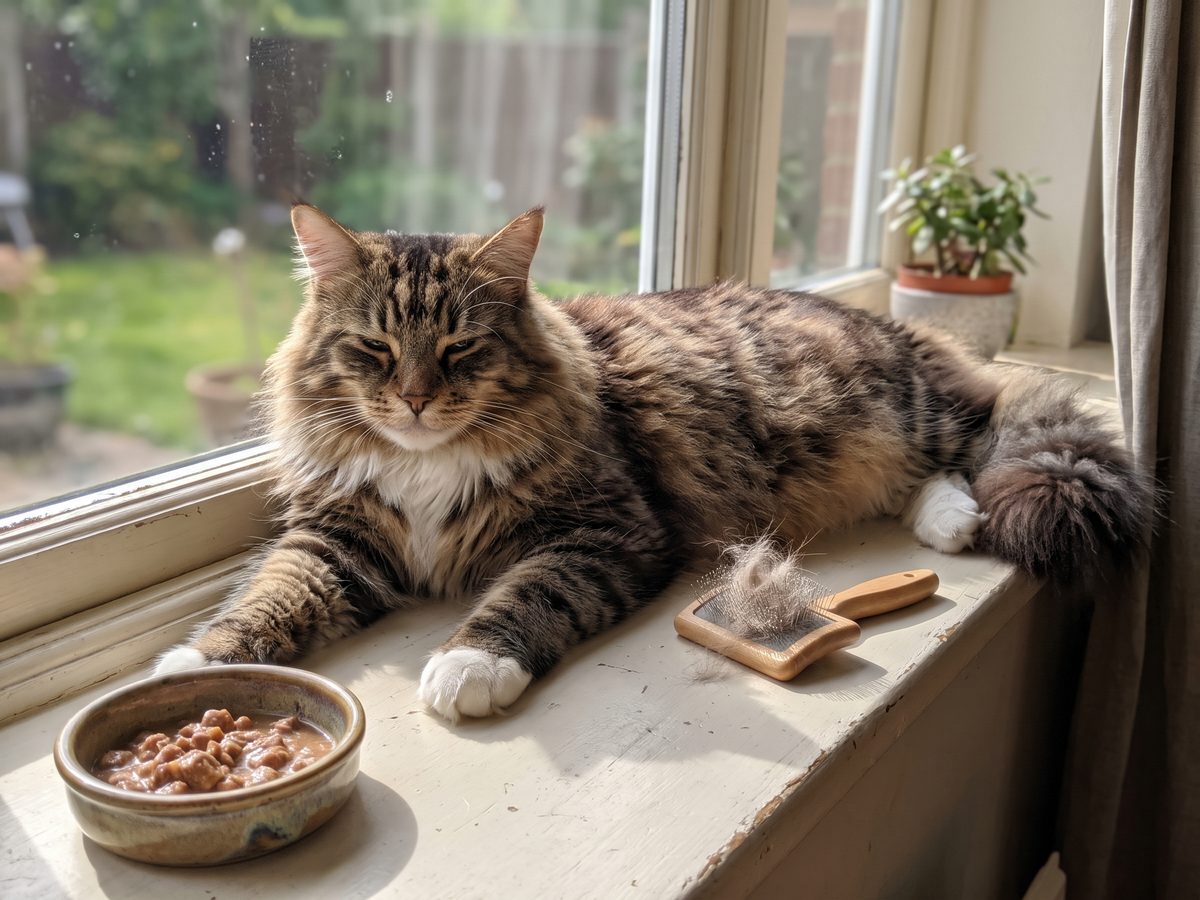
Each approach works differently, so pairing them tends to outperform picking just one.
| Approach | How it helps | Best for |
|---|---|---|
| Hairball-formula food | Added fiber helps fur move through instead of sitting in the stomach | An easy full-time swap for a cat that hairballs regularly |
| Lubricant gel | Coats swallowed fur so it slides through more easily | Only if your vet suggests it |
| Regular brushing | Removes loose fur before it's swallowed during self-grooming | Every cat, especially long-haired ones and heavy shedders |
| More wet food | Added moisture may help fur move through the gut | A cat that already eats little wet food |
The Grooming Habit Behind Every Hairball
A cat's tongue carries tiny backward-facing hooks that catch loose fur during grooming, and the bulk of what those hooks pull free ends up swallowed instead of spat out. Ordinarily that fur travels the length of the digestive tract and exits normally, but fur that mats together inside the stomach comes back up instead, as the familiar cylindrical clump.
Coat length, shedding volume, and how much a cat grooms itself all push the frequency up or down. A long-haired cat, a heavy shedder, or a cat licking excessively from stress or skin irritation typically deals with hairballs more than a calm-coated shorthair. Spring and fall shedding seasons bring a temporary uptick for most households no matter which control method is already in use.
What Hairball Gel Is Doing, Mechanically
Hairball gels and pastes, and anything else given by mouth to help with a health problem: see your vet or a pet supply store with trained staff. They can tell you whether one suits your cat.
Hairball gel is a flavored paste that coats fur already inside the digestive tract so it slides through instead of settling in the stomach. It does nothing to cut down how much fur gets swallowed in the first place, which is where brushing has the edge. Whether a gel suits your cat, and how often, is a question for your vet.
Why Brushing Is the Real Prevention
Food, gel, and extra moisture all manage fur that a cat has already swallowed, but a brush intercepts loose fur out on the coat, stopping it from reaching the tongue at all. It's the only approach on this list that reduces how much fur is swallowed.
Running a slicker brush or a deshedding tool over a short-haired cat a few times weekly, or daily on a long-haired cat mid-shed, visibly cuts down how much fur a cat's tongue picks up during its own grooming passes. A cat that resists the brush often comes around with brief, low-pressure sessions and a reward at the end, built up gradually instead of forced through in one sitting.
Beyond hairballs, a consistent brushing habit noticeably cuts down loose fur landing on furniture and clothing around the house.
When It Isn't a Hairball at All
A hairball comes up as a compact, tube-shaped mass after a bout of retching. Vomiting food, liquid or foam is not "just a hairball", and neither is retching that brings nothing up.
Call your vet if your cat vomits often, retches without result, goes off its food or seems unwell, or if hairballs suddenly become more frequent. Rarely, fur can block the gut, which is an emergency.
Building a Hairball Control Routine
A hairball-formula dry food from a line like Purina ONE or Hill's makes a reasonable everyday base for a cat that hairballs often. Ask your vet before adding a gel or paste.
A FURminator or Hertzko deshedding tool used a few times a week does more for prevention than either product alone, especially on a long-haired cat. Adding a wet-food topper a few times a week rounds out the routine for a cat that eats mostly dry food and rarely gets extra moisture otherwise.
Frequently Asked Questions
Are hairballs normal, or a sign something's wrong?
An occasional hairball, roughly once every few weeks for most cats, is a normal side effect of grooming. Hairballs showing up weekly or more, or paired with appetite loss or lethargy, point toward a cause beyond ordinary shedding and deserve a veterinary look.
Do hairball formulas actually reduce hairballs?
Hairball-formula foods add fiber intended to help swallowed fur move through the gut instead of collecting in the stomach, and many owners see fewer hairballs after switching. Results vary by cat, and a formula is a supportive habit, not a guaranteed fix for a heavy shedder.
Should I give my cat hairball gel?
Ask your vet first. A gel only helps fur that has already been swallowed, and whether it suits your cat, and how often, depends on the cat. Brushing is the place to start.
How often should I brush a cat to cut down on hairballs?
A short-haired cat generally does well with a quick brush-out several times a week, while a coat with more length often needs a daily pass once shedding picks up. Whatever fur the brush catches never has the chance to become a hairball later.
Can hairballs cause a blockage?
Rarely, yes, and it's an emergency. If your cat keeps retching without bringing anything up, or vomits repeatedly, call your vet straight away.
Do long-haired cats need a different approach than short-haired cats?
A fuller coat sheds and swallows more fur overall, so it typically calls for brushing more often, though the same tools (brushing, food and wet food) apply whatever the coat length. A dedicated deshedding tool earns its place more in a longer-coated cat's routine than in a shorthair's.
Does more wet food help with hairballs?
Some owners find that a wetter diet helps fur pass through more easily, likely from the added moisture supporting normal digestion, though the evidence is mostly anecdotal. It's a reasonable low-risk addition to try alongside brushing, not a proven fix on its own.
How can I tell a hairball apart from simple vomiting?
A hairball typically comes up as a compact, cylindrical mass after several rounds of retching, usually not tied to a meal. Vomiting food, liquid, or foam, especially repeatedly or alongside lethargy, is a different problem and calls for a vet.
Related Reading
- Cat grooming: the right brush for the coat.
- Wet vs dry food: more moisture in the diet.
- Domestic longhair: daily combing for long coats.
This page describes general hairball care, not your cat's health. If your cat vomits often, retches without result or seems unwell, call your vet or an emergency clinic.