Siberian Cats: The Triple Coat and the Allergy Claim
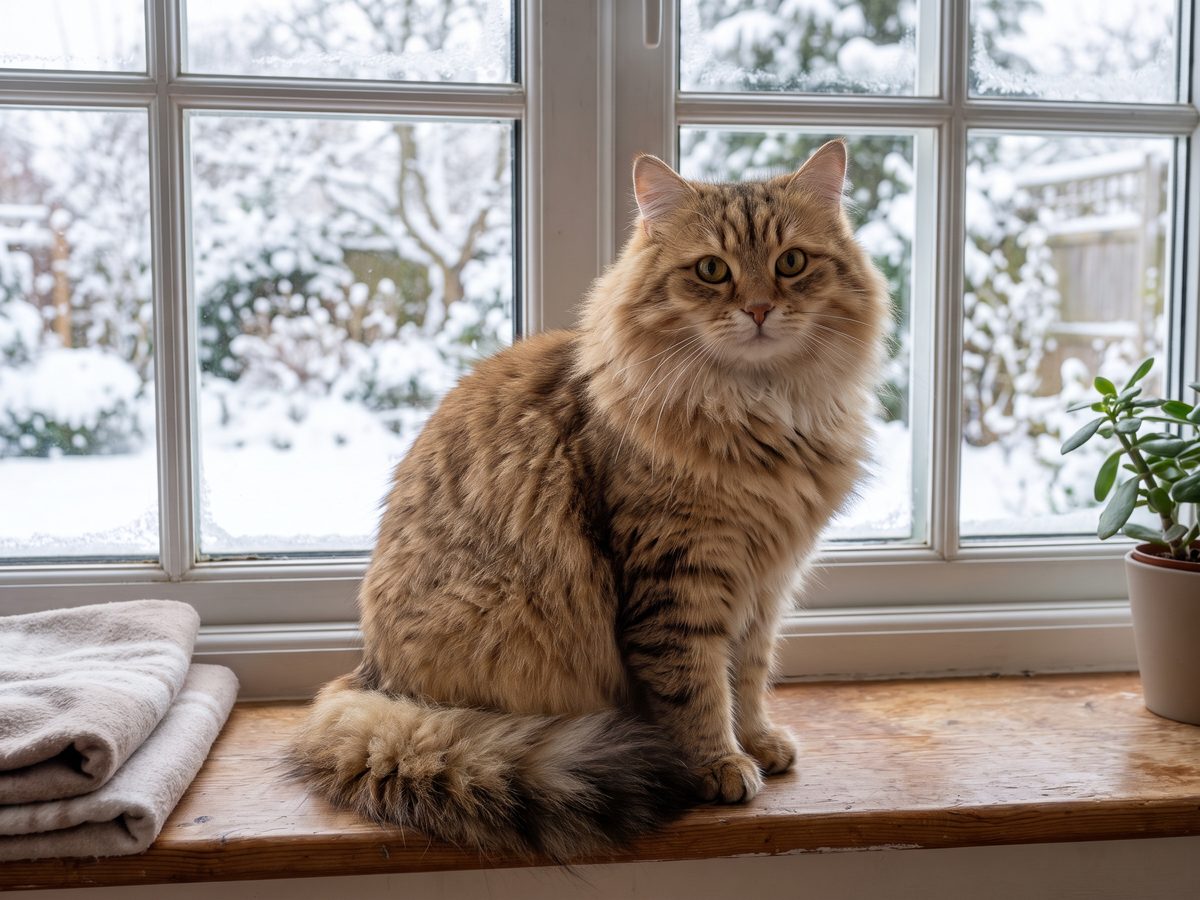
A famous claim, a real coat job and a slow-growing athlete: the table below sets the baseline.
| Coat | Allergy claim | Energy | Growth | Lifespan | Good with |
|---|---|---|---|---|---|
| Triple layer, heavy seasonal shed | Lower average Fel d1, never zero | High, athletic, strong jumper | Several years to full size | About 11–16 years | Active households with time for play |
Three Coat Layers, One Real Seasonal Job
A Siberian's coat is built from three layers: a coarse outer guard layer, a softer awn layer beneath it, and a dense insulating undercoat closest to the skin. It's a structure suited to a harsh, cold climate. Most of the year, a slicker brush a couple of times weekly keeps things manageable, but the undercoat lets go in a concentrated, heavier burst during seasonal changes, and skipping brushing during that window lets loose fur pack down fast.
Our domestic longhair coat guide covers the daily-comb habits a single-layer longhair coat needs, useful contrast for seeing how a three-layer structure behaves differently through the year.
The Hypoallergenic Claim, Weighed Carefully
Some testing has found Siberians carrying lower average levels of Fel d1, the protein behind most cat-triggered allergic reactions, than several other breeds tested alongside them. That finding gets repeated online as a flat guarantee, and it isn't one: individual cats vary widely even within the breed, no cat produces zero Fel d1, and a person's own reaction threshold weighs just as heavily as any published average. Spending real time with that individual cat first, across more than one visit, tells an allergic household far more than trusting a breed-wide statistic ever could.
A Slow Climb to Full Size
Where many cats finish growing inside their first year, a Siberian typically keeps adding frame and muscle well beyond that, often not reaching its final weight until somewhere between the third and fifth year of life. A one-year-old that looks solidly built has frequently only just started the real filling-out process, so mistaking that stage for a finished adult is an easy trap. A vet weighing the cat at regular checkups over these extra years catches that ongoing change far more reliably than an owner's own impression from looking at the cat day to day.
An Athletic Cat That Needs Somewhere to Put It
Siberians carry real muscle under that coat and a strong, confident jump most owners underestimate until a cat clears a counter from a standing start. This isn't a breed content to nap through the day on a single low perch. Daily active play and real vertical space keep a Siberian settled, not restless.
A Siberian without enough of an outlet tends to turn that energy on furniture, curtains or countertops. Furniture rated for a heavier, more athletic cat (see our cat trees and scratchers guide) holds up to a determined leap in a way lighter towers built for a smaller breed simply don't.
What a Triple Coat and a Strong Jumper Call For
Reaching for a fine-toothed comb during the heavy shed leaves most of the undercoat behind; a proper undercoat rake pulls it loose in far fewer passes, and switching back to a lighter comb once the burst has passed suits the quieter months fine.
A wide-base cat tree built to carry real weight without rocking pays off for this breed in a way it wouldn't for a smaller, lighter one, and an interactive wand toy gives this athletic energy a channel instead of leaving a curious cat to find furniture as its own outlet. Add a stainless water bowl or fountain, since a Siberian tends to drink more after a hard play session.
Frequently Asked Questions
The allergy claim is what draws most first-time searches on this breed, closely followed by the coat.
What makes a triple coat different from a regular longhair coat?
Three distinct layers working together: a coarse guard layer, a middle awn layer and a dense insulating undercoat. That structure is built for cold climates and sheds its undercoat in bulk during seasonal changes, not evenly year-round.
Does a lower Fel d1 reading mean a Siberian won't trigger allergies?
No. Some testing has found lower levels of the Fel d1 protein behind most cat-allergic reactions in Siberian saliva and skin compared with other breeds, but levels vary between individual cats and no cat produces zero. Treating a lower average as a guarantee for one specific allergic person is the mistake to avoid.
How can someone with cat allergies find out if a specific Siberian works for them?
Spending real time with that individual cat, ideally over several visits and in an enclosed room, not a brief hello, is the only real test. Allergen sensitivity varies enough between both cats and people that no lab figure substitutes for direct exposure. An allergist can also discuss what a personal reaction history suggests.
How long does a Siberian take to reach full size?
Several years, often not settling into final weight and frame until somewhere in a cat's third to fifth year, well past the point most cat breeds stop growing. A Siberian that looks sturdy and adult-sized at a year and a half can still have real filling out left to do.
How much exercise does a Siberian actually need?
More than a casual toy left on the floor provides. This is a solidly built, strong-jumping breed that does best with real climbing room and an active daily session. An under-exercised individual tends toward restlessness, not calm.
Is the seasonal shed worse than a typical longhair breed's?
Often more concentrated, since the triple coat releases its dense undercoat in a shorter, heavier burst. Stepping up brushing frequency specifically during that stretch handles the volume far better than a flat weekly routine ever could.
Are Siberians good with an active household or a calmer one?
Best suited to a household that builds in daily play and climbing opportunities on purpose, since this breed's athleticism and curiosity don't fade just because a home runs quiet. A calmer household can still make it work if enrichment gets treated as a fixed part of the routine, not an afterthought.
Related Reading
- Norwegian Forest Cat: another cold-climate coat.
- Cat grooming: undercoat rakes.
- Maine Coon: another big, slow-growing cat.
Nothing here can tell you whether you'll react to a particular cat; an allergist and time with the cat settle that, not a breed guide. A coat that mats heavily despite regular brushing, or a Siberian that pulls back from jumping and climbing it used to enjoy, deserves a vet's attention instead of a shrug about age or a rough grooming week.