Chartreux Cats: Personality, Care and What to Expect
Who a Chartreux Suits
The Chartreux suits people who want a calm, quiet, affectionate cat that is happy to keep them company without demanding constant attention. Many follow one favorite person around the house.
They do best with a predictable routine and gentle handling. Breed traits are tendencies; every cat is an individual.
Origin: France's Blue Cat
The Chartreux comes from France, where blue cats have a long history in folklore and writing. The breed is recognized by the major registries in the US and Europe, including the Cat Fanciers' Association, which granted championship status in 1987, The International Cat Association and FIFe. It is rare outside France and the US.
Personality and Play
Chartreux are typically gentle, observant and quiet; some barely meow at all, and breed fans describe small chirps instead. Under the calm surface is an athletic hunter that loves chasing toys, so short daily play sessions suit them well; see our play guide.
Coat, Grooming and Shedding
The dense, woolly double coat has a slightly water-resistant feel. A weekly brush with a rubber brush or slicker keeps it in good shape, and it sheds more heavily in seasonal molts, when daily brushing helps. Our grooming guide covers the tools.
Home Setup: Indoors, Outdoors and Climbing
Chartreux are adaptable and can live happily indoors with play and climbing space, or with outdoor access where that's normal and safe; see our indoor or outdoor guide. Breed sources say they mature slowly, taking around two years or more to fill out.
Gear for a Chartreux
Each button opens a search in your own country's Amazon store. As an Amazon Associate we earn from qualifying purchases.
A rubber brush or slicker handles the dense coat, with a deshedding tool for the seasonal molt. A wand toy and toy mice give a hunter something to chase, and a sturdy cat tree with a high perch suits a calm watcher.
Health: What to Discuss With Your Vet and Breeder
Breed sources describe the Chartreux as generally healthy, but no breed is free of problems. Ask breeders which health checks they carry out on breeding cats, including joint (kneecap) checks, and ask your vet what to watch for. Keep up the preventive care in our cat health basics.
Finding a Kitten or an Adult Cat
Chartreux are rare, so expect a waiting list with a registered breeder. Meet the mother, ask about health checks, and be wary of any "Chartreux" offered without papers: several blue-gray breeds look similar, including the British Shorthair and the Russian Blue.
Frequently Asked Questions
What people ask about this quiet French cat.
Are Chartreux cats quiet?
Usually very. Many rarely meow, and owners often describe small chirps instead.
How is a Chartreux different from a British Shorthair or Russian Blue?
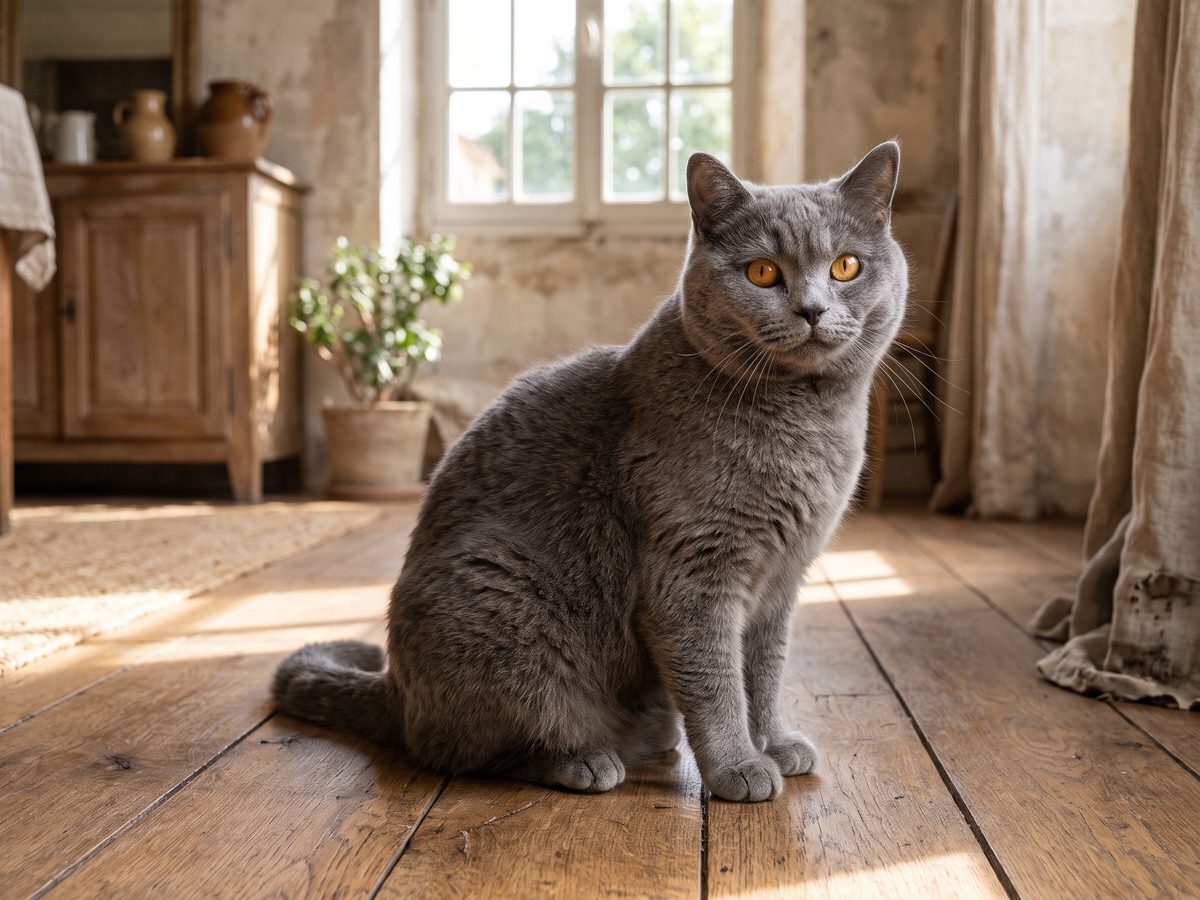
All three can be blue-gray. The Chartreux has copper to orange eyes, a woolly double coat and a sturdy body on fine legs; the Russian Blue has green eyes and a finer build; the British Shorthair is rounder and cobbier.
Do Chartreux shed a lot?
Moderately most of the year and heavily in seasonal molts, when daily brushing helps.
Are Chartreux good family cats?
They are often gentle and tolerant with considerate children and other pets, though many bond most closely with one person.
When is a Chartreux fully grown?
Breed sources say they mature slowly, taking around two years or more to fill out.
Related Reading
- Russian Blue: another blue-gray breed.
- British Shorthair: the round, plush blue cat.
- Play and the hunt sequence: play for a natural hunter.
Breed traits are tendencies, not promises. Book a check-up soon after your Chartreux comes home and ask your vet what to watch for.