Horses and Road Safety: For Riders and Drivers
For Riders: Before You Ride Out
- Be ready. Your horse should be calm in traffic before you ride on busy roads; school it with an experienced escort horse on quiet lanes first.
- Train. In the UK, the British Horse Society runs a Ride Safe award covering road riding; elsewhere, ask your national horse society.
- Tell someone your route and when you'll be back, and carry a charged phone and ID.
- Choose the time. Avoid riding at dusk, at night and in fog where you can. Great Britain's Highway Code says it is safer not to ride on the road at night or in poor visibility.
Be Seen
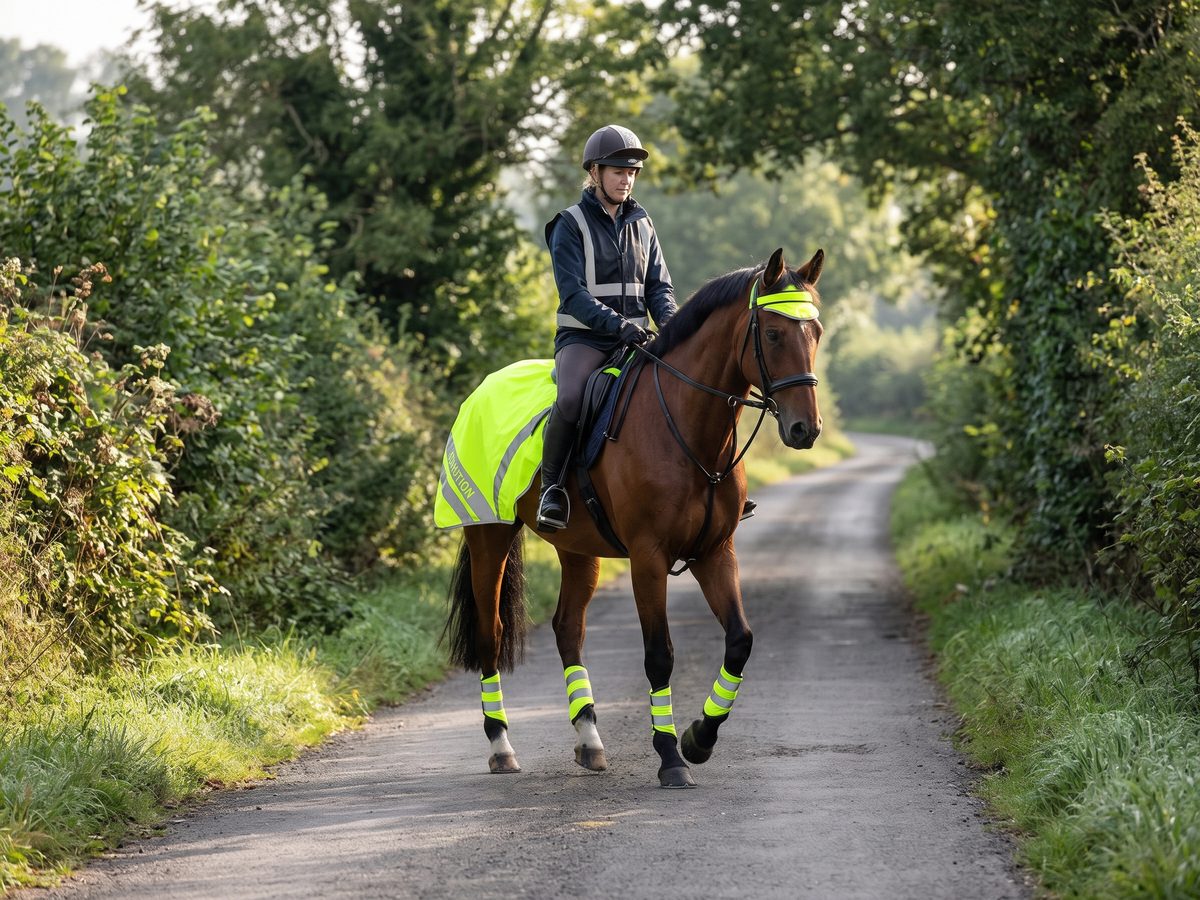
Fluorescent colors show up in daylight and reflective strips at night and in poor light. Wear a hi-vis vest or jacket and a hat cover, and put hi-vis on your horse: an exercise sheet, leg bands and a browband or bridle covers. Great Britain's Highway Code advises light-colored or fluorescent clothing in daylight and reflective clothing in poor light, and a light (white to the front, red to the rear) if you must ride in the dark.
On the Road
- Ride on the correct side of the road for your country, in single file on narrow or busy roads and on bends.
- Use clear arm signals and make eye contact with drivers.
- Thank drivers who slow down: a nod or a raised hand helps everyone.
- In Great Britain, the Highway Code says you must not take a horse onto a footpath or pavement, and advises avoiding roundabouts where possible.
- Use bridleways and off-road routes where you can.
For Drivers: Passing Horses
Horses are prey animals and can spook at sudden noises or close traffic, whatever their rider does. When you see a horse on the road:
- Slow right down early. Great Britain's Highway Code says to slow to a maximum of 10 mph.
- Be patient. Don't sound your horn or rev your engine.
- Pass wide and slow when it is safe, leaving at least 6.5 feet (2 meters) of space, as the Highway Code advises.
- Accelerate gently once well past.
Treat loose and free-roaming ponies, such as those on Dartmoor, Exmoor and in the New Forest, with the same care. In other countries, check your national driving rules; many give similar advice.
Hi-Vis for Horse and Rider
Each button opens a search in your own country's Amazon store. As an Amazon Associate we earn from qualifying purchases.
A fluorescent, reflective vest and a hat cover make the rider visible from a distance. A hi-vis exercise sheet covers the horse's hindquarters, and leg bands catch headlights because legs move. A hi-vis bridle cover or browband shows the front, and a light designed for riders helps if you get caught out as the light fades.
Frequently Asked Questions
Wide, slow and bright.
How fast should I drive past a horse?
Slowly. In Great Britain the Highway Code says a maximum of 10 mph, leaving at least 6.5 feet (2 meters) when it is safe to pass.
Should riders wear hi-vis in daylight?
Yes. Fluorescent colors make riders and horses visible from much further away in daylight, and reflective strips help in poor light.
Can I ride my horse on the pavement?
In Great Britain, no: the Highway Code says you must not take a horse onto a footpath or pavement. Rules elsewhere differ.
Is it safe to ride on the road at night?
It is safer not to. If you must, wear reflective clothing and fit a light showing white to the front and red to the rear.
What should I do if my horse spooks in traffic?
Stay calm, keep your horse straight and moving away from the traffic if you can, and get off and lead if it is safer. Training with an experienced escort horse helps prevent it.
Related Reading
- Learning to ride and safety gear: hats and body protectors.
- Trailers and horseboxes: getting there by road.
- Buying a horse: ask how it behaves in traffic.
If you or your horse are hurt in a road incident, get medical help for yourself and call your vet for your horse, then report it as your national rules require.