Enzyme Cleaners vs Bleach or Vinegar for Dog Urine
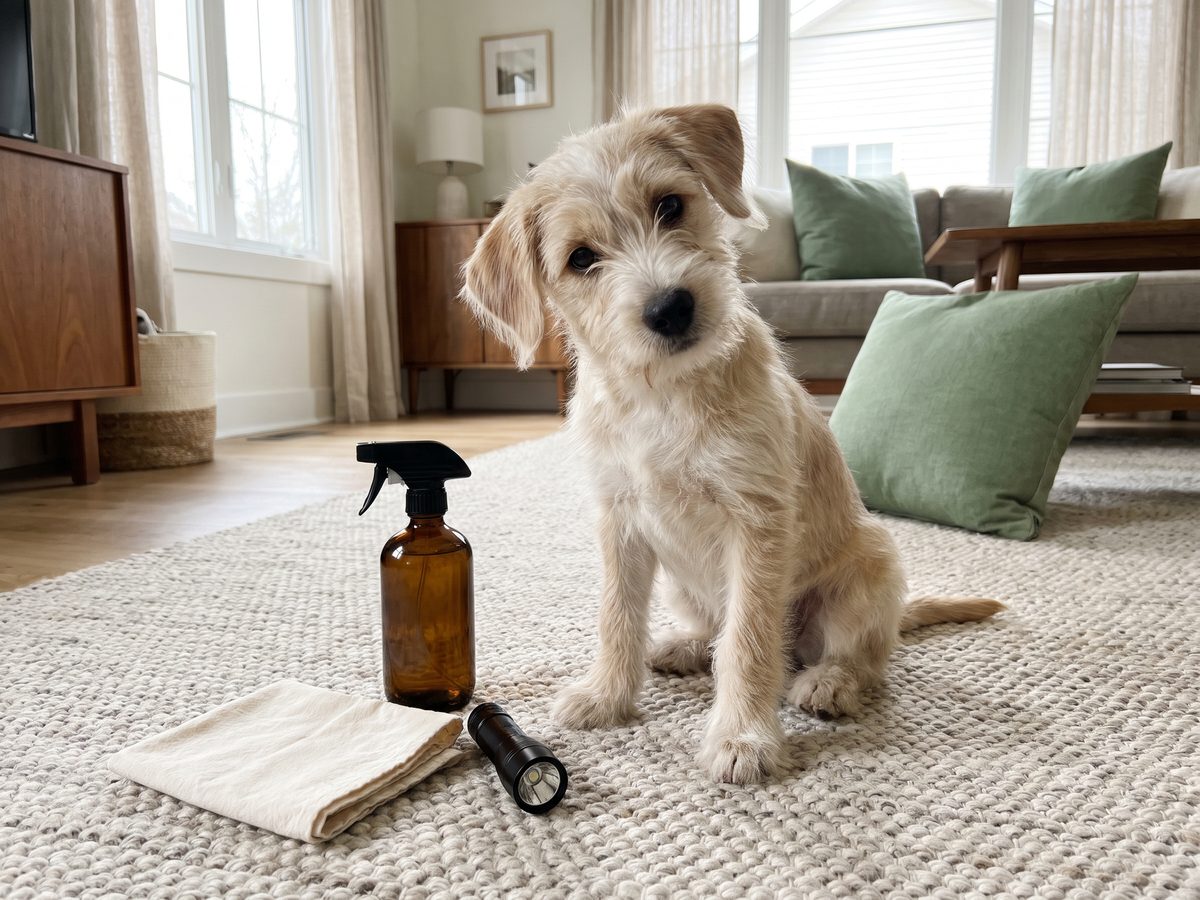
Why Ordinary Cleaners Fall Short
Urine leaves residues that soak deep into carpet and fabric and can keep releasing smell, especially in damp weather. Enzyme cleaners are made to break those residues down. Bleach doesn't remove them reliably, can damage fabrics and isn't safe to mix with other products. Ammonia-based cleaners can smell similar to urine to a dog and may even invite a repeat visit.
How to Clean a Fresh Accident
- Blot up as much as you can with paper towels; don't rub.
- Soak the area with enzyme cleaner, enough to reach as deep as the urine went.
- Leave it for the time on the label, often longer than you'd think.
- Blot again and let it air-dry fully. Keep your dog off the spot while it dries.
Test any cleaner on a hidden patch first.
Finding Old Spots With a UV Light
A UV (blacklight) flashlight makes dried urine glow in a dark room. Mark each spot with a sticky note, then treat them all. It's often the spots you didn't know about that keep a puppy going back.
Carpet, Fabric and Hard Floors
- Carpet and rugs: soak through to the backing; a carpet cleaner with an enzyme solution helps for big areas.
- Washable fabric: rinse in cold water, then wash with an enzyme laundry additive. Hot water can set the smell.
- Hard floors: wipe up, clean with enzyme spray, and check grout and skirting where urine can seep.
What to Keep Under the Sink
Each button opens a search in your own country's Amazon store. As an Amazon Associate we earn from qualifying purchases.
An enzyme spray handles everyday accidents, and a carpet-cleaner version tackles big areas. A UV flashlight finds old spots, and an enzyme laundry additive deals with bedding and throws.
When Accidents Need a Vet
Puppies have accidents; that's training, not a problem. But call your vet if a house-trained dog suddenly starts having accidents, drinks or pees much more than usual, strains, or there's blood in the urine. These can be signs of a health problem that cleaning won't fix. Marking (small amounts on upright surfaces) is different again and may need training help. See toilet training a puppy.
Frequently Asked Questions
Puddles happen. Here's the cleanup.
Does vinegar remove dog urine smell?
It may reduce the smell for a while, but it doesn't reliably break down the residue. An enzyme cleaner does a more thorough job.
Can I use bleach on dog urine?
It's not the best choice. It doesn't reliably remove the residue, can damage fabrics, and must never be mixed with other cleaners.
Why does my puppy keep going in the same spot?
It can probably still smell the old accident. Clean it with an enzyme cleaner and supervise that area closely for a while.
Related Reading
- Toilet training a puppy: the routine.
- Puppy pads: when and how to use them.
- Crate training: help with house training.
Sudden accidents in a house-trained dog, or changes in drinking or peeing, need a vet check.