Storm and Firework Fear in Dogs: A Plan for Calm Nights
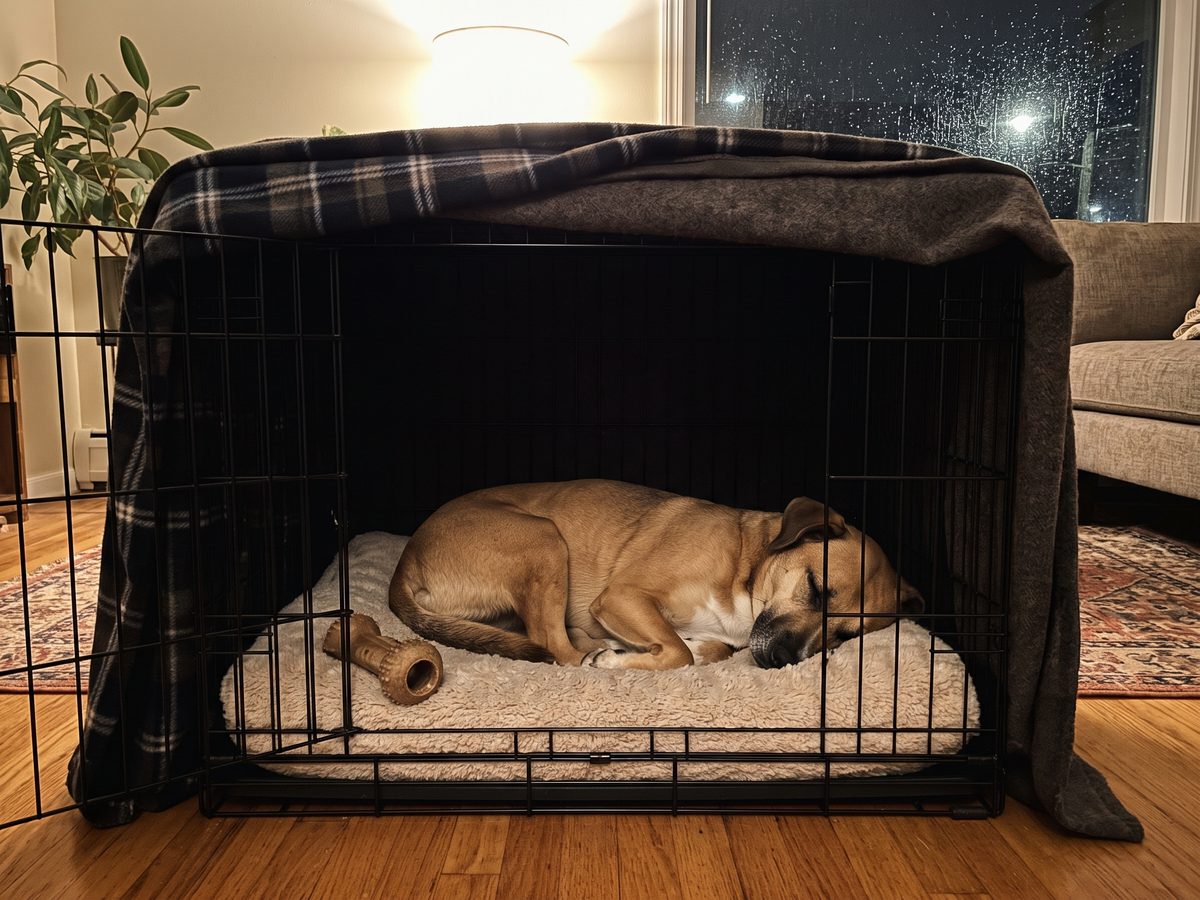
On the Night: Den, Sound and Calm
- A den. A crate with a blanket over it, or a space behind the sofa or in a closet, with bedding your dog likes. Leave the door open; never shut a frightened dog in.
- Curtains closed and lights on to hide flashes.
- Background sound: the TV, calm music, a fan or a white-noise machine to soften the bangs.
- Walk early. Take your dog out before dark on firework nights, on a leash even in the yard. Frightened dogs bolt.
- Stay close and calm. Comforting a frightened dog is fine and won't "reward" fear. Never scold a dog for being scared.
- Check ID. Make sure the microchip details are up to date and the collar tag is on, in case of an escape.
Know the Noisy Dates
Fireworks cluster around holidays that vary by country: Independence Day in the US, Canada Day, Bonfire Night (5 November) in the UK, Diwali, and New Year's Eve almost everywhere. Local festivals and sports wins add more. Put the dates in your calendar and start preparing weeks ahead, not on the day.
Sound Desensitization: The Long Game
Desensitization tackles the fear itself. You play recordings of thunder or fireworks so quietly your dog barely notices, pair them with treats or play, and turn the volume up very gradually over many short sessions.
- Start weeks before a known noisy season.
- Begin at a volume where your dog stays relaxed and keeps eating.
- Raise the volume a little at a time, only when your dog is happy at the current level.
- If your dog gets worried, go back a step. Going too fast can make the fear worse.
A qualified trainer or behaviorist can set up a plan for your dog; see when to hire a trainer or behaviorist.
Pressure Wraps and Other Helpers
A pressure wrap is a snug vest that gives gentle, even pressure around the body. Some dogs seem calmer in one and others show little change. Fit matters: too loose does nothing and too tight is uncomfortable. Let your dog get used to wearing it on quiet days first, so it doesn't become a signal that bangs are coming.
A lick mat or long-lasting chew can help a dog that is only mildly worried and still interested in food.
Calming supplements, pheromone products and anxiety medicines: see your vet or a pet supply store with trained staff. Your vet can check your dog and suggest what suits it.
Gear for a Calm-Night Kit
Each button opens a search in your own country's Amazon store. As an Amazon Associate we earn from qualifying purchases.
A crate cover turns a crate into a den. A white-noise machine masks sudden bangs. A pressure wrap suits some dogs. A lick mat gives a mildly worried dog something soothing to do, and blackout curtains hide the flashes.
When to Talk to Your Vet
Panting, pacing, trembling and hiding are common, and the steps above often help. Talk to your vet if your dog panics, tries to escape, damages doors or windows, hurts itself, or can't settle for hours afterward. Book that conversation well before the next noisy holiday. Your vet can check for anything else going on and talk through options, and may refer you to a behaviorist.
Frequently Asked Questions
Bangs, flashes and a dog under the bed. Here's what people ask.
Should I comfort my dog during fireworks?
Yes. Calm comfort won't make the fear worse. Stay relaxed, let your dog stay close if it wants to, and never scold it for being scared.
Does a pressure wrap work for every dog?
No. Some dogs seem calmer and others show little change. It's low-risk to try, but it shouldn't be the only plan for a very frightened dog.
What if my dog hides?
Let it. Make sure the hiding spot is safe and comfortable, and never drag a frightened dog out into the open.
When should I start desensitization training?
Weeks before a noisy season. The method relies on many short, gradual sessions, so a few days isn't enough.
Can music or white noise help?
Often, yes. Background sound softens sharp bangs and rumbles. It works well alongside a den and closed curtains.
Are there calming products I can buy?
There are, but ask your vet or a pet supply store with trained staff first. Your vet can check your dog and suggest what suits it, including options only a vet can provide.
Related Reading
- Fireworks and noise nights: a plan for every pet in the house.
- Crate training without tears: building a den your dog loves.
- Separation anxiety basics: when worry isn't about noise.
If your dog is in extreme distress or has hurt itself, call your vet or an emergency clinic.