Pug: Temperament, Breathing and Everyday Care
Who a Pug Suits
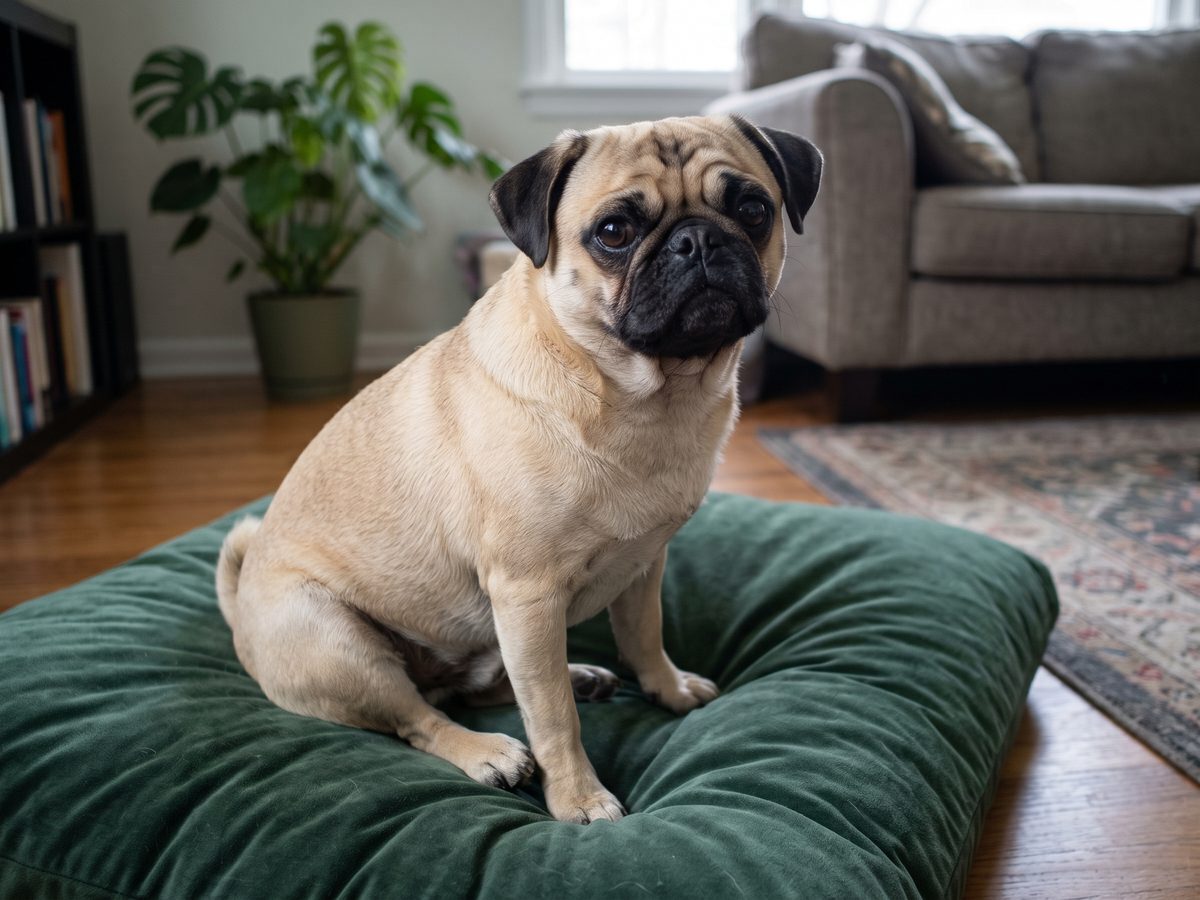
Pugs are sociable, funny and devoted, and they want to be with their people. They suit apartments, older owners and families with considerate children.
They are a harder fit for hot climates, long days alone or active outdoor lifestyles, and they shed far more than their short coat suggests.
Breathing, Heat and Exercise
Short, gentle walks in the cool of the day suit Pugs best. Use a harness rather than a collar, stop when breathing gets heavy, and never leave a Pug in a car. Noisy breathing at rest is worth raising with your vet. See our flat-faced breeds guide.
Eyes and Folds
Large, prominent eyes are easily knocked or scratched. Look at them daily; squinting, redness or cloudiness means a same-day vet visit. Wipe the nose fold gently and dry it well a few times a week.
Keeping a Pug Lean
Pugs love food, and extra weight makes breathing harder. Weigh meals, count treats and ask your vet to check body condition at every visit.
Comfort Kit for a Pug
Each button opens a search in your own country's Amazon store. As an Amazon Associate we earn from qualifying purchases.
A small padded harness keeps pressure off the throat. A cooling mat helps on warm days, soft unscented wipes make fold care easy, and a shallow slow-feed bowl suits a short muzzle and a keen appetite.
Health: What to Ask the Breeder and Your Vet
In the UK, The Royal Kennel Club lists breathing assessment under the Respiratory Function Grading scheme and eye testing as good practice for Pug breeders, with a DNA test for Pug dog encephalitis and hip scoring as best practice. Choose parents with open nostrils and easy breathing, and see the results.
Book a check-up soon after your dog comes home, keep it lean, and ask your vet about vaccinations, neutering and a parasite plan. A short muzzle is something your vet plans for if your dog ever needs an anesthetic.
Worming, flea and tick products and any medicines: see your vet or a pet supply store with trained staff. They can tell you what suits your dog.
Finding a Puppy or a Rescue
Choose a breeder who tests breathing and breeds for moderate features, and walk away from a puppy that breathes noisily at rest. Pugs also come into breed rescues. See rescue vs breeder.
Frequently Asked Questions
Snorts, shedding and summer come up most.
Do Pugs shed?
Yes, a lot for a short-coated dog. Brushing a few times a week helps.
Are Pugs good apartment dogs?
Often, yes. They are small, sociable and don't need long walks. Keep the home cool in summer.
Is snoring normal in Pugs?
It's common, but mention it to your vet, who can check how your dog's airway is coping.
How do I care for a Pug's eyes?
Look at them daily and keep the face clean. Squinting, redness or cloudiness needs a same-day vet visit.
Can Pugs fly?
Many airlines restrict flat-faced breeds in the hold. Check your airline's policy before booking.
Related Reading
- French Bulldog: another flat-faced favorite.
- Flat-faced breeds: heat, flying and insurance.
- Boston Terrier: a short-faced city dog.
Breed traits are tendencies, not promises. If your Pug struggles to breathe, overheats or has a sore eye, see a vet straight away.