How to Stop a Cat Scratching the Sofa
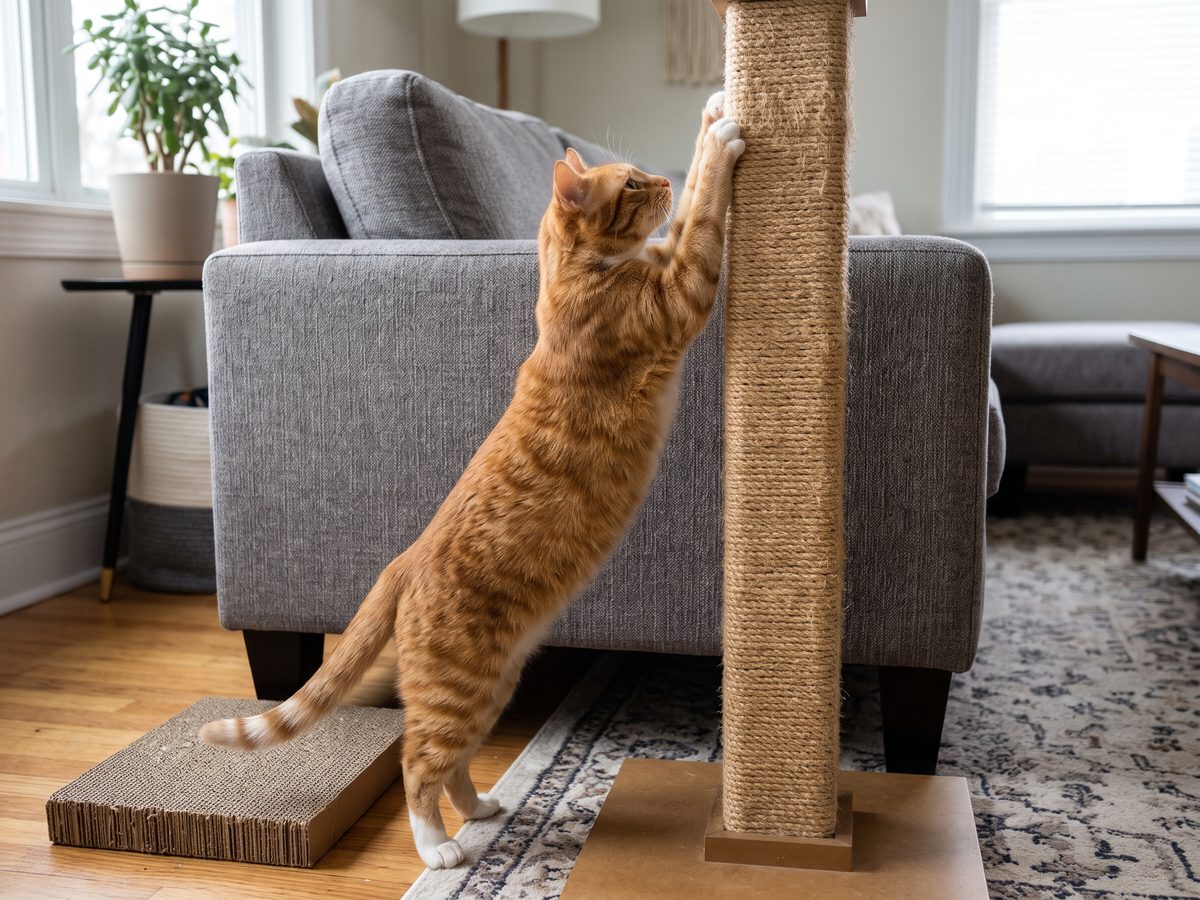
A consistent redirect routine, given a couple of weeks, retrains most cats without a single unpleasant confrontation.
- Step 1. Watch which surfaces and angles your cat already prefers (vertical stretching against the sofa arm, or horizontal scratching on a rug) and match the new post or pad to that same orientation.
- Step 2. Place the post or scratcher directly against or right beside the exact spot on the sofa your cat currently uses, not across the room where it's easy to ignore.
- Step 3. Apply a cat-safe deterrent, such as furniture tape or a scent your cat dislikes, to the sofa spot itself to make it briefly less appealing.
- Step 4. Rub catnip or silvervine onto the new post, or use a spray version, to draw your cat toward it during the switch.
- Step 5. Reward your cat with praise or a small treat any time you catch it using the new post, especially during the earliest stretch of the switch.
- Step 6. Once the post is the established habit, gradually move it a short distance at a time if you eventually want it somewhere else in the room.
Why Cats Scratch in the First Place
Scratching serves several real purposes for a cat: it conditions and sheds the outer layer of the claw, gives the whole topline, from shoulders to haunches, a deep stretch, and leaves both a visual mark and a scent cue released by glands located inside each paw, which communicates territory information to other cats.
None of that goes away because a behavior is inconvenient for furniture, which is why punishment tends to fail: a cat that's scolded or sprayed with water often just scratches when no one's watching. Seeing scratching as a need, not a bad habit, changes the whole approach. The job isn't to suppress it; it's to give it an approved outlet that's at least as appealing as the sofa.
Never Declawing
Declawing isn't a nail trim or a training shortcut. It removes the final bone of every toe, comparable to taking off a person's fingertip at the last knuckle, and it carries real risks of ongoing pain, altered gait, and behavior changes including litter box avoidance from a paw that no longer feels the same. It doesn't teach a cat anything about where to scratch; it simply removes the physical ability, at a permanent and significant cost to the cat's welfare.
A cat scratching the sofa is a solvable furniture problem with training and product options that work for most households. It is never a reason to consider declawing, and a vet who takes animal welfare seriously will walk you through the alternatives instead. Rules differ by country: declawing for non-medical reasons is banned in much of Europe and in a growing number of US states and cities, so check with your national or local authority if you're unsure where you live.
Nail Caps as a Bridge, Not a Fix
Soft nail caps glue over the tip of each claw and blunt the damage a cat can do to furniture while training is still in progress, without affecting the paw itself or the cat's ability to retract its claws normally. They need reapplying on a recurring basis, since new growth naturally pushes the old cap off, and the nail underneath still needs regular trimming the same as any cat's would.
Caps work best as a temporary bridge while a redirect routine has time to take hold, not as a lasting stand-in for teaching a cat where scratching is welcome. Watch for a cat pulling at caps excessively or any sign of irritation where the nail meets the skin, and stop using them if that happens.
What This Means for the Scratching Setup
A sturdy sisal-covered post placed right at the sofa's favorite scratching spot is the core of most successful setups, paired with a cardboard scratcher for cats that prefer a horizontal surface. Furniture tape such as Sticky Paws applied to the sofa itself, alongside a catnip or silvervine spray on the new post, speeds up the switch for most cats. Soft nail caps are worth having on hand as a temporary bridge while training takes hold, and a motion-activated deterrent can help with a particularly stubborn spot the tape alone doesn't discourage.
Frequently Asked Questions
Is declawing ever an acceptable solution for sofa scratching?
No. Declawing amputates part of each toe, carries real welfare risks, and doesn't teach a cat anything about where scratching belongs. Training combined with the right setup solves most scratching problems without it.
What makes my cat scratch the sofa instead of a scratching post?
Often the post doesn't match what the cat prefers: the wrong material, the wrong orientation, or simply placed somewhere less convenient than the sofa. Matching the post's texture and angle to what your cat already does, and putting it right where the sofa scratching happens, usually solves it.
Do nail caps hurt cats?
When applied correctly, caps shouldn't hurt, since they attach to the existing claw, not the nail bed underneath. Watch for excessive pulling at the caps or irritation where the nail meets the skin, and stop using them if either happens.
What attracts a cat to a new scratching post?
Catnip or silvervine rubbed onto the post, or a spray version of either, draws many cats toward a new surface during the switch. Placement counts just as much: a post near where the cat already scratches works better than an attractant on a post kept somewhere out of the way.
How long does redirect training usually take?
Most cats shift their habit inside two or three weeks of steady placement, deterrents, and rewards, though a strongly established habit on a favorite piece of furniture can take longer. Reward timing and where the post sits do more of the work here than any specific product on a shelf.
Are cardboard scratchers as effective as sisal posts?
Many cats take to cardboard just as readily as sisal, and texture preference varies from cat to cat. Offering both a horizontal cardboard scratcher and a vertical sisal post covers more of a cat's natural preferences at once.
What if my cat ignores every scratching post I buy?
Try varying the orientation, material, and location before assuming your cat simply won't use one. A cat that stretches vertically against furniture needs a tall, sturdy vertical post, not a flat pad on the floor. Placing the new option directly at the current scratching spot, not in a corner across the room, solves most persistent cases.
Related Reading
- Cat trees and scratchers: posts and pads.
- Cat grooming: nail trims and caps.
- Cat body language: why cats scratch.
This page describes training and product options, not medical guidance. A sudden increase in scratching, especially paired with other behavior changes, can sometimes reflect stress or an underlying issue, and a veterinarian or veterinary behaviorist can help sort out the difference if a straightforward redirect routine isn't working.