Savannah and Other Hybrid Cats: Think Hard Before You Buy
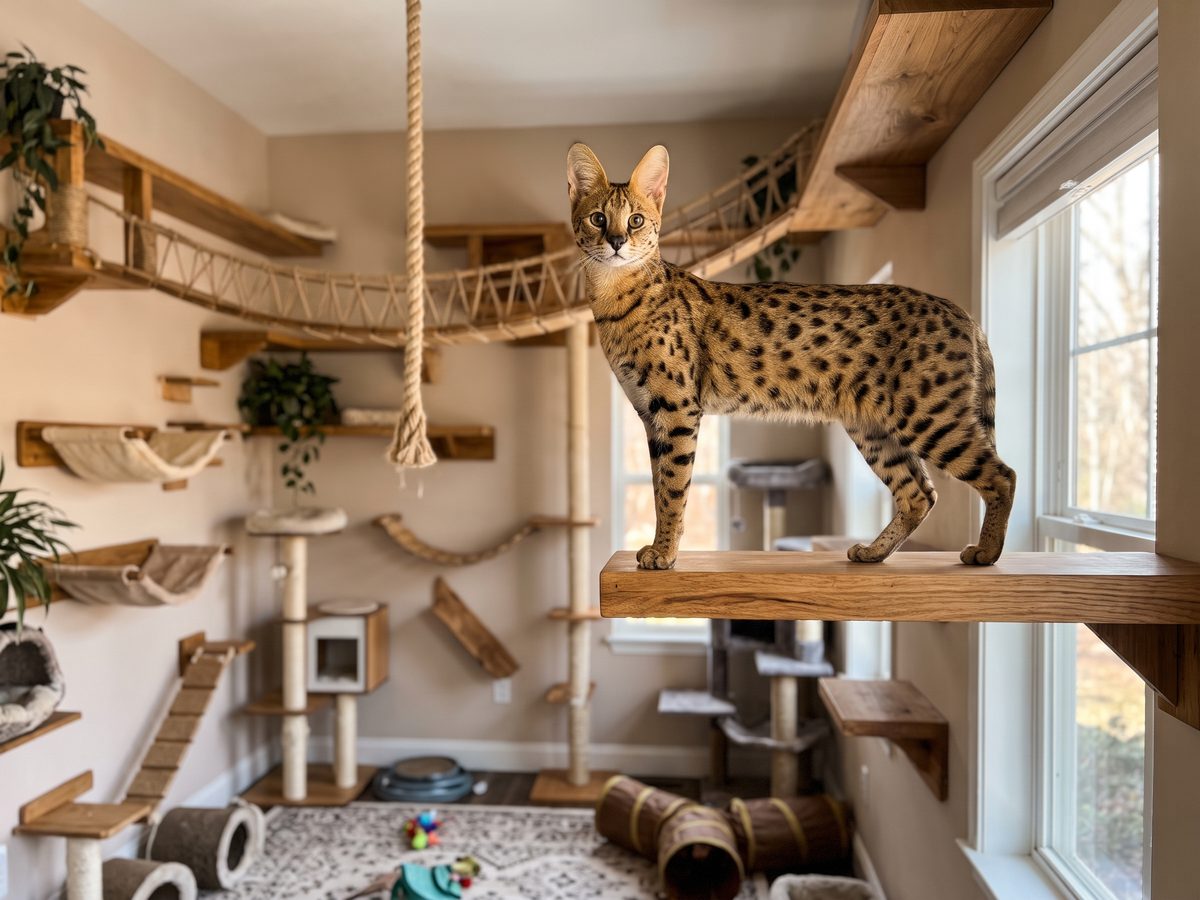
What Hybrid Cats Are
A hybrid cat comes from crossing a domestic cat with a wild cat species. The Savannah comes from the serval, a long-legged African wild cat; the Bengal from the Asian leopard cat; and several newer breeds from other wild species.
Breeders count generations from the wild ancestor. An F1 cat has a wild parent, an F2 has a wild grandparent, and so on. Cat registries treat the first few generations as foundation or hybrid cats and later generations as domestic; the cut-off differs between registries. Most Bengals sold as pets are many generations from the wild cat, while Savannahs of early generations are still bred and sold.
The Welfare Concerns
Wild cats are adapted to roam large territories, hunt and avoid people. The closer a hybrid is to its wild parent, the more of those needs it keeps, and an ordinary house rarely meets them. Owners report cats that jump to the tops of doors, open cupboards, spray, and become stressed without space and a lot of daily activity.
Breeding early hybrids also raises welfare questions for the wild parents and for the mother cats, because domestic cats and servals differ in size and pregnancy length. Some welfare organizations oppose breeding wild-domestic hybrids as pets for these reasons.
Wildlife and Escapes
Large, athletic hybrids are strong hunters, and an escaped one is a risk to local wildlife. Australia refused imports of Savannah cats in 2008 to protect native wildlife, and researchers who later assessed the risk supported that decision. Anyone who keeps a hybrid needs secure, escape-proof housing.
If You Love the Look
Spotted and wild-looking coats are found in fully domestic breeds. The Egyptian Mau is a naturally spotted domestic breed, the Ocicat was bred to look wild from domestic cats only, and a well-bred later-generation Bengal from a breeder who health-tests is far closer to a domestic cat than an early hybrid. A tabby or spotted moggy from a rescue has the same stripes and spots without the paperwork.
If what draws you is an active, playful, interactive cat, our guide to Bengals and high-energy cats explains what that takes, and the Abyssinian and Siamese and Oriental breeds are other athletic, people-focused choices.
Frequently Asked Questions
The questions people ask before they buy, and should.
Are Savannah cats legal?
It depends on where you live and the cat's generation. Australia bans their import, Great Britain requires a license for first-generation cats, and some US states and cities ban or restrict them. Check with your national and local authorities before you buy.
What does F1, F2 or F5 mean?
It counts generations from the wild ancestor. An F1 has a wild parent, an F2 a wild grandparent, and so on. Early generations keep more wild behavior and face more legal restrictions.
Are Bengals hybrid cats?
The breed began as a cross with the Asian leopard cat, but most pet Bengals are many generations from it and are treated as domestic cats by registries. Early-generation Bengals are restricted in some places. Ask the breeder for registration papers showing the generation.
Do hybrid cats make good pets?
Later generations can, for owners who can give a lot of space, play and time. Early generations are part wild and are hard to keep well in an ordinary home.
Is there a cat with a wild look but a domestic temperament?
Yes. Egyptian Maus are naturally spotted domestic cats, Ocicats were bred to look wild from domestic breeds only, and plenty of spotted tabby moggies need homes.
Related Reading
- Bengals and high-energy cats: what an athletic cat needs every day.
- Indoor or outdoor?: wildlife, containment and local rules.
- Companions we do not recommend: other animals that are hard to keep well.
If you already share your home with a hybrid cat, find a vet who is comfortable with them and ask about their specific needs. A qualified feline behaviorist can help if your cat seems stressed or destructive.